1877
Le ciel

diverse vervaardigers
@diversevervaardigersLocation
RijksmuseumListen to curator's interpretation
Curatorial notes
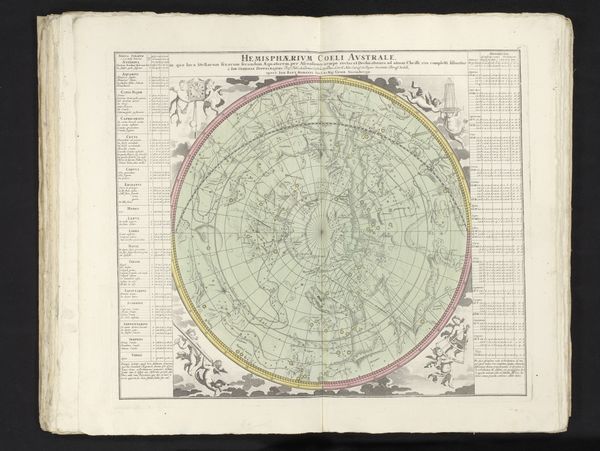
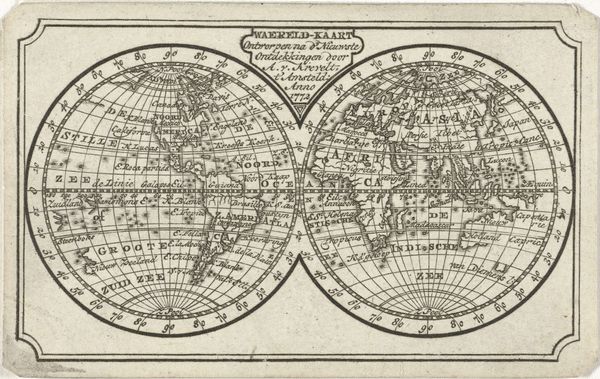
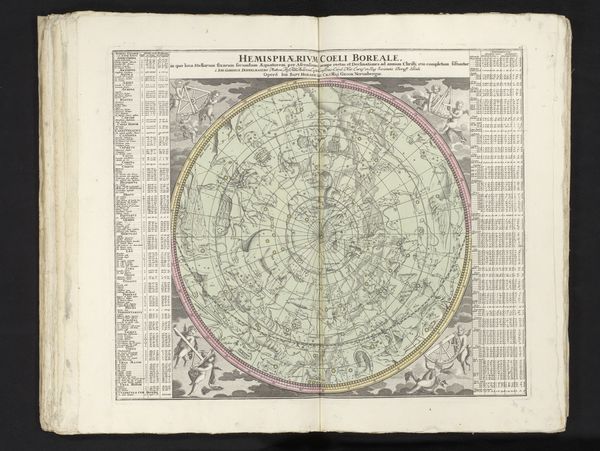
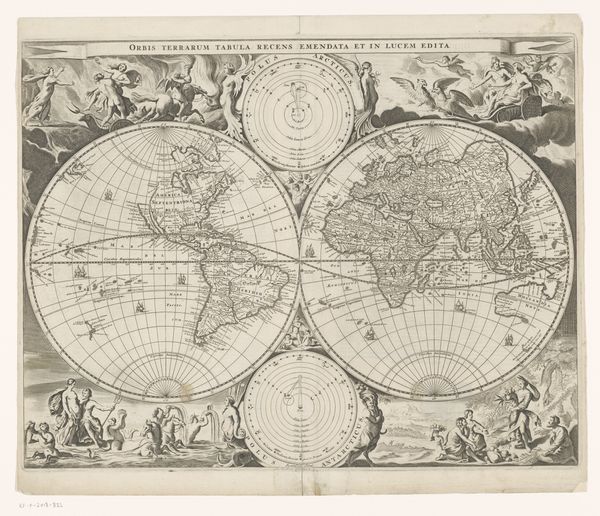
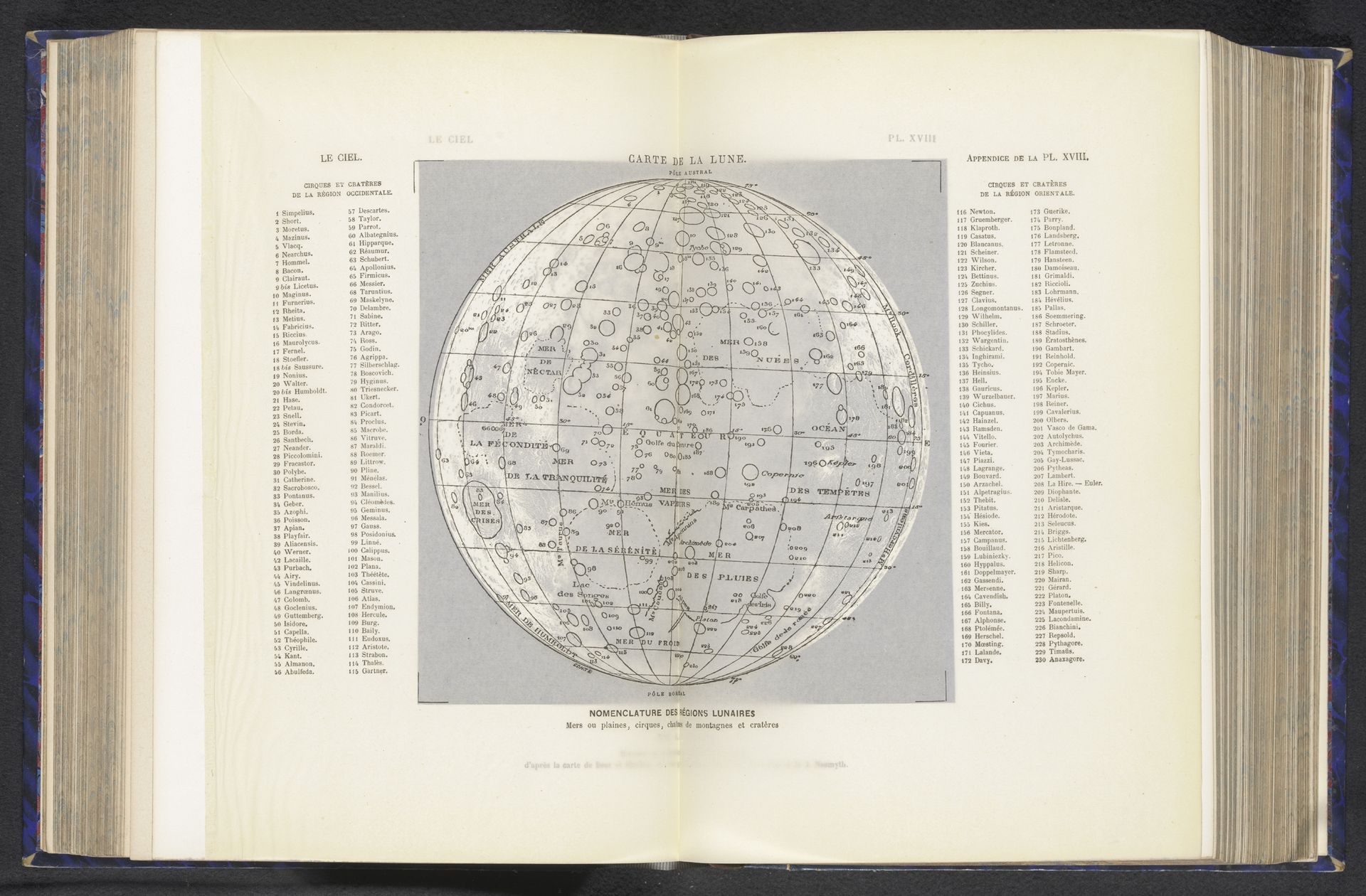
Editor: This is an engraving titled "Le Ciel," created in 1877. It seems to be a page from a book, a very detailed map of the moon. What do you see in this piece, especially considering it's a print from the late 19th century? Curator: Considering this print was created in 1877, it's important to acknowledge how printmaking enabled dissemination of astronomical knowledge and shaped cultural perception. Let’s also acknowledge the materials at play here – the paper, the ink, the engraved plate. What does the *process* of creating this image reveal about the intersection of art, labor, and the pursuit of scientific accuracy? Editor: I hadn't really considered it in terms of labour. The process seems incredibly intricate! So many tiny details all needing to be individually marked. Curator: Exactly! The human hand plays a crucial role. Consider the social context – the rise of scientific societies and the increasing interest in astronomy among the middle class. Printmaking democratized knowledge. This print wouldn't be displayed as "high art" as a painting in a gallery; its use lay in domestic or academic engagement, bound inside books to be shared and read and perhaps emulated by scientists, researchers, and amateur moon-gazers. Do you think the intent to facilitate scientific learning had some kind of influence in printmaking and engraving becoming art practices? Editor: That's a very interesting point. The purpose informs the medium. Curator: Precisely. Looking at this image from a materialist perspective, we uncover a layered story of knowledge production, labor, and cultural consumption. Editor: I see the artwork differently now! Thank you. Curator: My pleasure. Considering the materials, techniques, and socio-economic context enriches our understanding and highlights printmaking role in both art and science of this period.