c. 1756
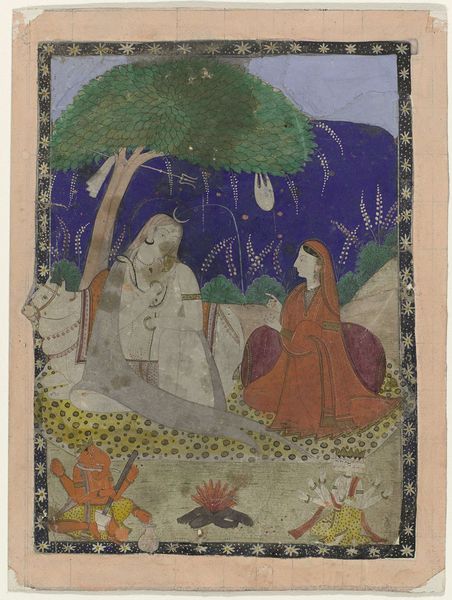
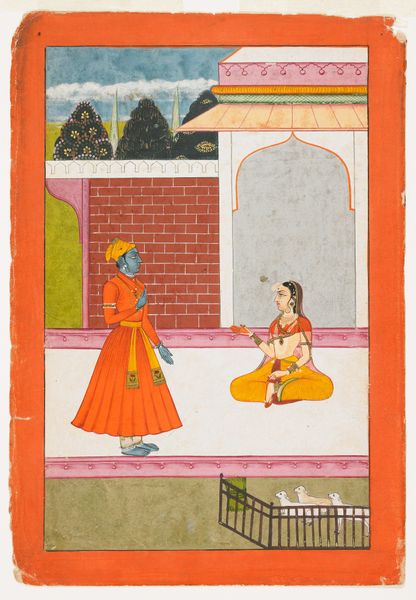
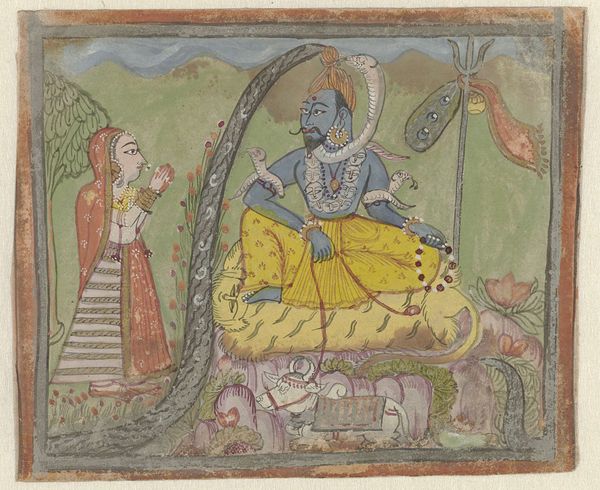
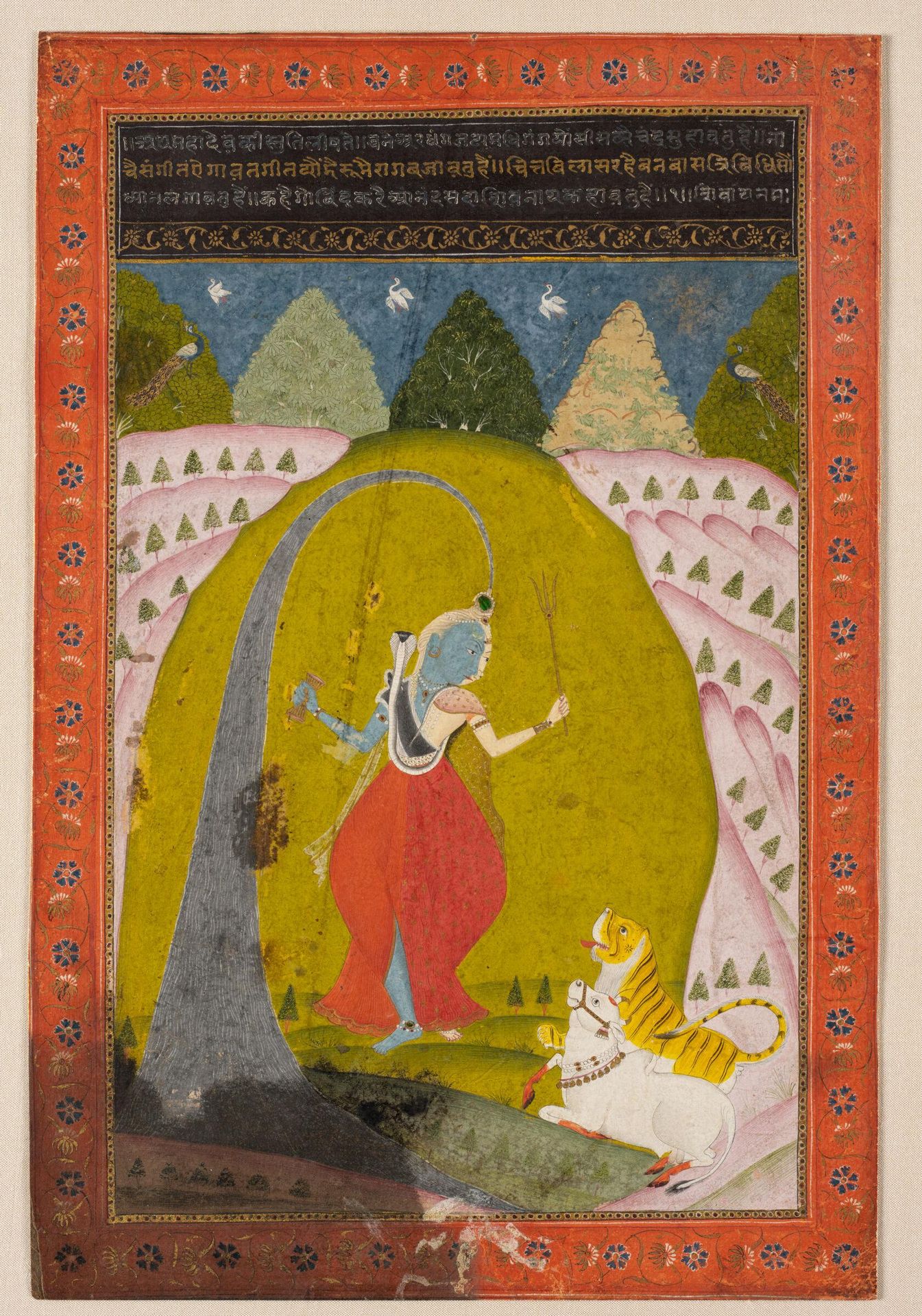
Shiva's Half-Body Form (Shiva Ardhanareshvara) (painting, recto), from a Ragamala (Garland of Melodies) Series
Attributed to Jai Kisan of Malpura
@attributedtojaikisanofmalpura
Harvard Art Museums
Harvard Art MuseumsListen to curator's interpretation
Curatorial notes
Curator: This painting, Shiva’s Half-Body Form, attributed to Jai Kisan of Malpura, is part of a Ragamala series. I am immediately struck by the vibrant use of color, particularly the contrast between Shiva's blue skin and the red garment. Editor: What a fascinating depiction of Ardhanarishvara, the composite male-female form of Shiva and Parvati! The fusion of masculine and feminine energies here transcends simple androgyny. I find myself considering how this image challenges the patriarchal norms embedded in Indian art history. Curator: Absolutely. It's also interesting to note the tiger and the bull, both vehicles of different deities, coexisting peacefully. It's a potent symbol of harmony and balance. This speaks to the inclusivity of the divine, doesn't it? Editor: Indeed. The symbolism is incredibly rich. The imagery acts as a mnemonic device, rooting the viewer in a specific cultural and emotional landscape. I am captivated by the enduring power of these symbols and their capacity to evolve and adapt across generations. Curator: Agreed. I find myself pondering its relevance to contemporary conversations around gender fluidity and non-binary identities. Editor: And for me, this image underscores the human need to visualize and understand complex spiritual concepts through enduring symbols.