c. 1850
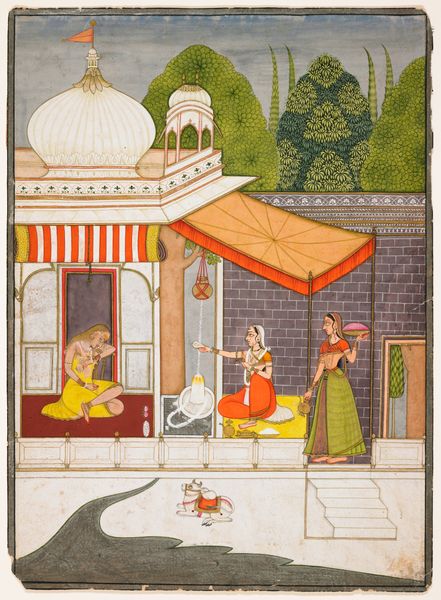
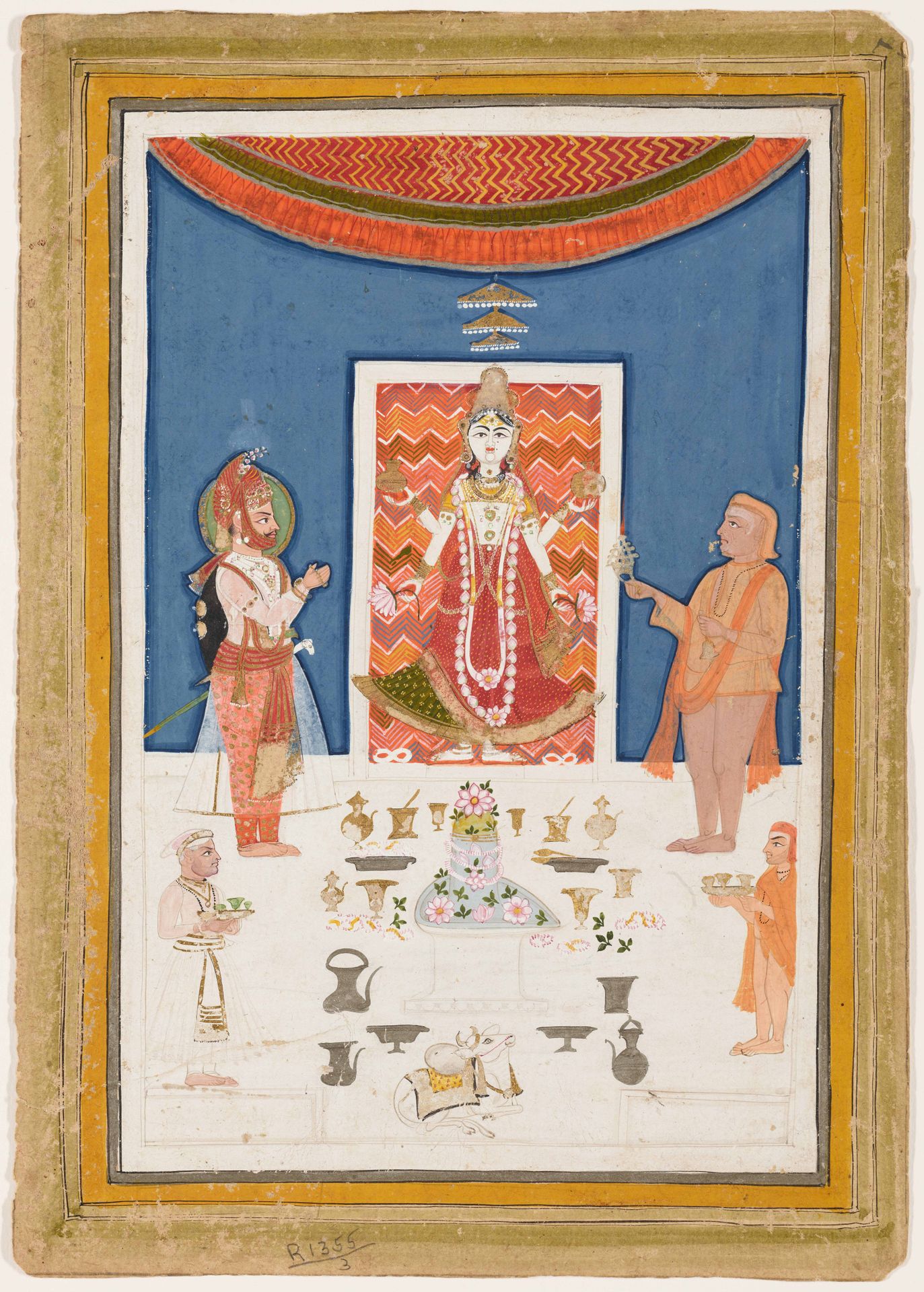
A Maharana of Mewar Worshipping an Icon


Listen to curator's interpretation
Curatorial notes
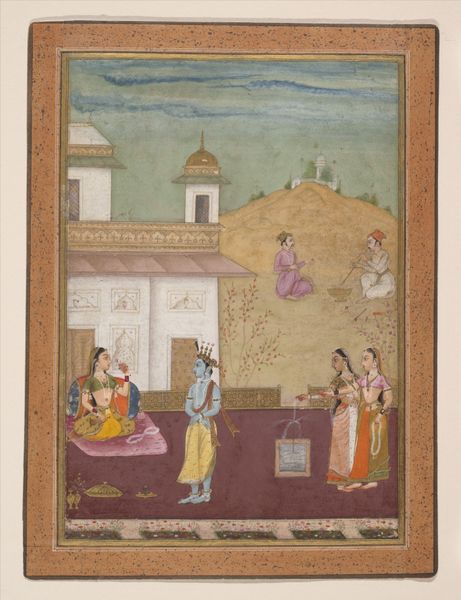
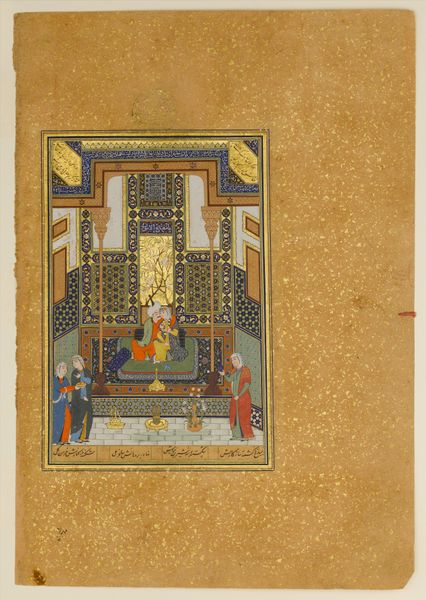
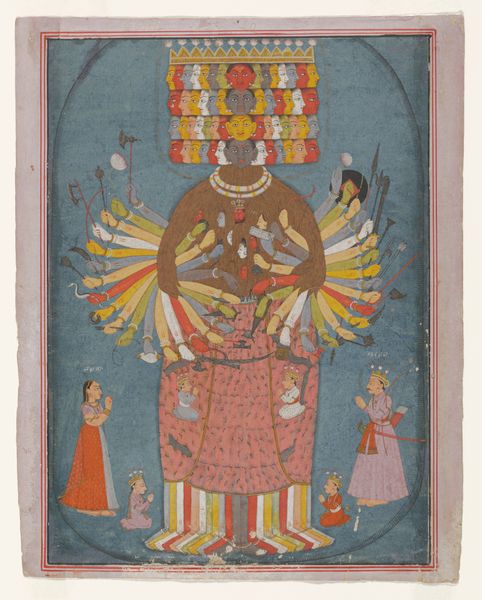
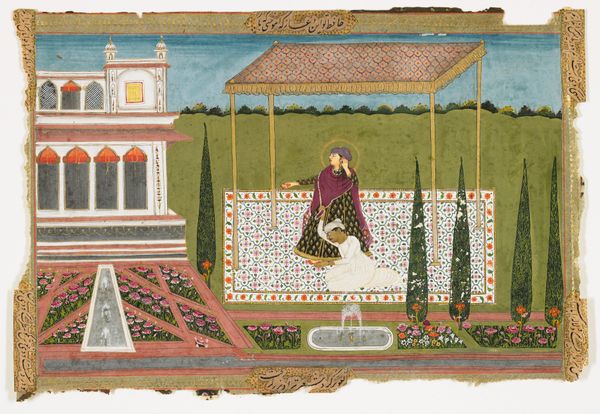
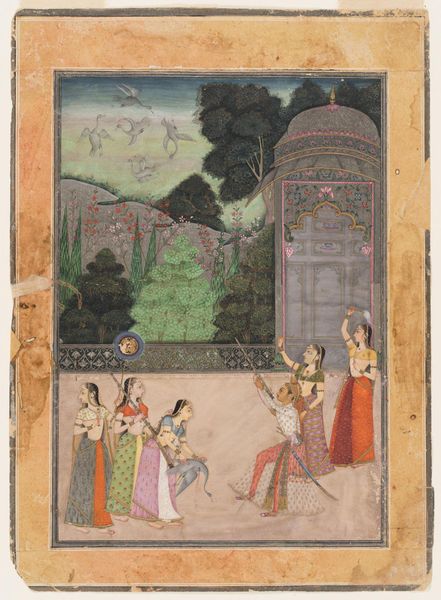
Editor: Here we have "A Maharana of Mewar Worshipping an Icon," a watercolor painting from around 1850. I'm struck by how meticulously rendered every little object is. What symbols do you notice here, and what do they suggest about the painting's cultural memory? Curator: The most prominent symbol, of course, is the icon itself – likely an image of a Hindu goddess, possibly Durga or Lakshmi, given the offerings placed before it. Notice how the Maharana, the ruler, isn’t merely observing but actively participating in the worship. This communicates the ruler’s devotion, legitimizing his power through a connection with the divine. Editor: That makes sense. And what about the array of objects laid out as offerings? They seem carefully chosen. Curator: Precisely. The flowers, incense, vessels – each represents an offering to please the deity. This act of worship is not simply personal; it’s a public demonstration of piety and a connection to cultural tradition. The objects act as visual cues, triggering a memory of rituals passed down through generations. How does the deity's specific placement, framed within what seems to be an architectural niche, influence your perception of her importance? Editor: I hadn't considered the niche as part of the symbolism. It elevates her, quite literally putting her on a higher plane. It's like framing her as the focal point of this entire worldview. I wonder what kind of message that sends to viewers. Curator: Exactly. This elevation reinforces the interconnectedness of the divine and the earthly realms. Through this devotion and symbolic vocabulary, the ruler aligns himself with a timeless spiritual order, subtly cementing his authority. Editor: I see now that the symbols are so intertwined with political power in this painting. That gives the image new significance! Curator: Indeed. And understanding the meaning behind each element gives us deeper insight into not just the artist’s intent, but the cultural values being upheld.