About this artwork
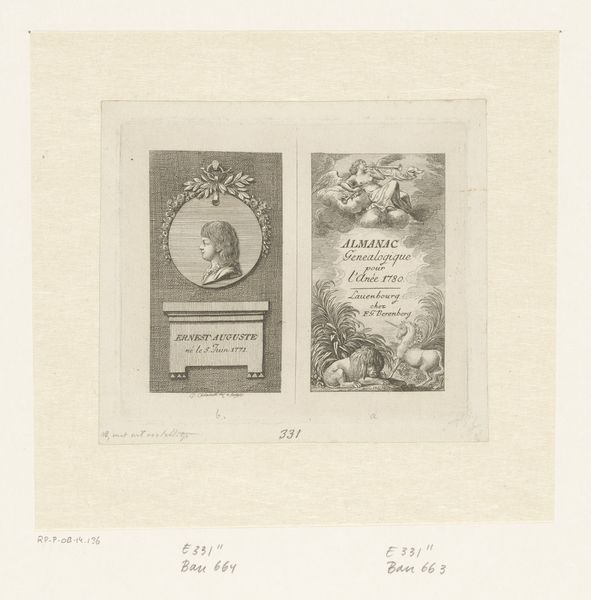
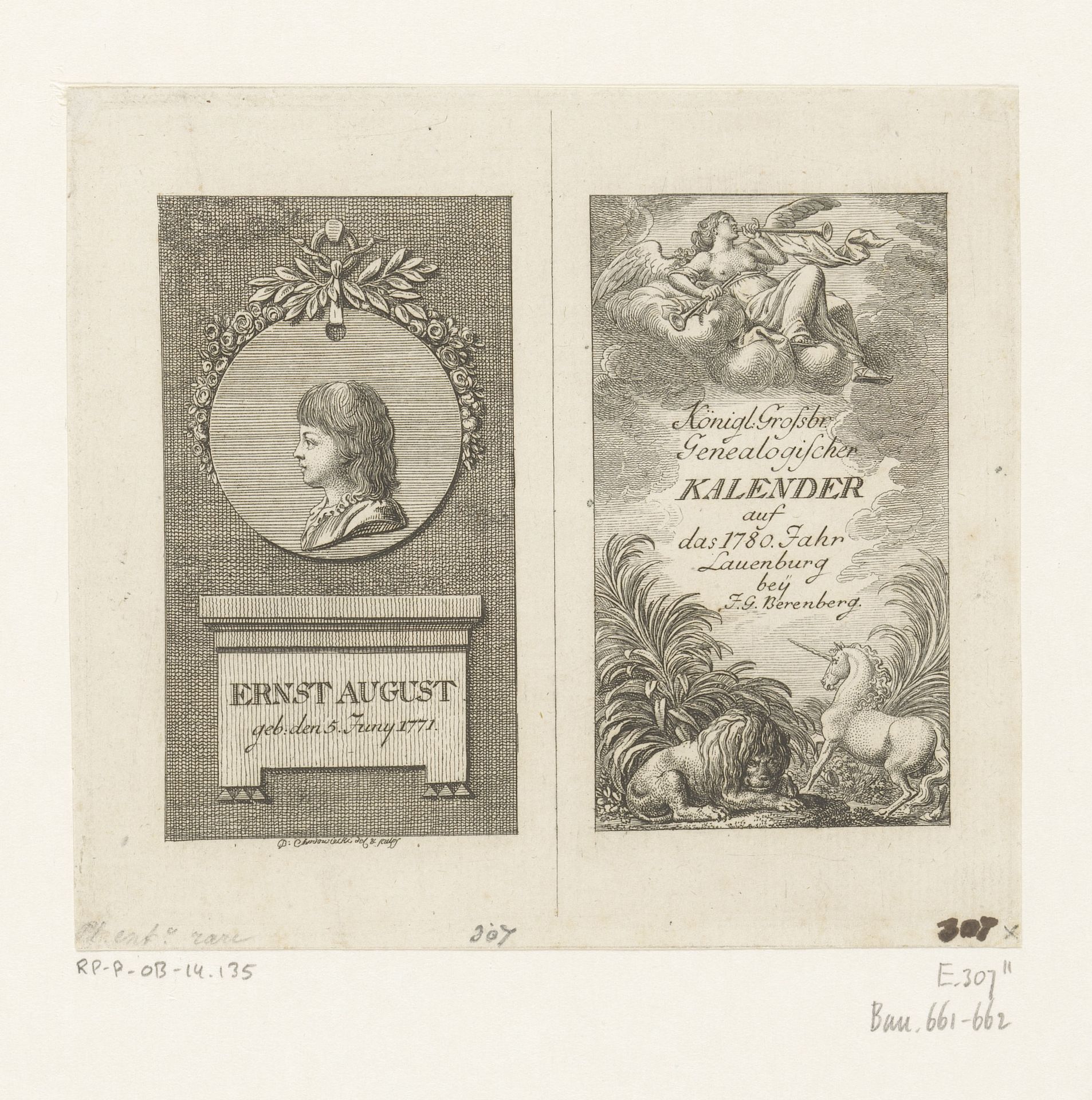
Editor: Here we have Daniel Nikolaus Chodowiecki's "Portret van Ernst August van Hannover en Fama met een eenhoorn en een leeuw," an etching and engraving from 1779. The portrait's formality contrasts with the fantastical elements—a unicorn and a lion! What do you see in this print? Curator: I see a work deeply embedded in the visual language of power and privilege, but also trying to negotiate new forms of legitimacy. The inclusion of the unicorn and lion isn’t merely decorative; they're symbolic actors in the drama of monarchy. Consider how the piece uses both realistic portraiture and allegorical figures. Why do you think the artist chose to combine these modes? Editor: Perhaps to blend the real and the ideal? To suggest young Ernst August embodies those mythical qualities? Curator: Exactly. But consider this further: the very act of creating and circulating such imagery reinforces a particular societal hierarchy. These weren't simply portraits; they were carefully constructed narratives meant to shape public perception and affirm social order. What message is sent by portraying Ernst August alongside Fama and these powerful animals? What does it mean that it was meant for a calendar? Editor: It sounds like this image served a very specific purpose, beyond just being a portrait. It’s fascinating to consider its role in upholding social structures and propagating certain ideals. Curator: Precisely. It makes you wonder how art throughout history has served to maintain the status quo. The study of art and its history isn't only to understand beauty, but the systems in which it operates. Editor: Definitely a different perspective to the artworks! It's helpful to have these kind of things highlighted.
Portret van Ernst August van Hannover en Fama met een eenhoorn en een leeuw
1779

Daniel Nikolaus Chodowiecki
1726 - 1801Location
RijksmuseumArtwork details
- Dimensions
- height 117 mm, width 130 mm
- Location
- Rijksmuseum
- Copyright
- Rijks Museum: Open Domain
Comments
Share your thoughts
About this artwork
Editor: Here we have Daniel Nikolaus Chodowiecki's "Portret van Ernst August van Hannover en Fama met een eenhoorn en een leeuw," an etching and engraving from 1779. The portrait's formality contrasts with the fantastical elements—a unicorn and a lion! What do you see in this print? Curator: I see a work deeply embedded in the visual language of power and privilege, but also trying to negotiate new forms of legitimacy. The inclusion of the unicorn and lion isn’t merely decorative; they're symbolic actors in the drama of monarchy. Consider how the piece uses both realistic portraiture and allegorical figures. Why do you think the artist chose to combine these modes? Editor: Perhaps to blend the real and the ideal? To suggest young Ernst August embodies those mythical qualities? Curator: Exactly. But consider this further: the very act of creating and circulating such imagery reinforces a particular societal hierarchy. These weren't simply portraits; they were carefully constructed narratives meant to shape public perception and affirm social order. What message is sent by portraying Ernst August alongside Fama and these powerful animals? What does it mean that it was meant for a calendar? Editor: It sounds like this image served a very specific purpose, beyond just being a portrait. It’s fascinating to consider its role in upholding social structures and propagating certain ideals. Curator: Precisely. It makes you wonder how art throughout history has served to maintain the status quo. The study of art and its history isn't only to understand beauty, but the systems in which it operates. Editor: Definitely a different perspective to the artworks! It's helpful to have these kind of things highlighted.
Comments
Share your thoughts