About this artwork
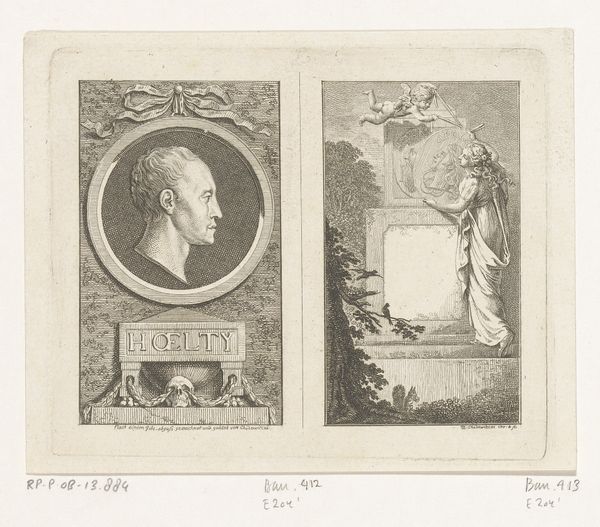
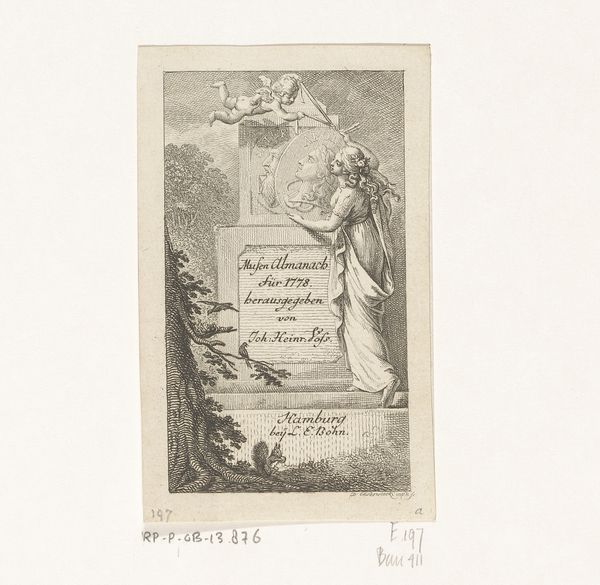
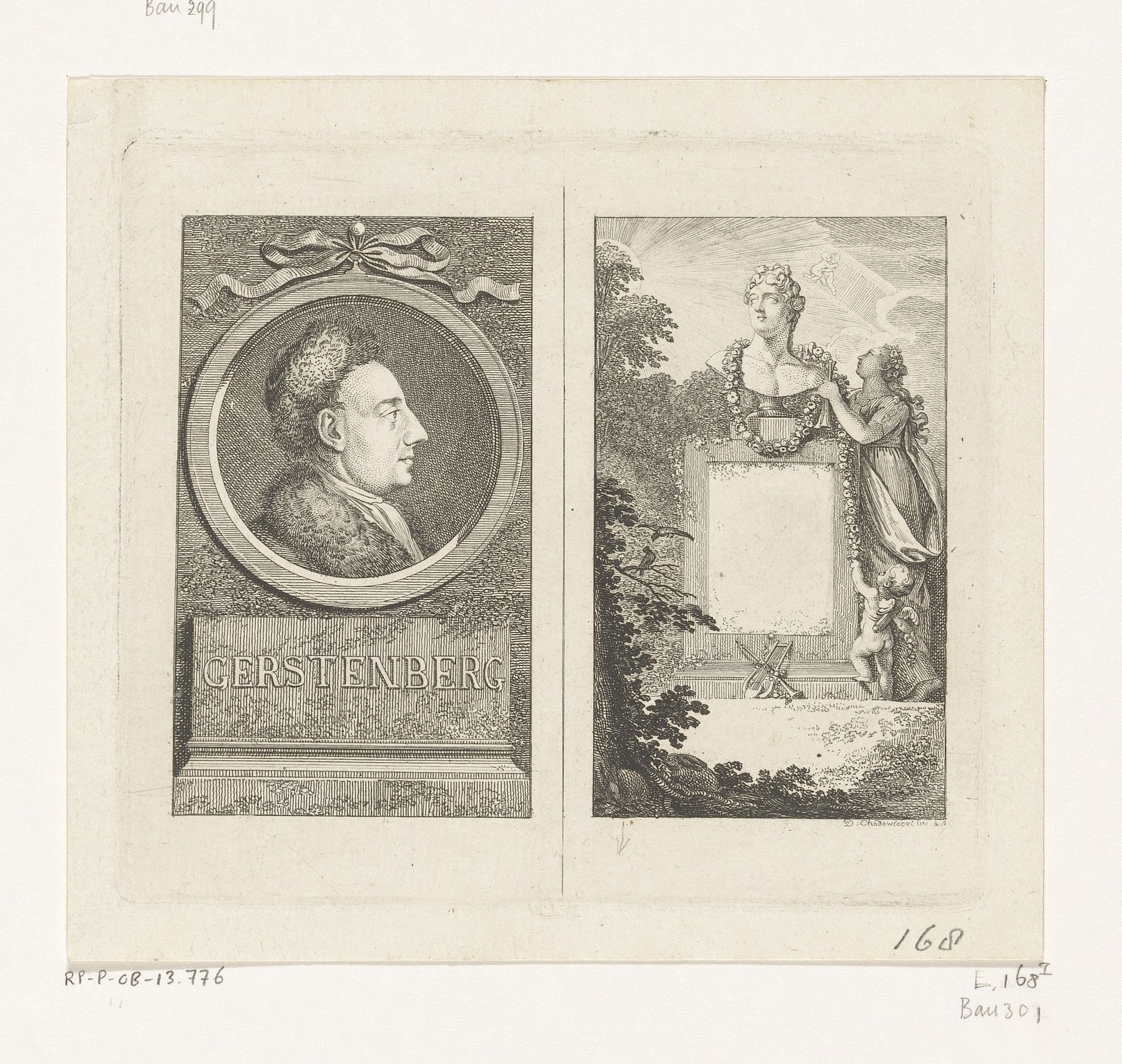
Daniel Nikolaus Chodowiecki created this print of Heinrich Wilhelm von Gerstenberg in the late 18th century. It’s an etching, a process that democratized image production, moving away from unique artworks and toward repeatable images. Here, Gerstenberg, a writer and critic, is memorialized in profile, an artistic convention that evokes classical antiquity. On the right, a bust of Apollo, the god of the arts, is wreathed by a muse, and a blank tablet awaits inscription. This combination of images tells us about Gerstenberg’s cultural aspirations. Produced in Germany at a time when the Enlightenment was taking hold, this artwork reflects a society where the arts and sciences were increasingly valued as tools for social progress. Art historians might consult period publications and archival records to understand how Gerstenberg’s contemporaries perceived his role in shaping German culture. Ultimately, this print underscores art’s function as a conveyor of cultural values and social ideals.
Portret van Heinrich Wilhelm von Gerstenberg en een buste van Apollo 1776

Daniel Nikolaus Chodowiecki
1726 - 1801Location
RijksmuseumArtwork details
- Dimensions
- height 110 mm, width 125 mm
- Location
- Rijksmuseum
- Copyright
- Rijks Museum: Open Domain
Comments
No comments
About this artwork
Daniel Nikolaus Chodowiecki created this print of Heinrich Wilhelm von Gerstenberg in the late 18th century. It’s an etching, a process that democratized image production, moving away from unique artworks and toward repeatable images. Here, Gerstenberg, a writer and critic, is memorialized in profile, an artistic convention that evokes classical antiquity. On the right, a bust of Apollo, the god of the arts, is wreathed by a muse, and a blank tablet awaits inscription. This combination of images tells us about Gerstenberg’s cultural aspirations. Produced in Germany at a time when the Enlightenment was taking hold, this artwork reflects a society where the arts and sciences were increasingly valued as tools for social progress. Art historians might consult period publications and archival records to understand how Gerstenberg’s contemporaries perceived his role in shaping German culture. Ultimately, this print underscores art’s function as a conveyor of cultural values and social ideals.
Comments
No comments