drawing, graphite, charcoal
#
portrait
#
drawing
#
pencil sketch
#
figuration
#
romanticism
#
graphite
#
sketchbook drawing
#
pencil work
#
charcoal
#
history-painting
Dimensions: height 345 mm, width 260 mm
Copyright: Rijks Museum: Open Domain
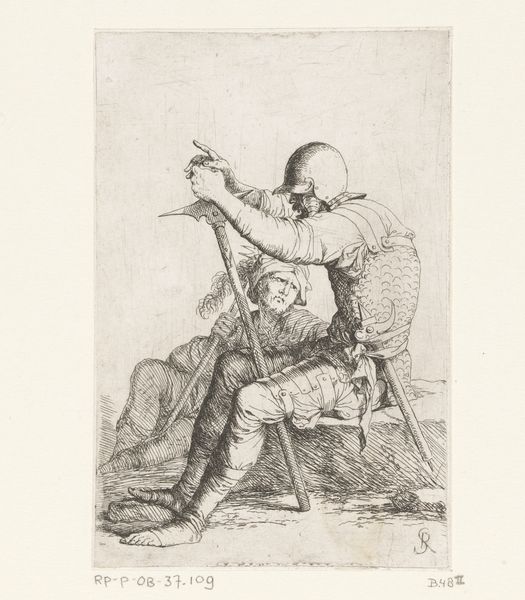
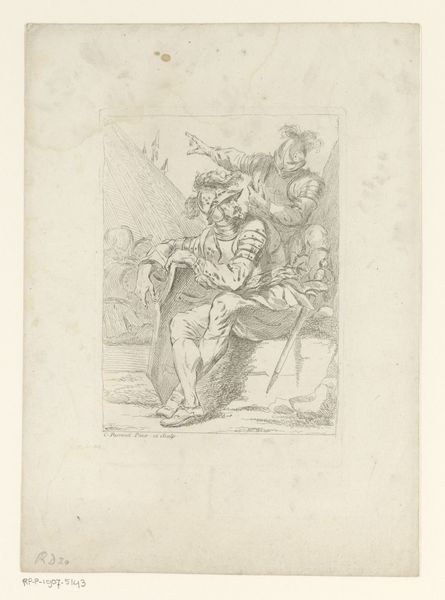
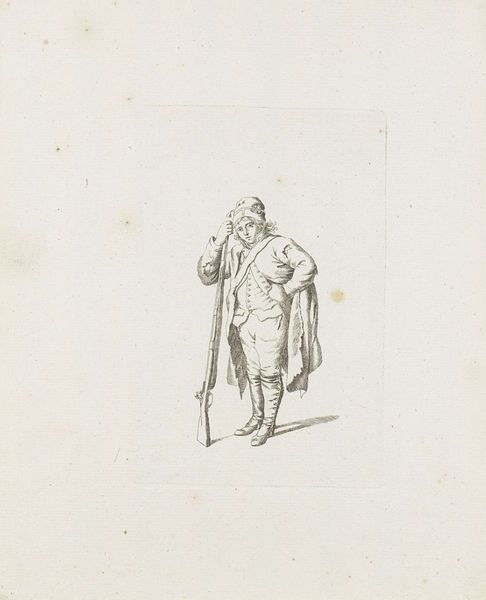
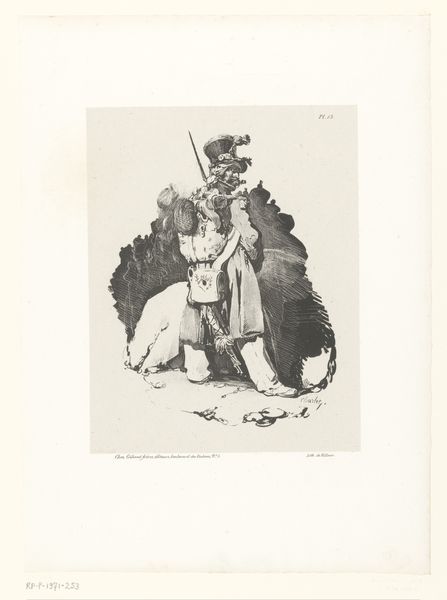
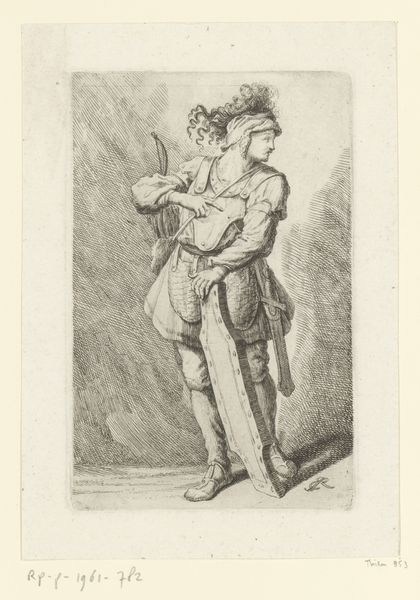
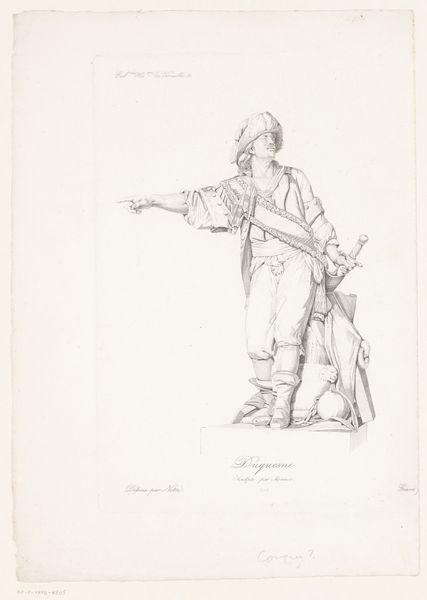
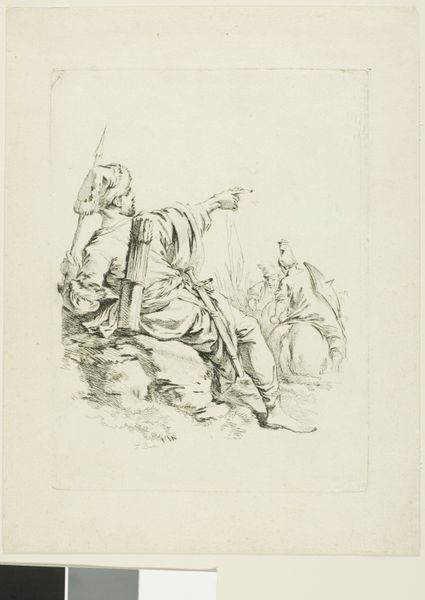
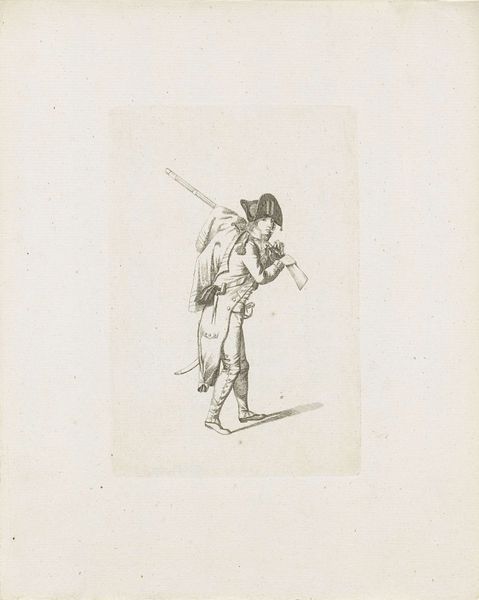
Nicolas Toussaint Charlet created this etching, “Swiss Soldier on a Stone,” using metal plates and acid. The etched lines define the soldier’s figure, and the rock he sits on. Notice how the varying depth and density of the lines create a sense of light and shadow, volume and texture. The dense cross-hatching suggests the rough surface of the stone, in contrast to the smoother areas defining the soldier’s uniform. Etching demands careful planning, control, and skill. The artist carefully coats a metal plate with a waxy, acid-resistant substance, then draws through this coating with a needle. The plate is then immersed in acid, which bites into the metal where the coating has been removed. The longer the plate remains in the acid, the deeper the lines become. This painstaking process emphasizes the manual labor involved in producing each print. Charlet's choice of etching as a medium resonates with the subject matter, elevating it to a form of skilled craft. This challenges the conventional hierarchy between fine art and more ‘humble’ practices.
Comments
No comments
Be the first to comment and join the conversation on the ultimate creative platform.
 Collect
 React
React Comment
More like this