About this artwork
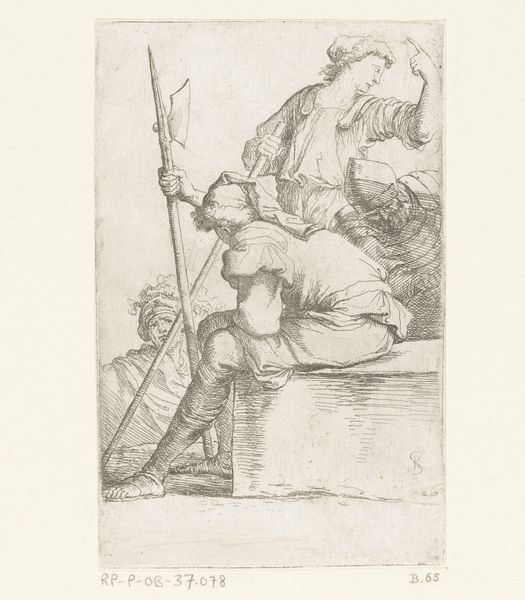
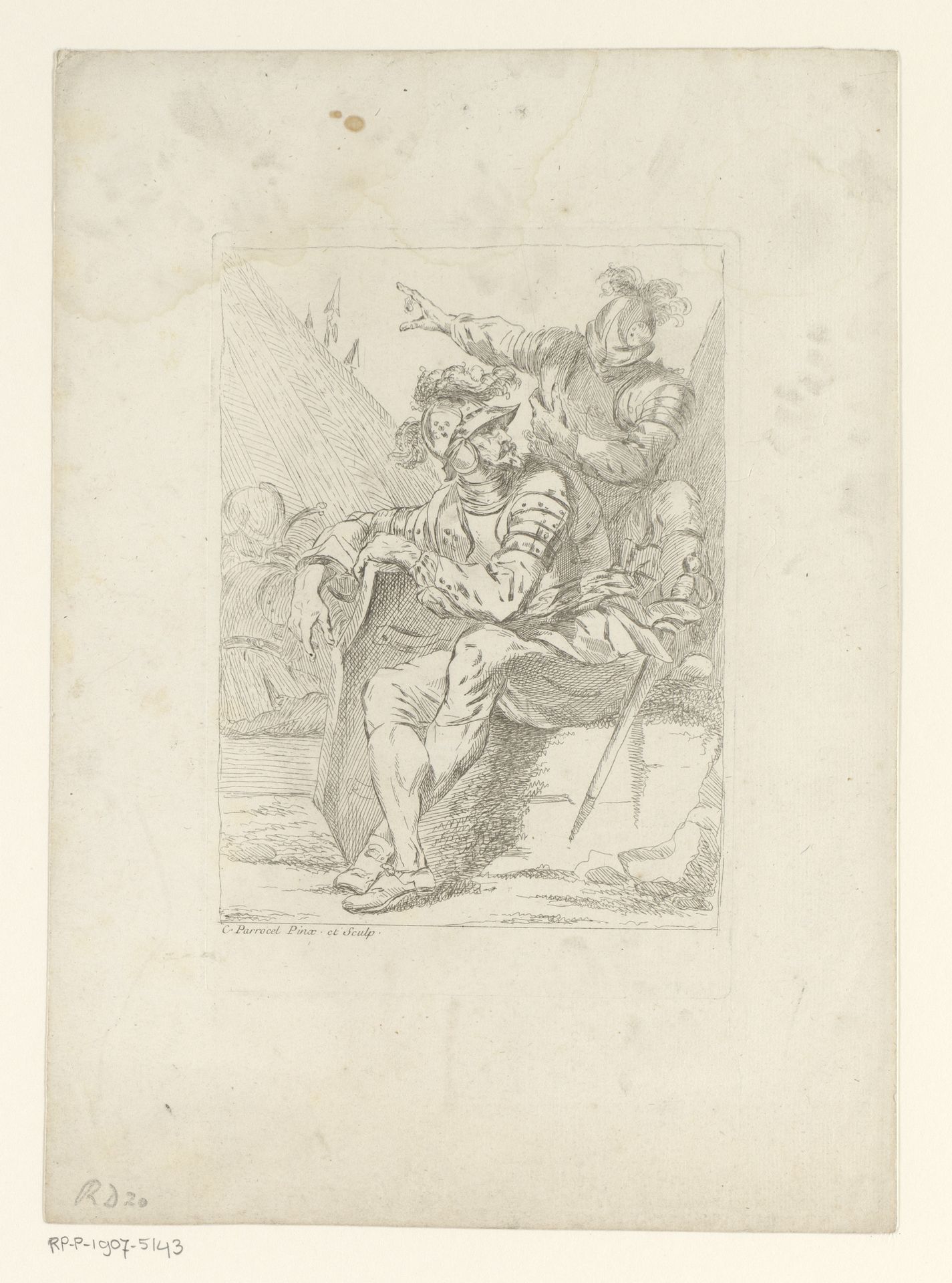
Editor: So, this drawing is entitled "Soldaat wekt legerleider" by Charles Parrocel, and it dates to sometime between 1698 and 1752. It’s a pencil drawing, currently held at the Rijksmuseum. I’m struck by the contrast; the seated figure is so still, almost slumped, while the figure behind him is full of energy, pointing outwards. How do you interpret this work? Curator: Well, it evokes a compelling study of duty versus weariness. The image, though seemingly simple, touches upon enduring cultural anxieties about leadership and the cost of conflict. Look at the leader's posture – slumped, almost melancholic. Doesn’t that speak to the psychological burden of command, perhaps echoing anxieties around Baroque Era warfare? Editor: It does. It makes me wonder what they are looking at, with one pointing like that. Curator: Precisely! Consider the act of awakening: it's not merely physical, is it? Think about the symbolic weight. Is the soldier waking him to battle, or also to a renewed sense of purpose? The landscape fades in the background, so the focus is on the men as archetypes. Editor: I never thought of it as an archetypal representation. I see what you mean; it elevates the figures from just a genre painting into something…more. Curator: Indeed! Parrocel is playing with these potent symbols - alertness, weariness, duty. Ask yourself, what cultural narratives are being subtly reinforced, or perhaps challenged? How did the weight of warfare influence Baroque values, which is echoed in the cultural memory carried forward by symbols over time? Editor: It is a powerful reminder that images are carriers of narratives, constantly shaping our understanding of history. The interplay of personal burden and duty resonates even now, regardless of period. Thanks for your insights!

Artwork details
- Medium
- drawing, pencil
- Dimensions
- height 188 mm, width 131 mm
- Location
- Rijksmuseum
- Copyright
- Rijks Museum: Open Domain
Tags
Comments
Share your thoughts
About this artwork
Editor: So, this drawing is entitled "Soldaat wekt legerleider" by Charles Parrocel, and it dates to sometime between 1698 and 1752. It’s a pencil drawing, currently held at the Rijksmuseum. I’m struck by the contrast; the seated figure is so still, almost slumped, while the figure behind him is full of energy, pointing outwards. How do you interpret this work? Curator: Well, it evokes a compelling study of duty versus weariness. The image, though seemingly simple, touches upon enduring cultural anxieties about leadership and the cost of conflict. Look at the leader's posture – slumped, almost melancholic. Doesn’t that speak to the psychological burden of command, perhaps echoing anxieties around Baroque Era warfare? Editor: It does. It makes me wonder what they are looking at, with one pointing like that. Curator: Precisely! Consider the act of awakening: it's not merely physical, is it? Think about the symbolic weight. Is the soldier waking him to battle, or also to a renewed sense of purpose? The landscape fades in the background, so the focus is on the men as archetypes. Editor: I never thought of it as an archetypal representation. I see what you mean; it elevates the figures from just a genre painting into something…more. Curator: Indeed! Parrocel is playing with these potent symbols - alertness, weariness, duty. Ask yourself, what cultural narratives are being subtly reinforced, or perhaps challenged? How did the weight of warfare influence Baroque values, which is echoed in the cultural memory carried forward by symbols over time? Editor: It is a powerful reminder that images are carriers of narratives, constantly shaping our understanding of history. The interplay of personal burden and duty resonates even now, regardless of period. Thanks for your insights!
Comments
Share your thoughts