c. 3th century
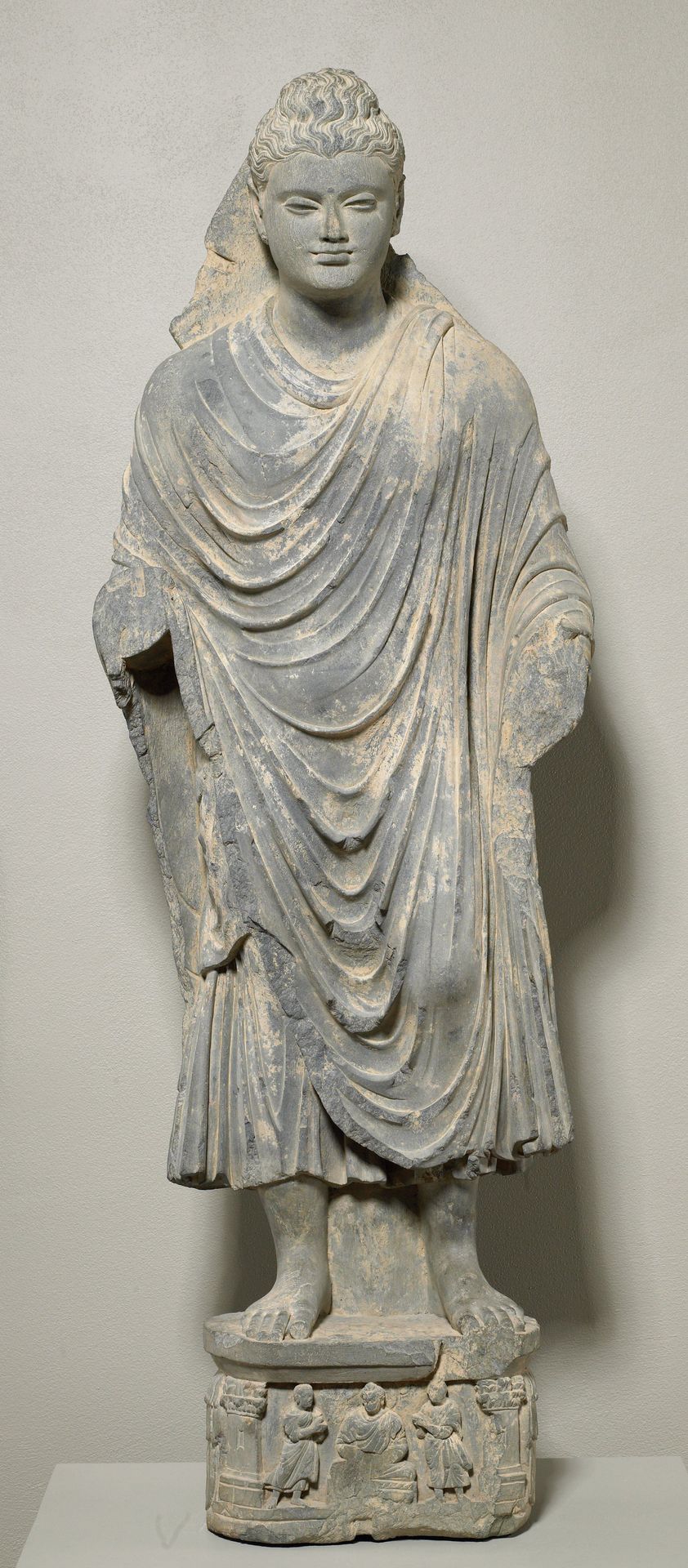
Buddha


Listen to curator's interpretation
Curatorial notes
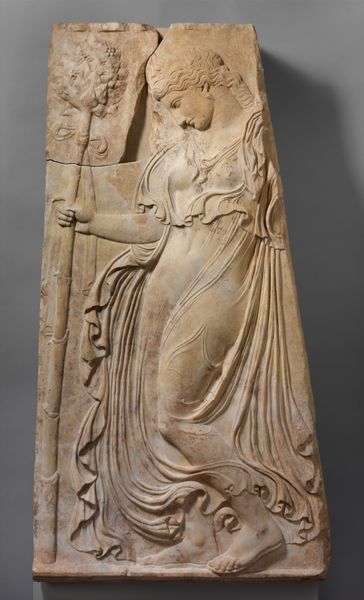
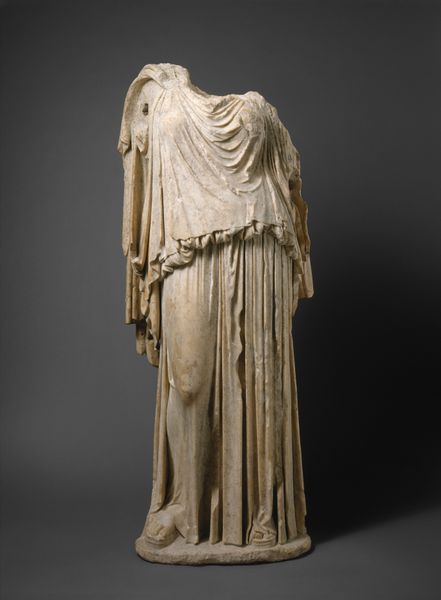
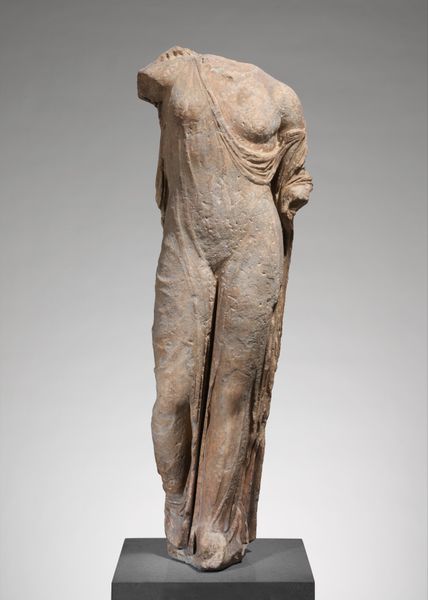
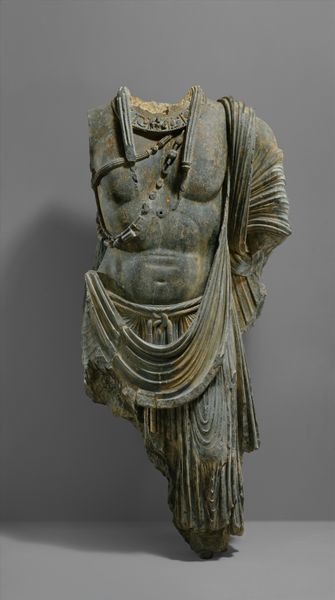
This sculpture of the Buddha was carved from gray schist in the ancient region of Gandhara, likely between the 1st and 3rd centuries CE. Gandhara, located in present-day Pakistan and Afghanistan, was a melting pot of cultures, bridging the East and West through trade and cultural exchange. This cultural fusion is evident in the sculpture itself. The Buddha's serene expression and monastic robe reflect Indian artistic traditions, while the realistic drapery and idealized human form show the influence of classical Greek sculpture, which arrived with Alexander the Great. The institutional histories of both Buddhism and Greek art are present here. This syncretism reflects the way that religious and philosophical ideas moved along the silk road. To truly understand this Buddha, we delve into archaeological reports, religious texts, and studies of trade routes. Each tells a story of how cultural exchange shapes artistic production.