About this artwork
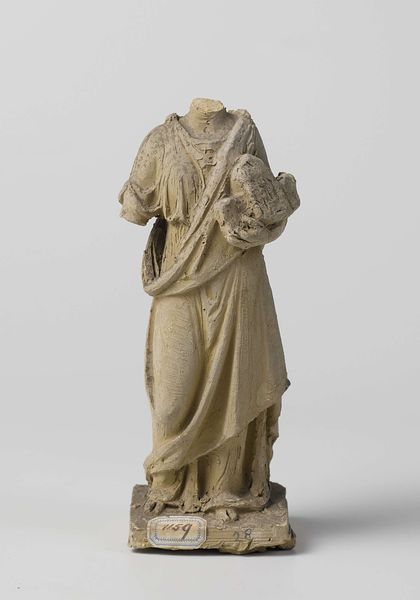
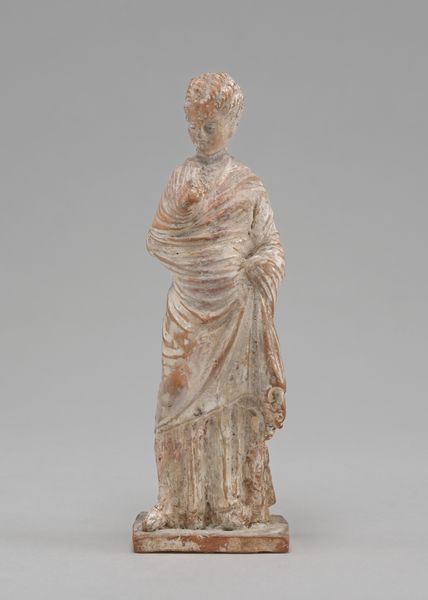
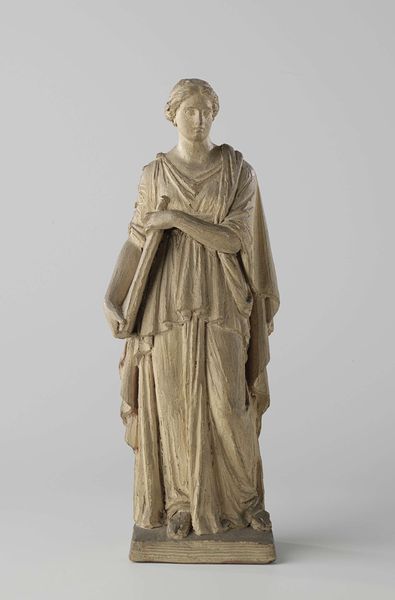
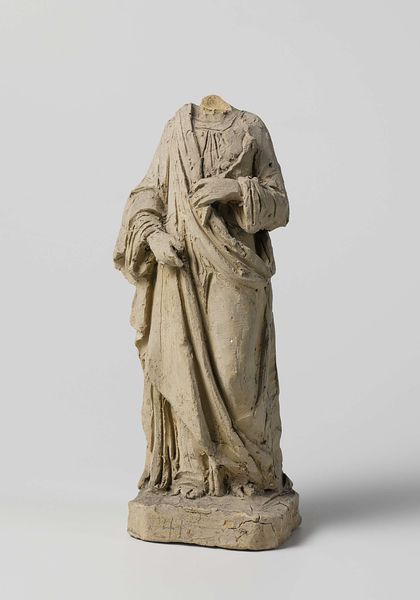
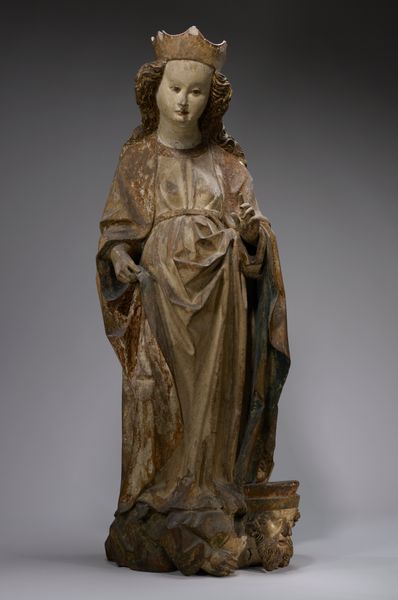
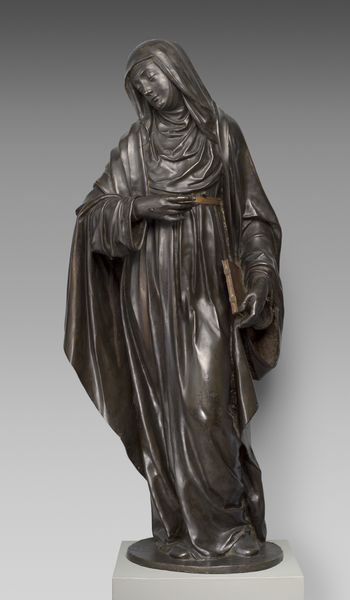
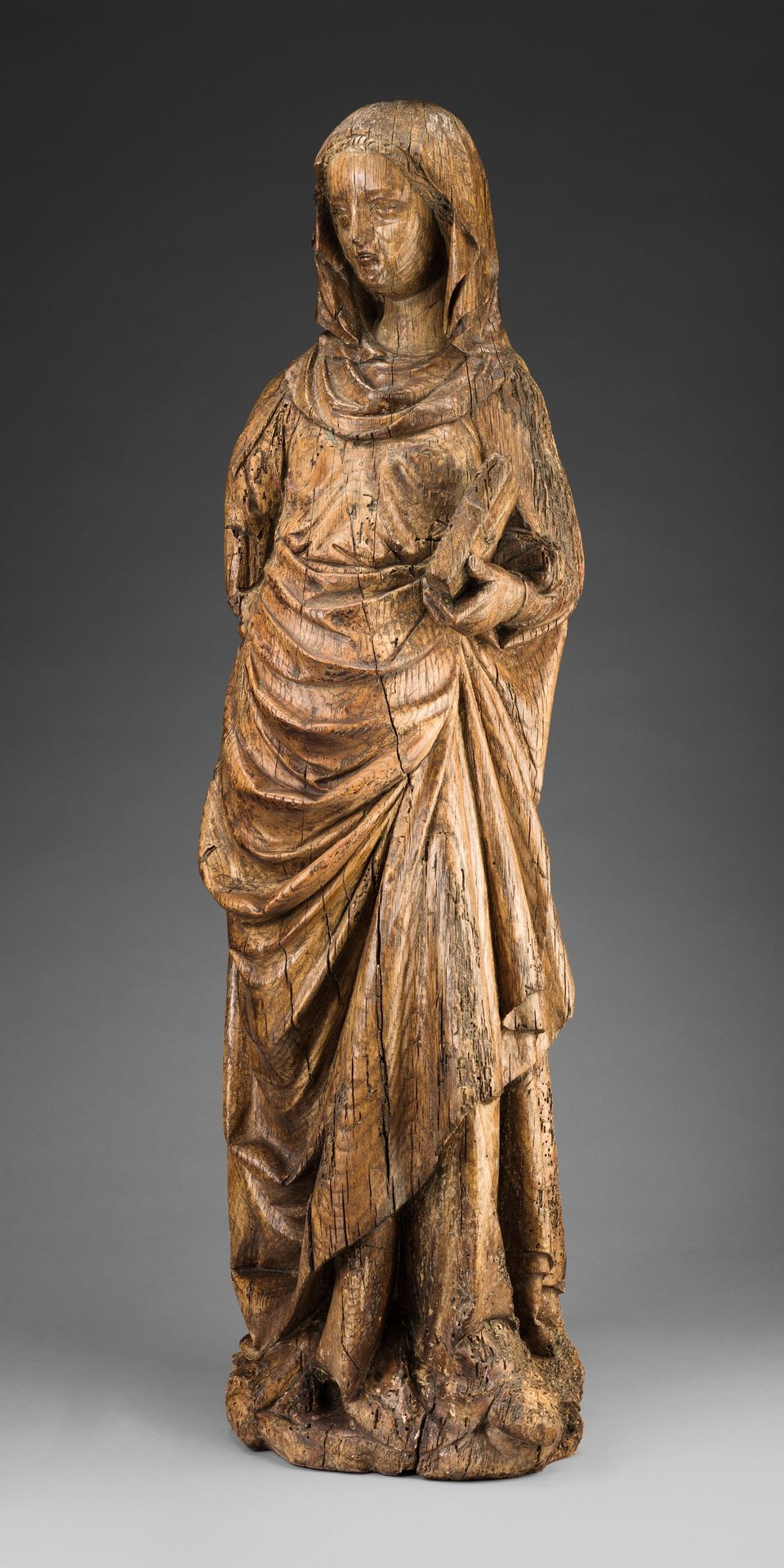
This is an oak sculpture of the Virgin of the Annunciation, made by an anonymous artist. The sculpture likely served a public role within a church, where it would have been positioned with an angel in a visual representation of the Annunciation. During the medieval period, the church was a central social institution. Art functioned as a tool for religious instruction. The artist's use of oak, a common material, reflects the period's artistic conventions and the ready availability of resources. The drapery around Mary signifies her purity. The book she holds alludes to her knowledge of scripture and willingness to accept God's will. Mary’s downcast gaze invites contemplation. Without knowing the specific location where the sculpture was housed it is difficult to ascertain how it would have been interpreted. Historical research into the traditions and beliefs of the region where it was originally housed might reveal unique insights into the intentions and influences that shaped this sculpture.
Virgin of the Annunciation
1275 - 1300


Artwork details
- Medium
- sculpture, wood
- Dimensions
- H. 85.1 cm (33 1/2 in.)
- Location
- The Art Institute of Chicago
- Copyright
- Public Domain
Tags
Comments
Share your thoughts
About this artwork
This is an oak sculpture of the Virgin of the Annunciation, made by an anonymous artist. The sculpture likely served a public role within a church, where it would have been positioned with an angel in a visual representation of the Annunciation. During the medieval period, the church was a central social institution. Art functioned as a tool for religious instruction. The artist's use of oak, a common material, reflects the period's artistic conventions and the ready availability of resources. The drapery around Mary signifies her purity. The book she holds alludes to her knowledge of scripture and willingness to accept God's will. Mary’s downcast gaze invites contemplation. Without knowing the specific location where the sculpture was housed it is difficult to ascertain how it would have been interpreted. Historical research into the traditions and beliefs of the region where it was originally housed might reveal unique insights into the intentions and influences that shaped this sculpture.
Comments
Share your thoughts