About this artwork
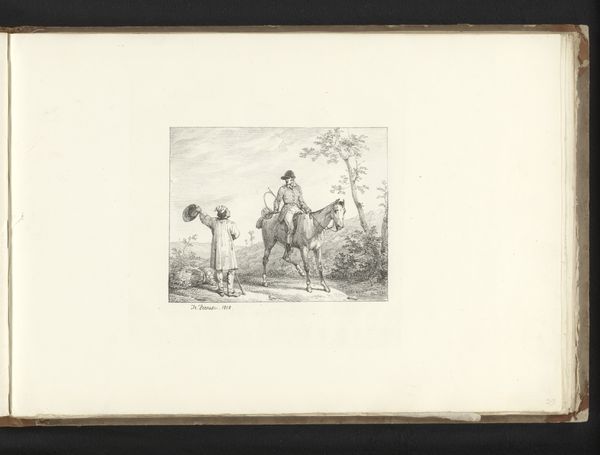
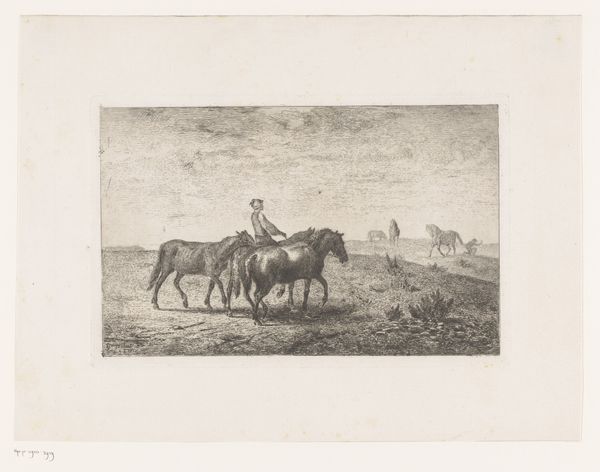
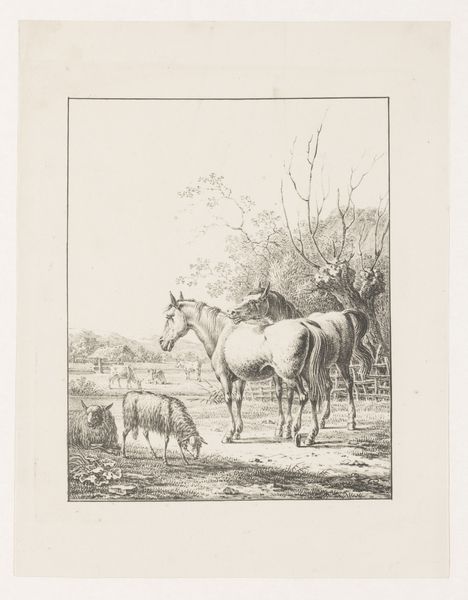
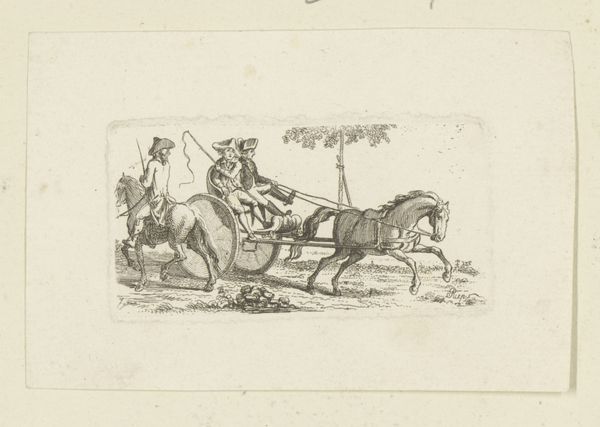
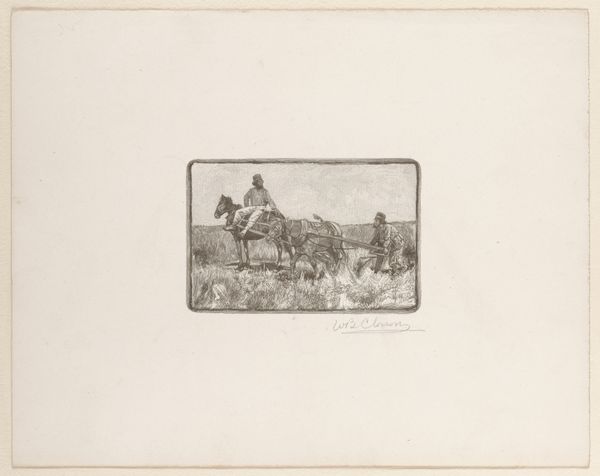
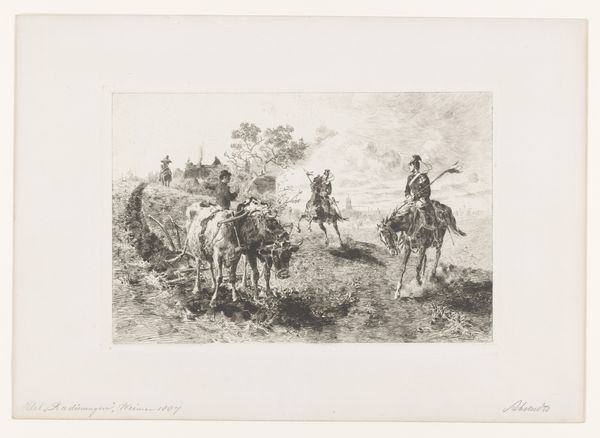
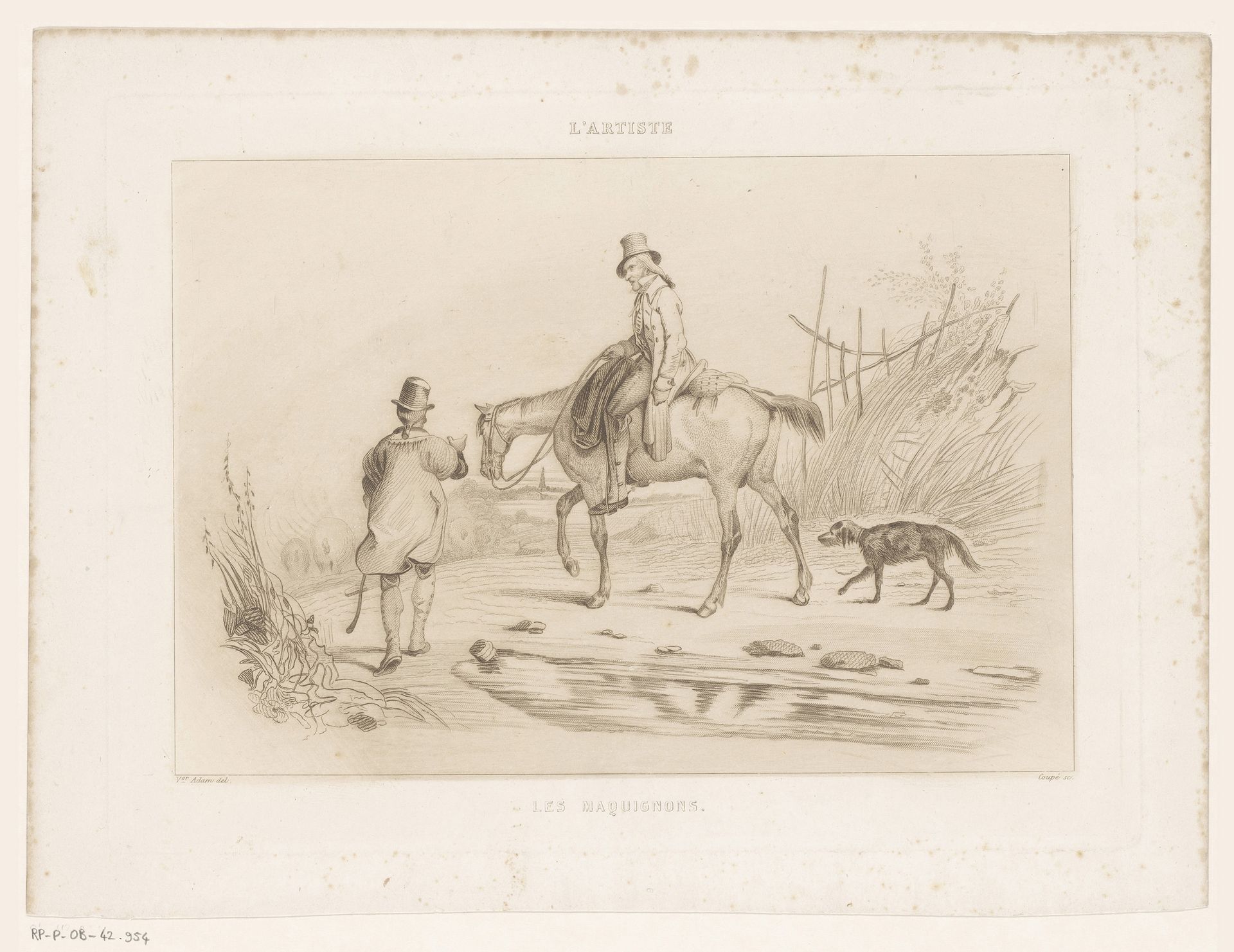
Antoine Jean Baptiste Coupé created this print, "Ruiter te paard en man met hond," around the early 19th century. The image employs a limited palette to depict a scene featuring a rider on horseback, a man, and a dog. The composition uses horizontal lines of the landscape, contrasted by vertical lines of the figures and vegetation to create a sense of depth and space. The arrangement of the figures suggests a narrative about social hierarchy and the relationship between humans and animals. The rider, elevated on the horse, dominates the scene. The standing man, positioned lower in the composition, may be read as being of lower status. The dog, set slightly apart, adds another layer to the social dynamic. Consider the artist's choice of lines and shading. These elements define the forms and textures within the print. The delicate lines and subtle tonal variations contribute to the overall mood of the artwork. It invites us to consider the stories and social contexts embedded within its visual structure.
Ruiter te paard en man met hond
1811 - 1846

Antoine Jean Baptiste Coupé
1784 - 1846Location
RijksmuseumArtwork details
- Medium
- drawing, pencil
- Dimensions
- height 198 mm, width 267 mm
- Location
- Rijksmuseum
- Copyright
- Rijks Museum: Open Domain
Tags
Comments
Share your thoughts
About this artwork
Antoine Jean Baptiste Coupé created this print, "Ruiter te paard en man met hond," around the early 19th century. The image employs a limited palette to depict a scene featuring a rider on horseback, a man, and a dog. The composition uses horizontal lines of the landscape, contrasted by vertical lines of the figures and vegetation to create a sense of depth and space. The arrangement of the figures suggests a narrative about social hierarchy and the relationship between humans and animals. The rider, elevated on the horse, dominates the scene. The standing man, positioned lower in the composition, may be read as being of lower status. The dog, set slightly apart, adds another layer to the social dynamic. Consider the artist's choice of lines and shading. These elements define the forms and textures within the print. The delicate lines and subtle tonal variations contribute to the overall mood of the artwork. It invites us to consider the stories and social contexts embedded within its visual structure.
Comments
Share your thoughts