About this artwork
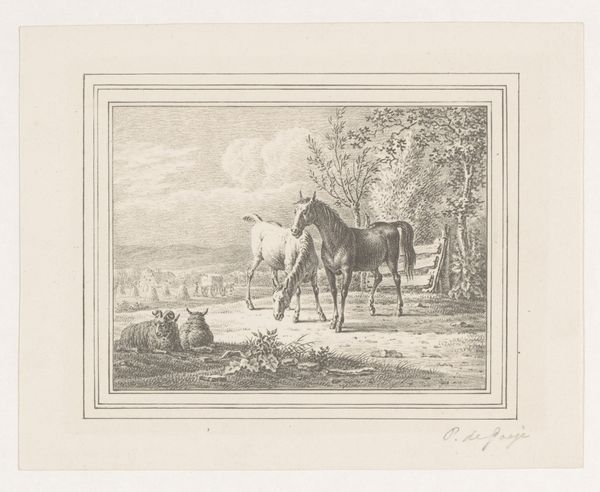
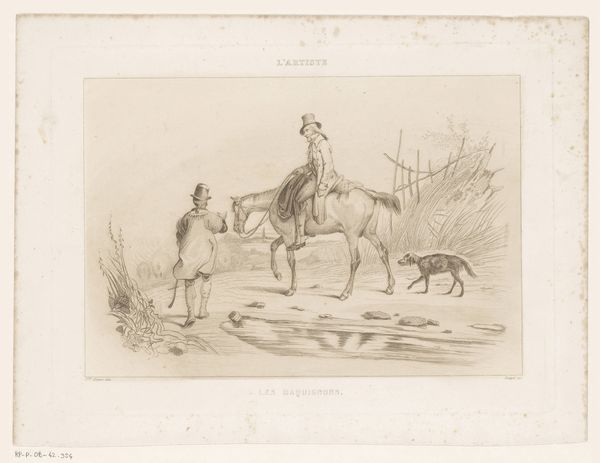
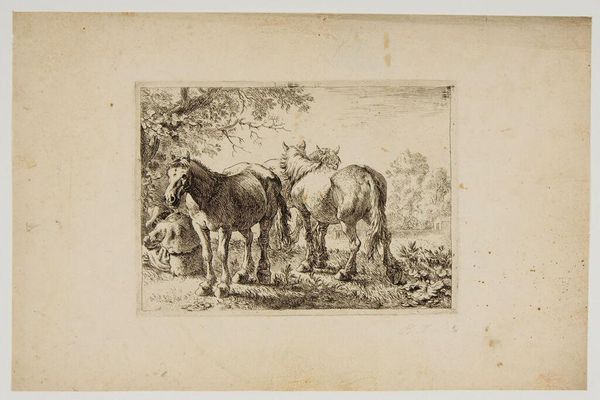
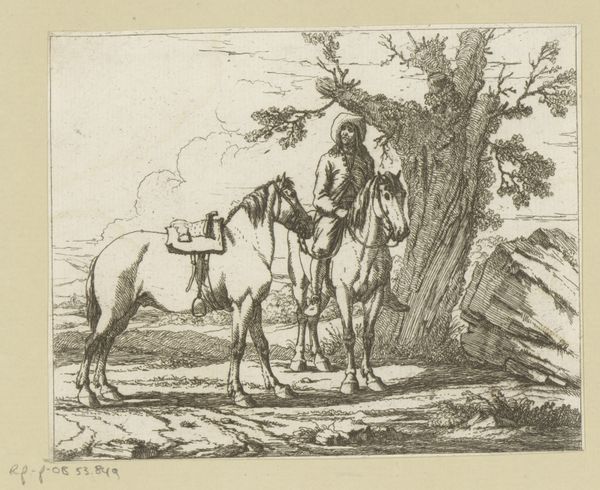
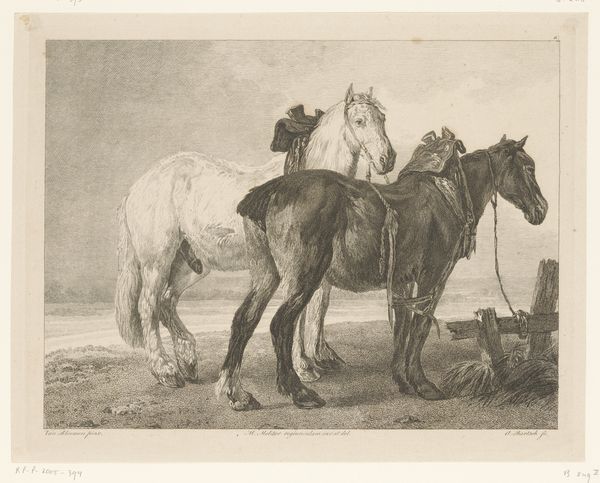
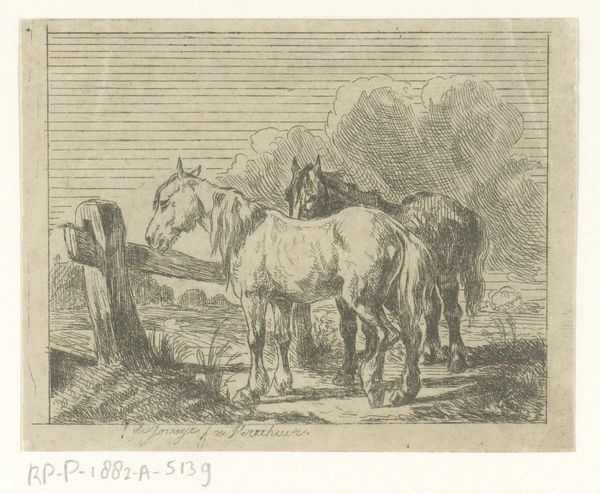
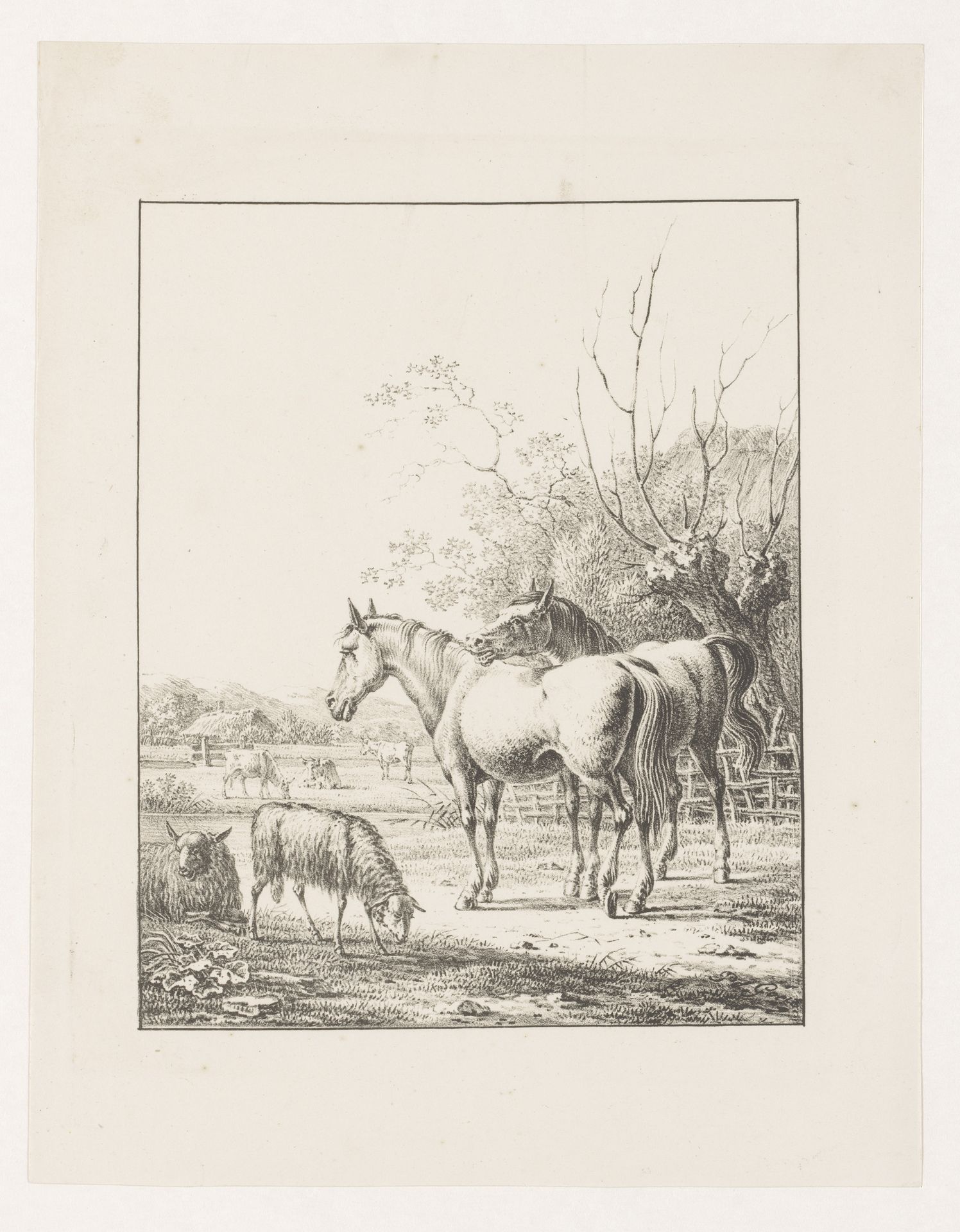
Pieter de Goeje’s ink drawing features two horses, sheep, and cows, reflecting a pastoral harmony and a vision of rural life. The animals, symbols of fertility and agrarian prosperity, are central to understanding the cultural values of the time. Notice the intertwined presence of horses, often seen throughout the history of art, as symbols of power and freedom. From the equestrian statues of Roman emperors to the dynamic steeds in Renaissance battle scenes, horses evoke a sense of vitality. Here, however, they appear subdued, integrated into the peaceful backdrop of the pasture. Consider the collective memory associated with these animals. Horses and sheep recur in art across different cultures, from ancient tapestries to modern photography, each time carrying layers of historical and cultural significance. This enduring presence speaks to our shared, perhaps subconscious, recognition of the natural world, and our complex relationship with it. In this seemingly quiet image, De Goeje touches on a deeply rooted sense of connection that transcends time.

Artwork details
- Medium
- drawing, pencil
- Dimensions
- height 300 mm, width 232 mm
- Copyright
- Rijks Museum: Open Domain
Tags
Comments
Share your thoughts
About this artwork
Pieter de Goeje’s ink drawing features two horses, sheep, and cows, reflecting a pastoral harmony and a vision of rural life. The animals, symbols of fertility and agrarian prosperity, are central to understanding the cultural values of the time. Notice the intertwined presence of horses, often seen throughout the history of art, as symbols of power and freedom. From the equestrian statues of Roman emperors to the dynamic steeds in Renaissance battle scenes, horses evoke a sense of vitality. Here, however, they appear subdued, integrated into the peaceful backdrop of the pasture. Consider the collective memory associated with these animals. Horses and sheep recur in art across different cultures, from ancient tapestries to modern photography, each time carrying layers of historical and cultural significance. This enduring presence speaks to our shared, perhaps subconscious, recognition of the natural world, and our complex relationship with it. In this seemingly quiet image, De Goeje touches on a deeply rooted sense of connection that transcends time.
Comments
Share your thoughts