1775 - 1840
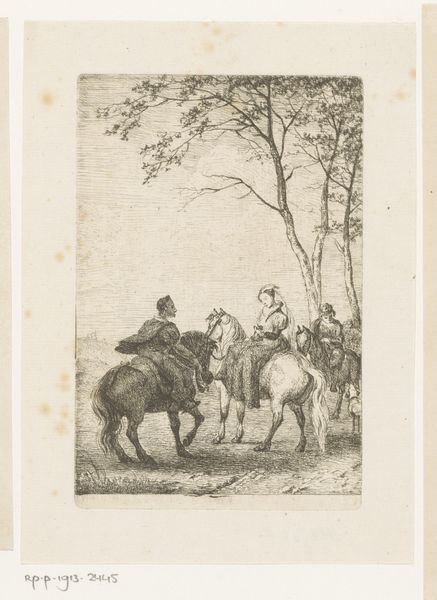
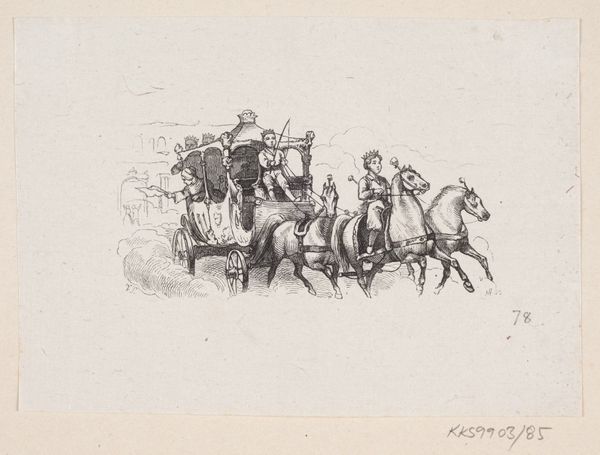
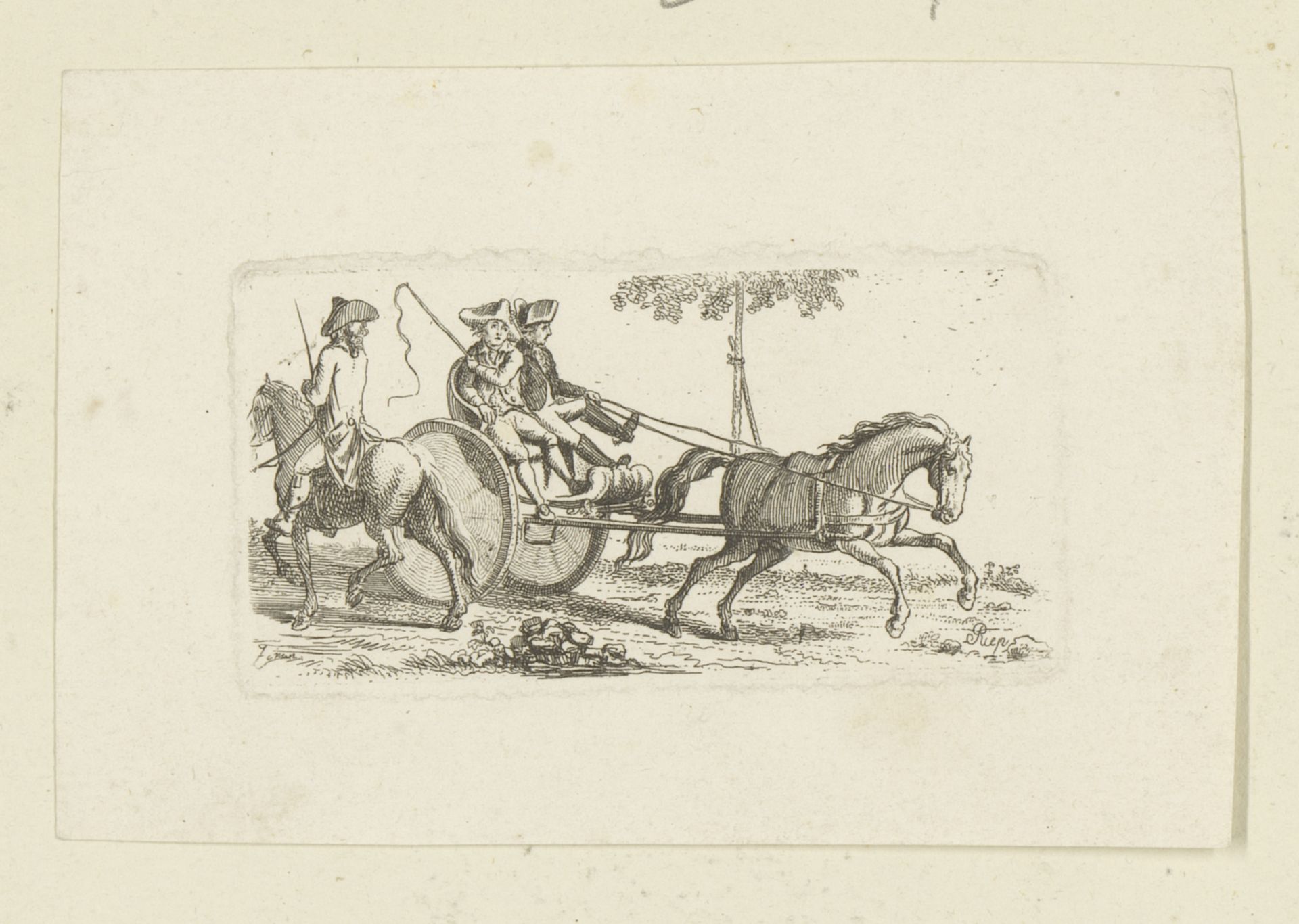
Rijtuig met twee mannen en ruiter passeren elkaar

Listen to curator's interpretation
Curatorial notes
Ernst Ludwig Riepenhausen made this print of a carriage passing a lone rider in the late 18th or early 19th century. The small etching offers a snapshot of the social hierarchy in Germany at the time. Here, the image's meaning is created through the depiction of class distinctions. On the one hand, we have the gentry in their fancy horse-drawn cart, dressed in finery. Their status is highlighted by the contrast with the lone rider, likely a commoner, on a less impressive steed. The setting itself, an open road, underscores the transit and mobility enjoyed by the privileged. The artist, working within a society defined by rigid social strata, subtly comments on the existing order. Delving into historical archives and social documents from the period would give us greater insight into the public role of art. How did images like this reflect, reinforce, or perhaps even challenge the norms of the time?