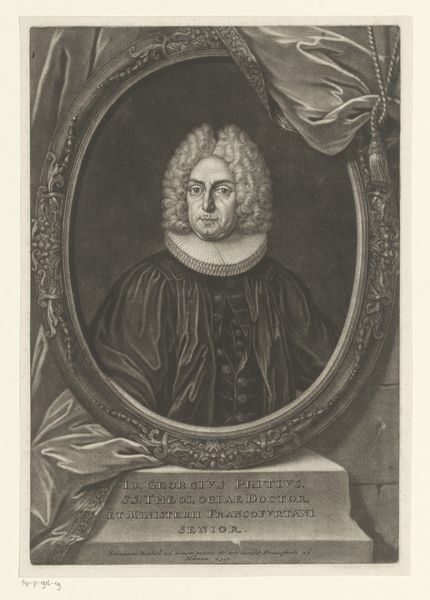
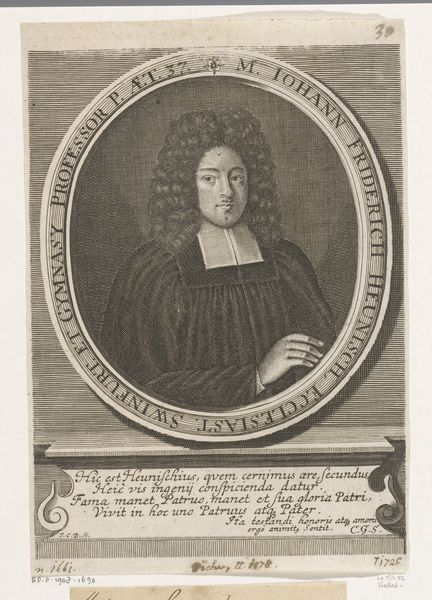
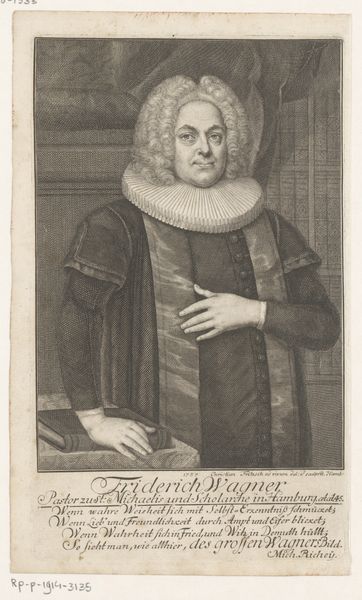
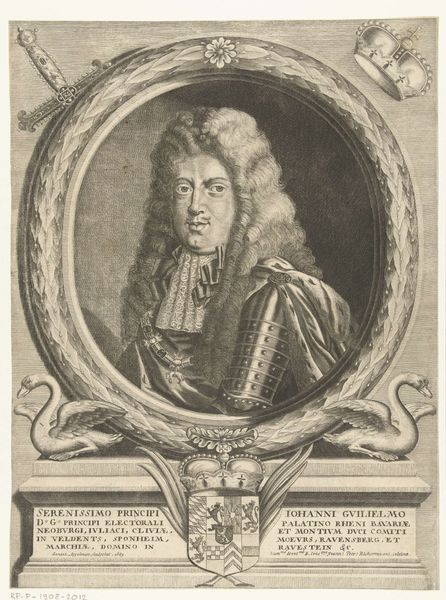
print, engraving
portrait
baroque
old engraving style
portrait reference
portrait drawing
engraving
Dimensions: height 247 mm, width 200 mm
Copyright: Rijks Museum: Open Domain
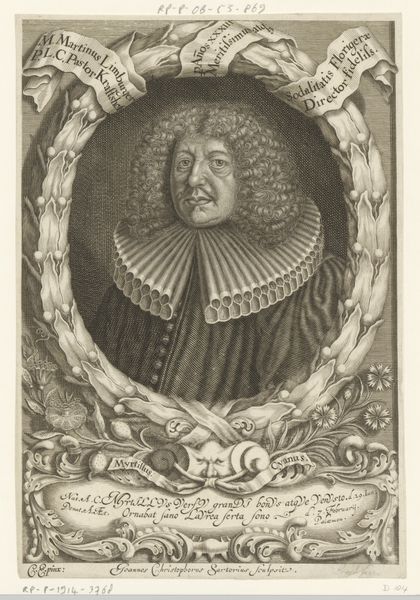
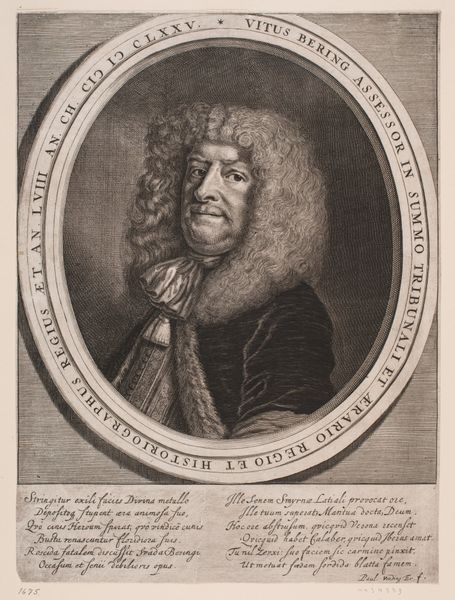
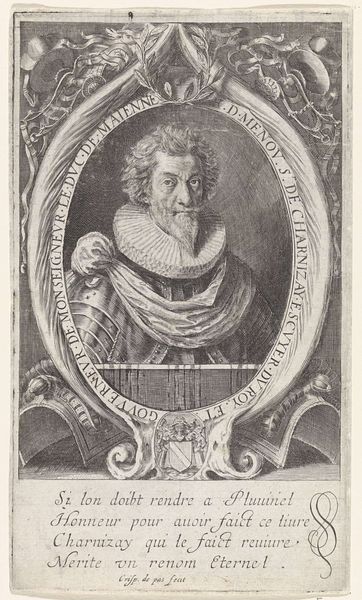
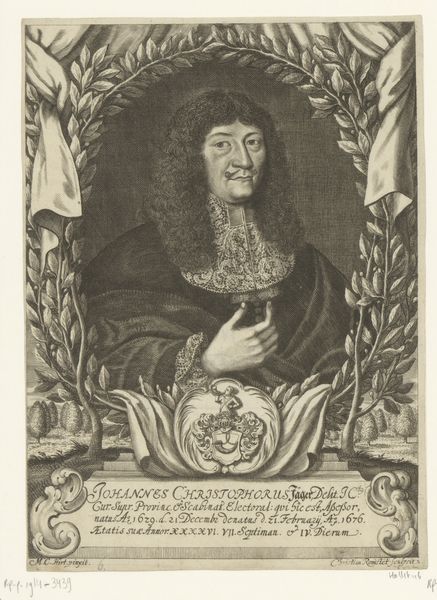
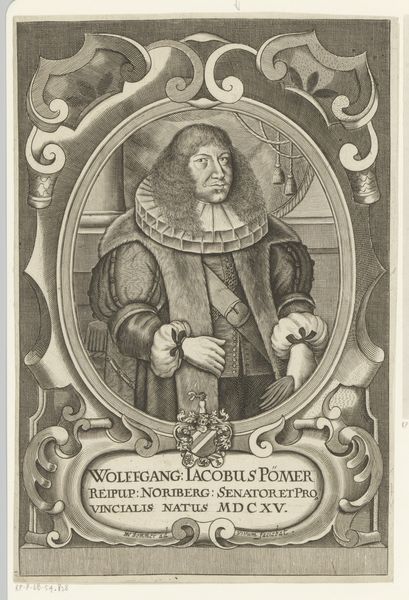
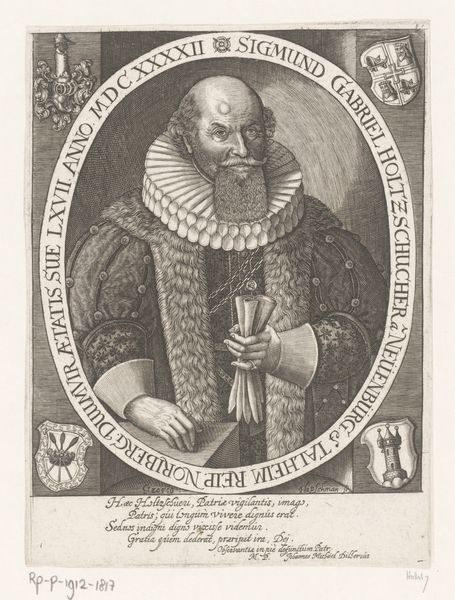
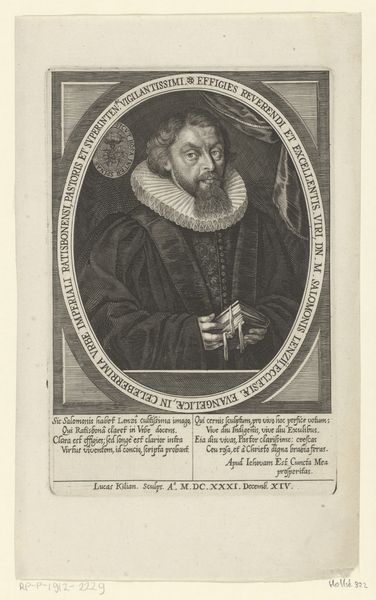
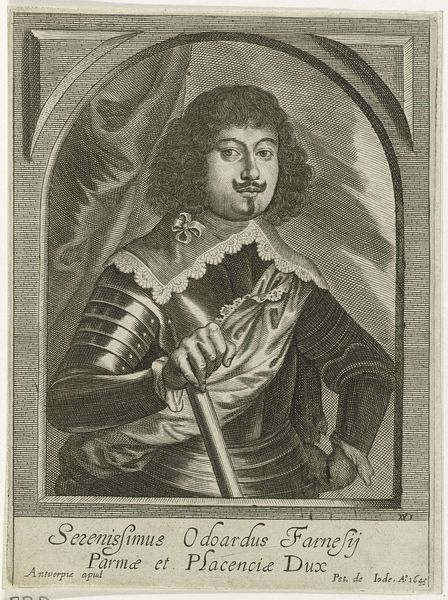
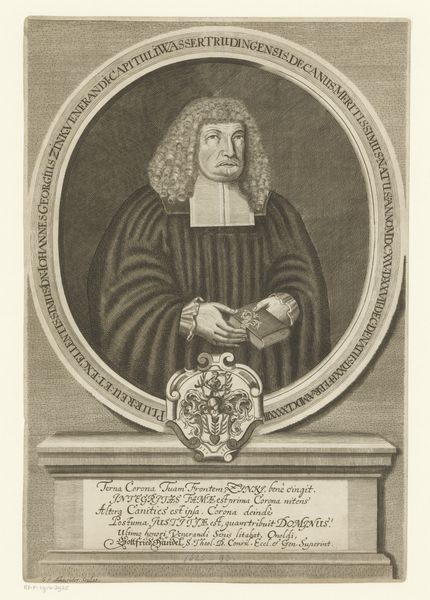
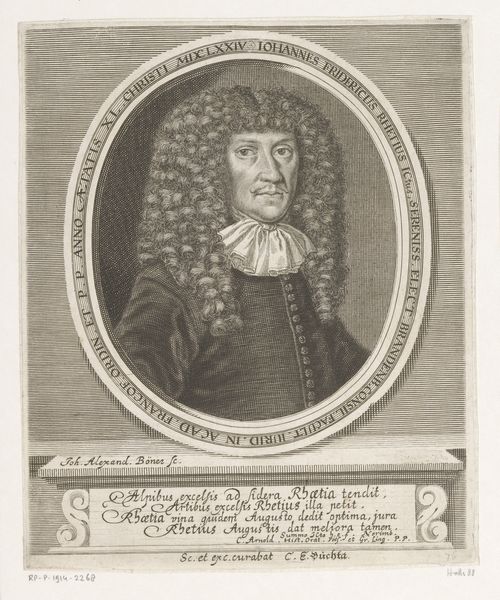
Curator: Here at the Rijksmuseum, we have a fascinating piece: a portrait of Johann Friedrich Mayer, dating back to between 1689 and 1692. It's an engraving. What are your first thoughts? Editor: Well, my first impression is of almost theatrical intensity, it has this incredible texture, all those fine lines creating so much contrast, especially the striking ruff, or even the sort of baroque circular structure for the text—everything appears a bit dense. Curator: It’s certainly baroque, the work of Pieter van den Berge. As an engraving, it relies on meticulously carved lines to create tone and form, which adds to that density you observed. Van den Berge really captured the formality and status associated with Mayer. Editor: The status is undeniable. The text surrounding him, that collar, even his almost foppish wig. But beyond status, there's this palpable tension. Mayer seems to be caught between worlds, or perhaps confronting an internal conflict about religious reform during that time. I mean, what was Mayer’s involvement? Curator: Mayer was a highly influential Lutheran theologian, known for his staunch defense of orthodox Lutheranism against syncretism. Editor: Exactly! The historical backdrop gives the artwork another layer. The weight of religious doctrine, the pressure to conform or reform, might have very well found their ways into van den Berge's art—consciously or not. Looking closer at the detail, I wonder what drove van den Berge, I bet it involved more than illustrating a powerful figure! Curator: Well, as with any portrait, there's a dance between representation and interpretation. Van den Berge likely aimed to present Mayer faithfully, but his own artistic sensibilities would inevitably shape the final image. Plus, engravings often served a didactic purpose. The portrait wasn’t just about likeness, but conveying Mayer's importance. Editor: Agreed. It's about the message it's conveying to the audiences. By thinking more about how religion at that time impacts this portrayal, we might be closer to decode not only a historical figure, but even understand ourselves in our contemporary political context. Curator: Absolutely! And the ability to elicit such a multifaceted interpretation is a hallmark of a great artwork. It definitely offers plenty to ponder. Editor: I second that! I feel that by delving into the complex dynamics between tradition, identity, and representation within it, the artwork becomes a window onto both the past and the present.
Comments
No comments
Be the first to comment and join the conversation on the ultimate creative platform.
 React
React Comment