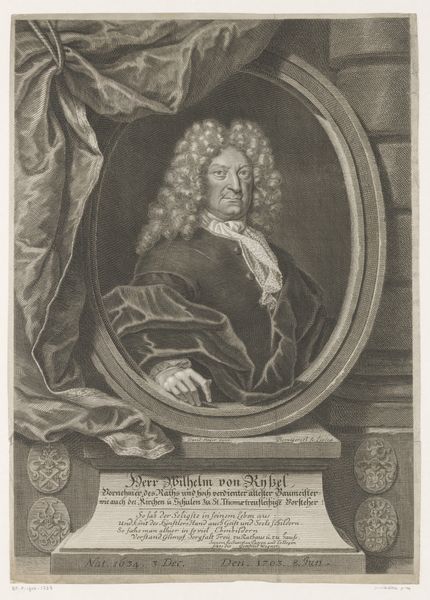
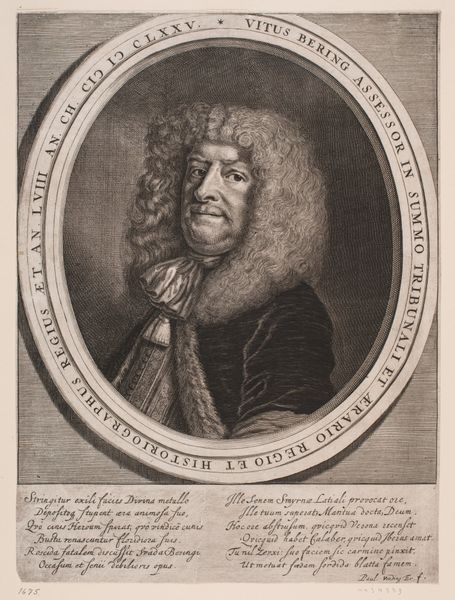
print, engraving
#
portrait
#
baroque
# print
#
old engraving style
#
history-painting
#
engraving
Dimensions: height 232 mm, width 160 mm
Copyright: Rijks Museum: Open Domain
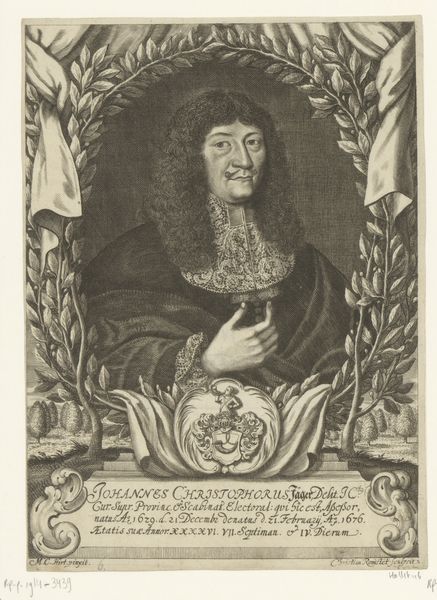
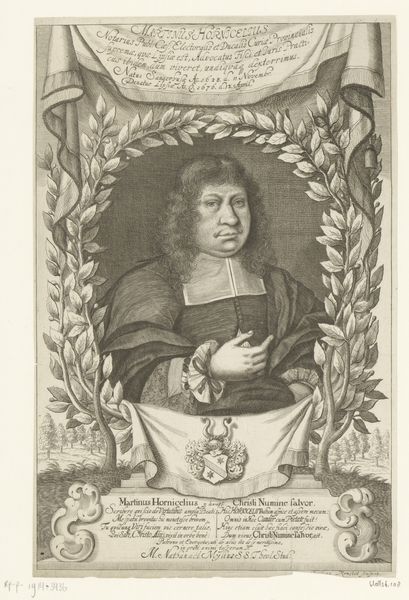
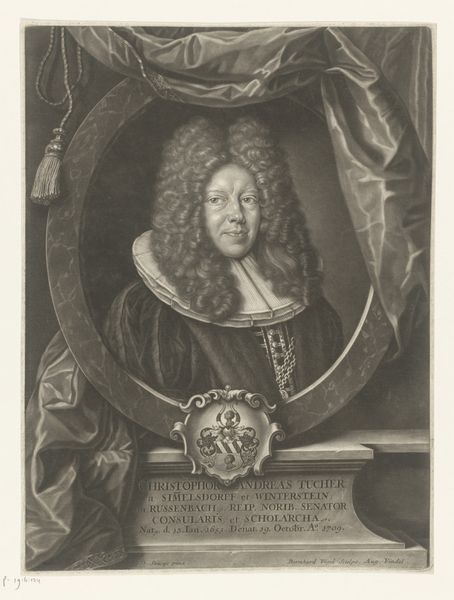
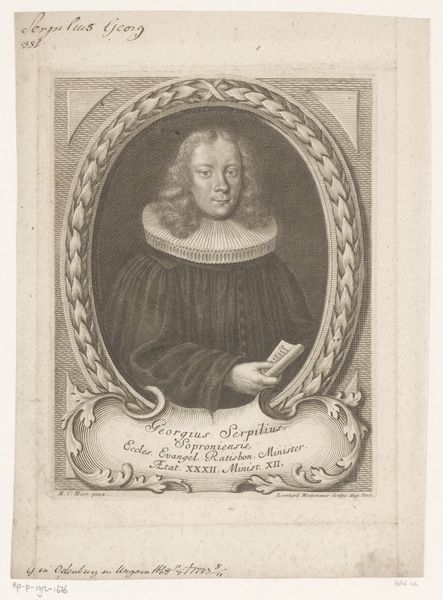
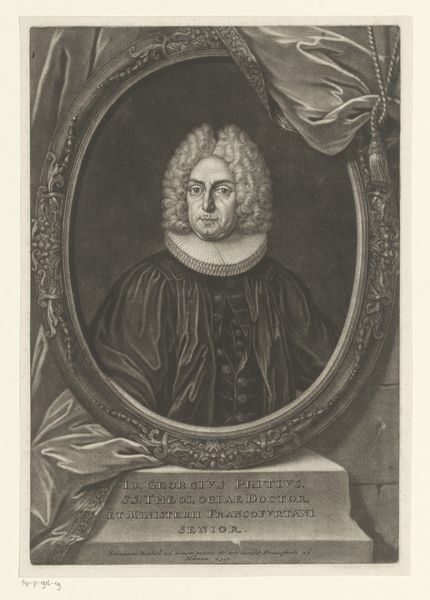
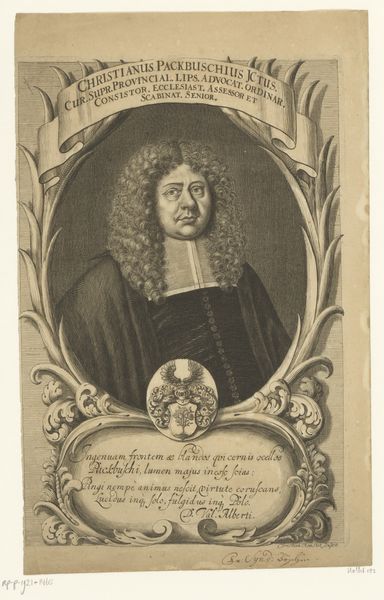
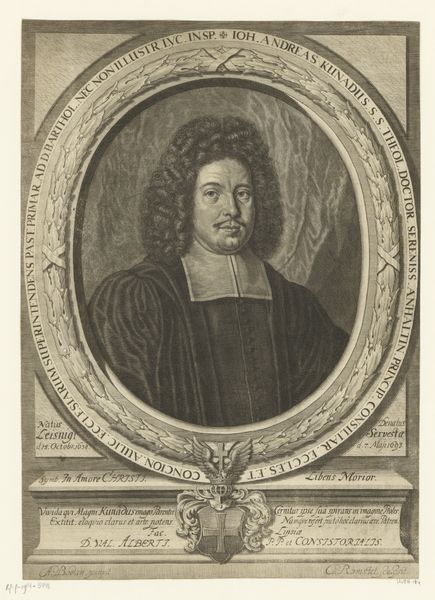
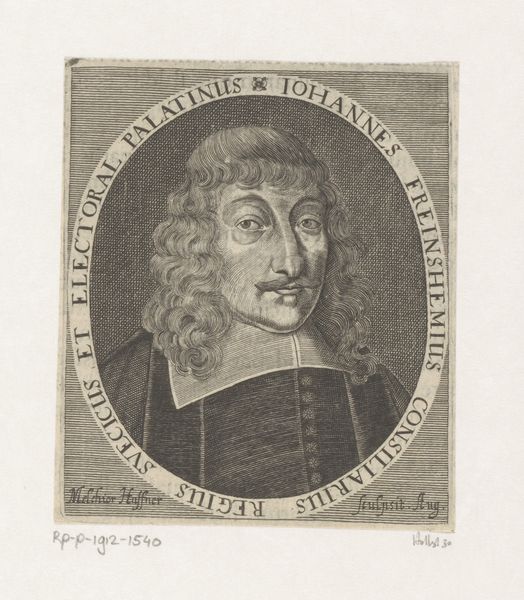
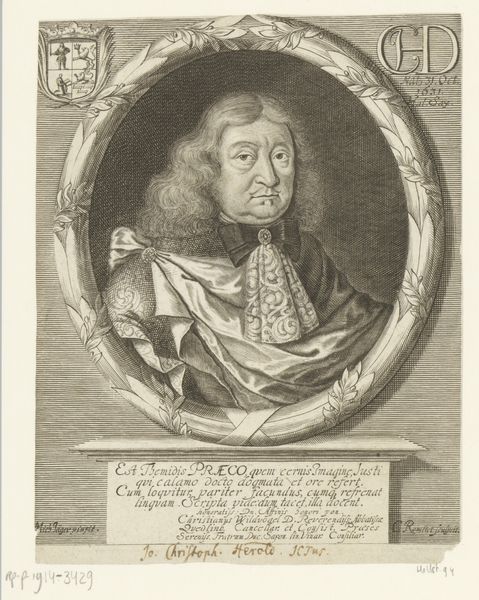
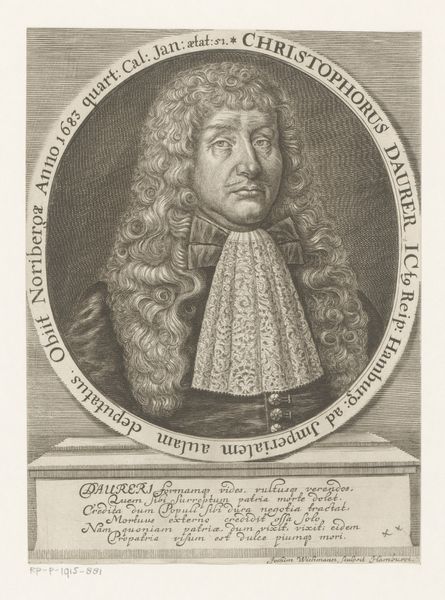
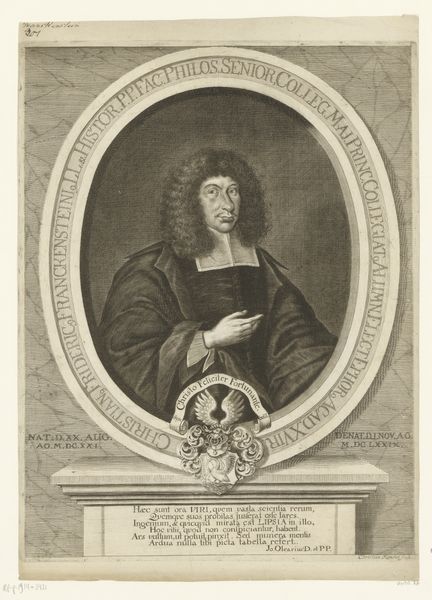
This is Johann Christoph Sartorius's portrait of Martin Limburger. During the 17th century, the Dutch Republic saw the rise of a prosperous middle class, leading to a demand for portraiture that reflected their status and identity. Sartorius captures Limburger, a pastor, within the visual language of his time, embedding symbols of his achievements and affiliations. Wreaths of myrtle and cornflowers frame Limburger’s face; the myrtle symbolizes love and immortality, while the cornflowers are a symbol of fidelity. He is also identified as the director of Sodalitatis Florigera, a society dedicated to flowers. The piece is an emotional portrayal of identity in a way that reflects the societal values of the Dutch Golden Age. In a society marked by religious and political shifts, this portrait serves as a statement of Limburger's role and values, offering us a glimpse into the intersection of personal identity and public life during this transformative era.
Comments
No comments
Be the first to comment and join the conversation on the ultimate creative platform.
 Collect
 React
React Comment
More like this