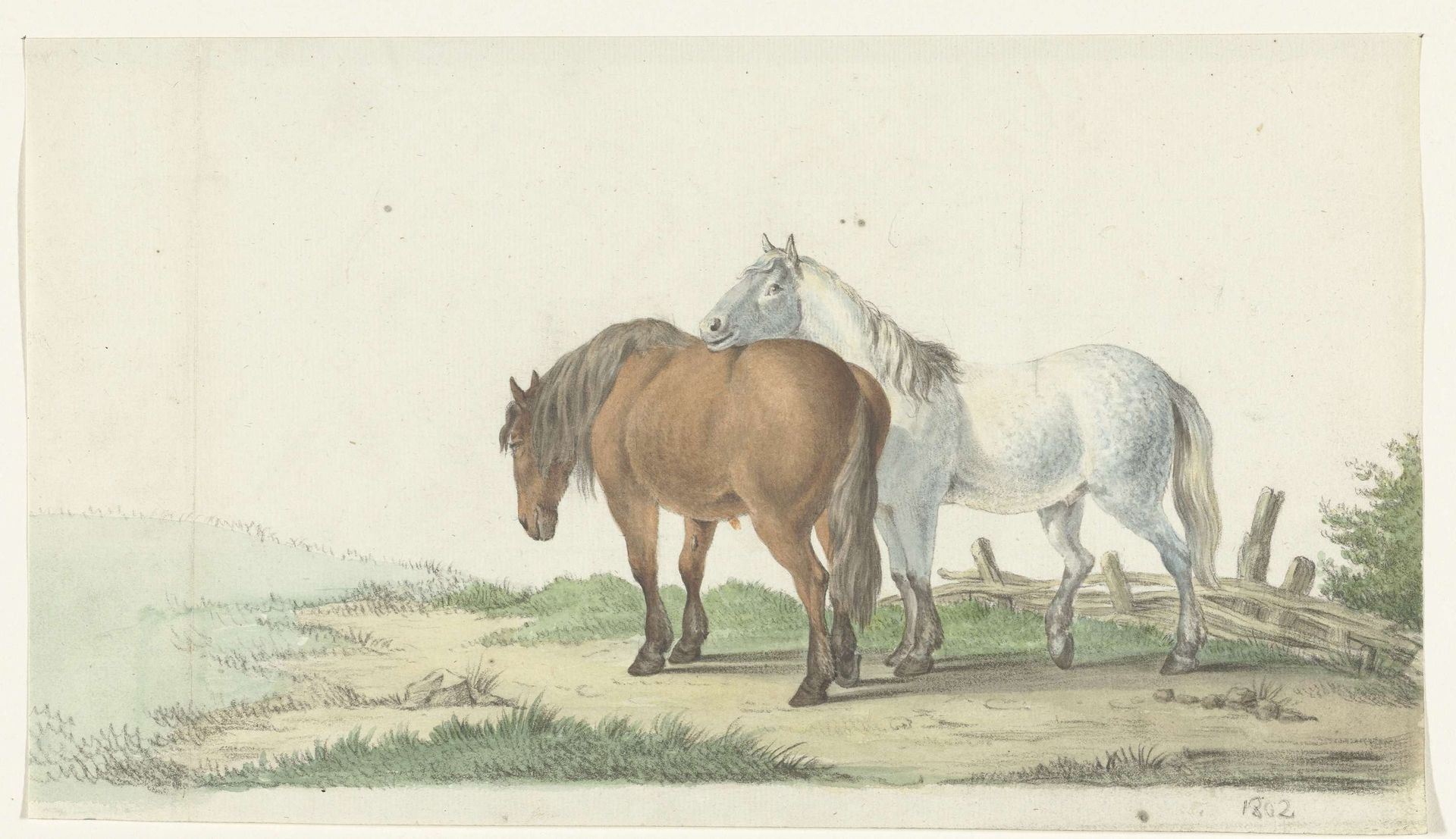
1802
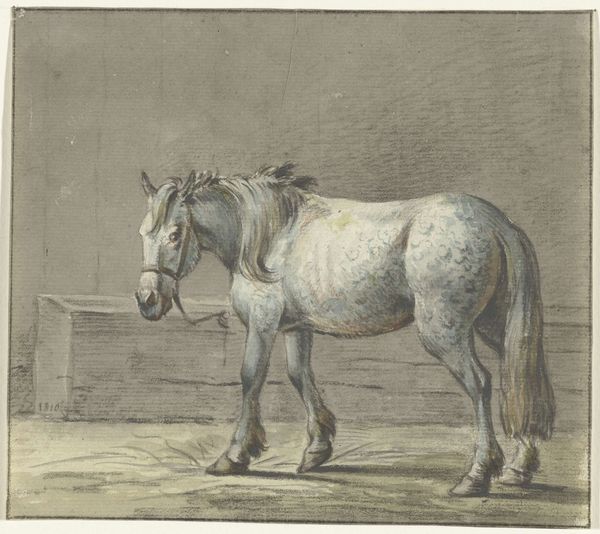
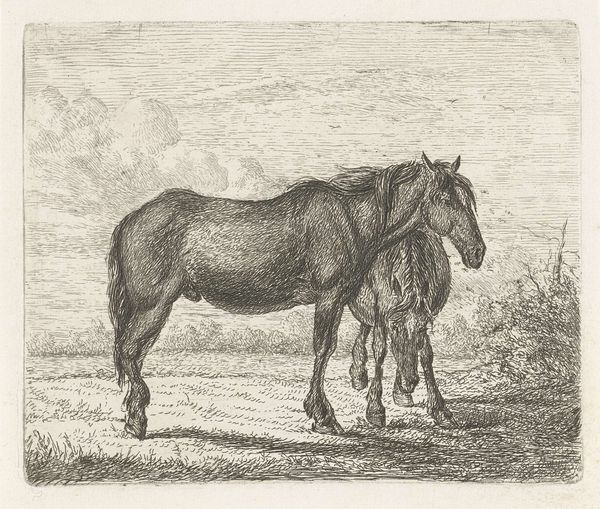
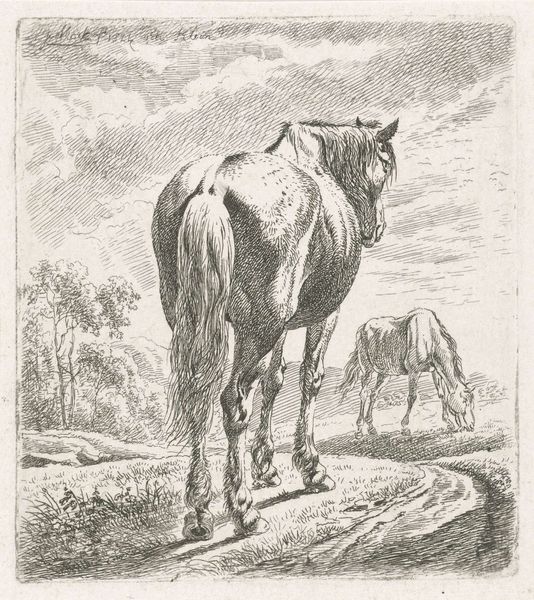
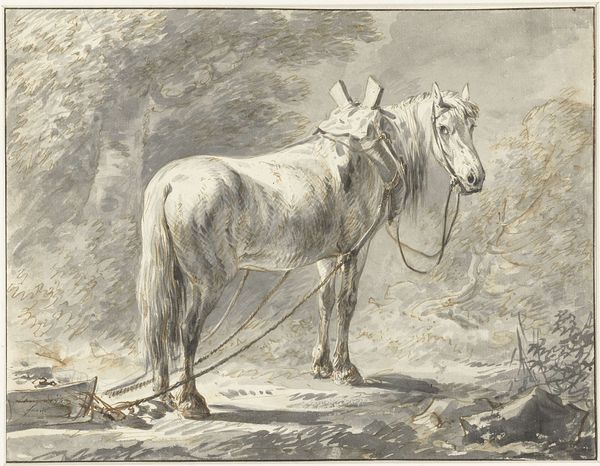
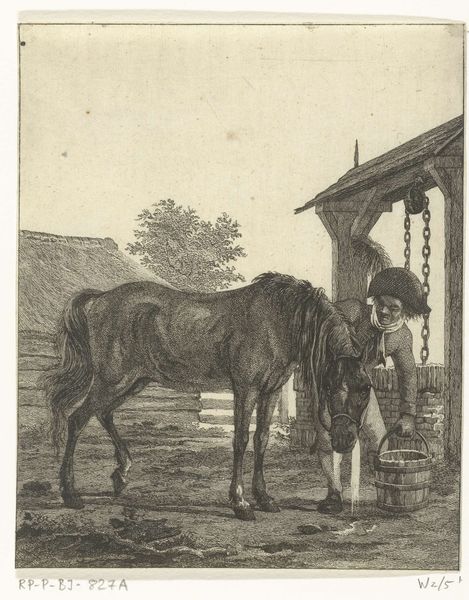
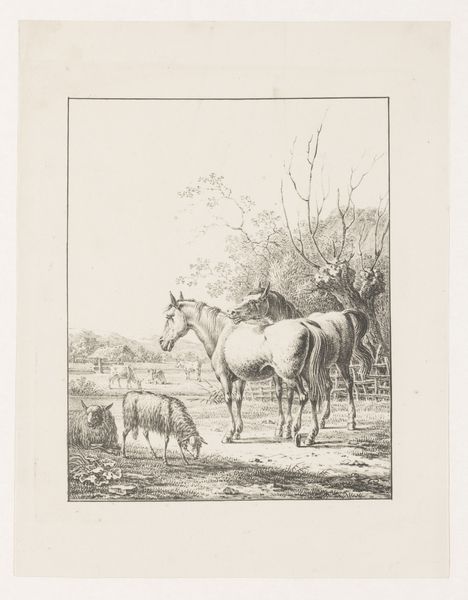
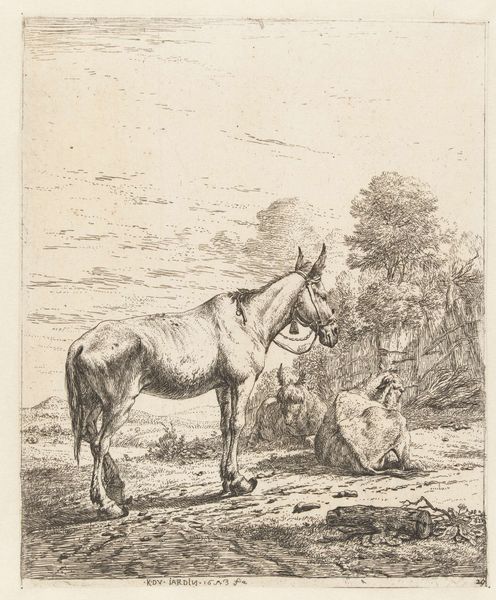
Een bruin en wit paard op een weg naast een hek

Jean Bernard
1765 - 1833Location
RijksmuseumListen to curator's interpretation
Curatorial notes
This watercolor of a brown and white horse on a road beside a fence was created by Jean Bernard, an artist working in the Netherlands in the late 18th and early 19th centuries. Looking at this image, we can see that Bernard's work engages with a rising interest in rural life. In the Netherlands, the late 1700s and early 1800s were a time of economic decline, and the rise of a wealthy merchant class, so there was a nostalgia for more agricultural times. The image itself creates meaning through the visual codes of romanticism. We see a sense of quiet contemplation of the natural world. The composition is simple, without too much fuss or detail, which gives it a kind of peaceful quality. As art historians, we might research the period, looking at popular literature, political speeches, and economic reports. In so doing, the artwork’s role in shaping and reflecting cultural values becomes clear. The meaning of art is always contingent on its social and institutional context.