
Curatorial notes
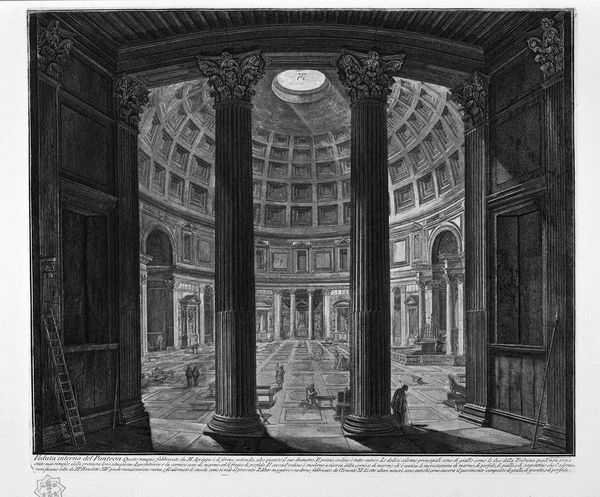
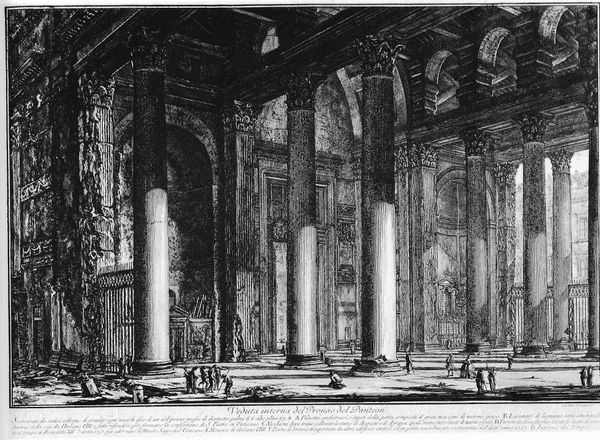
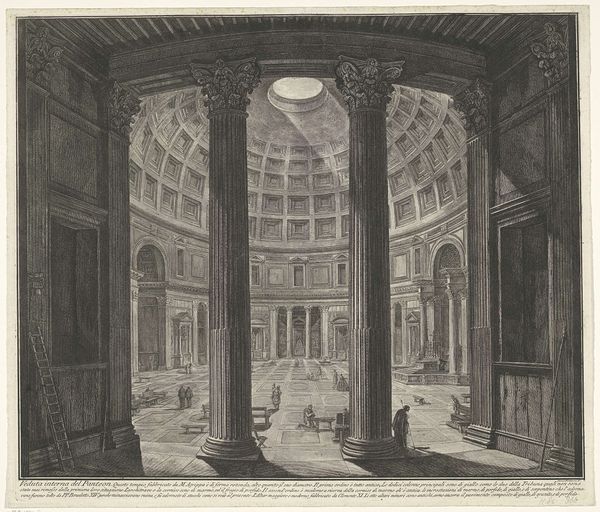
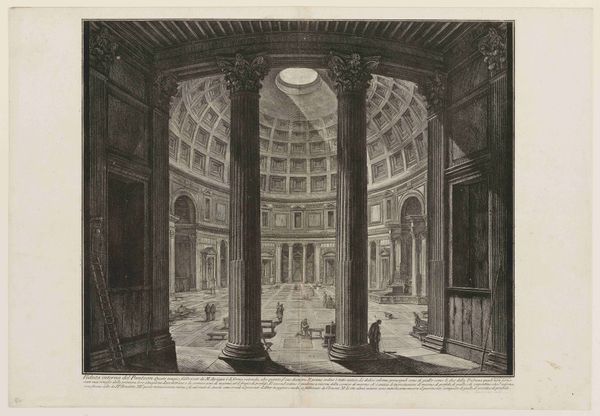
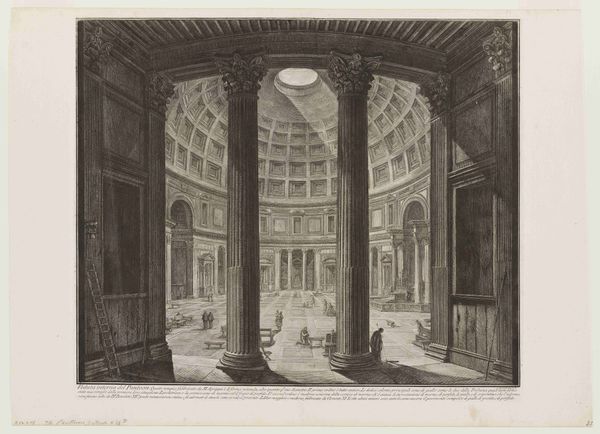
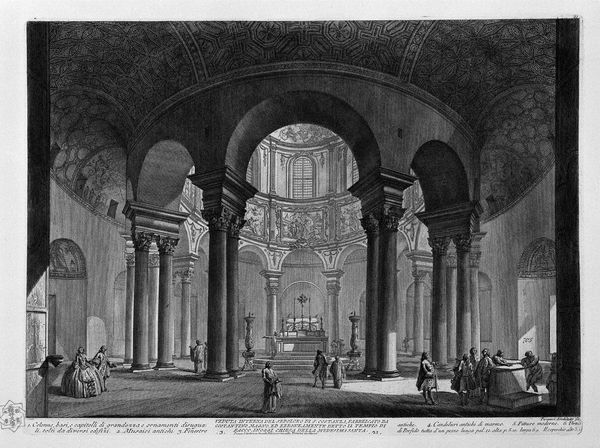
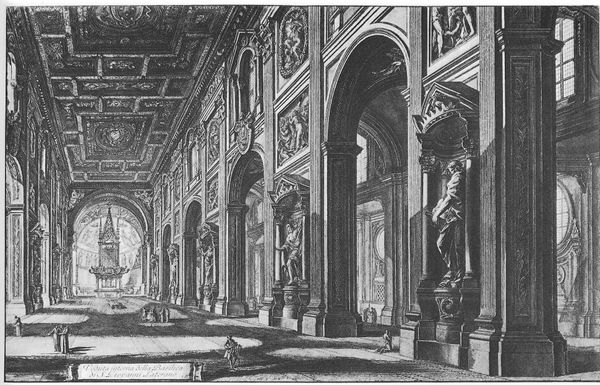
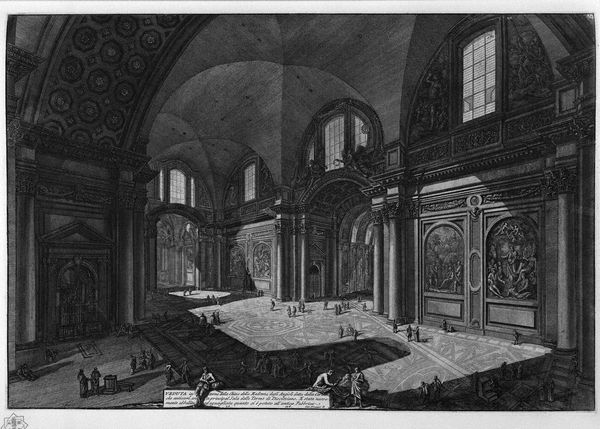
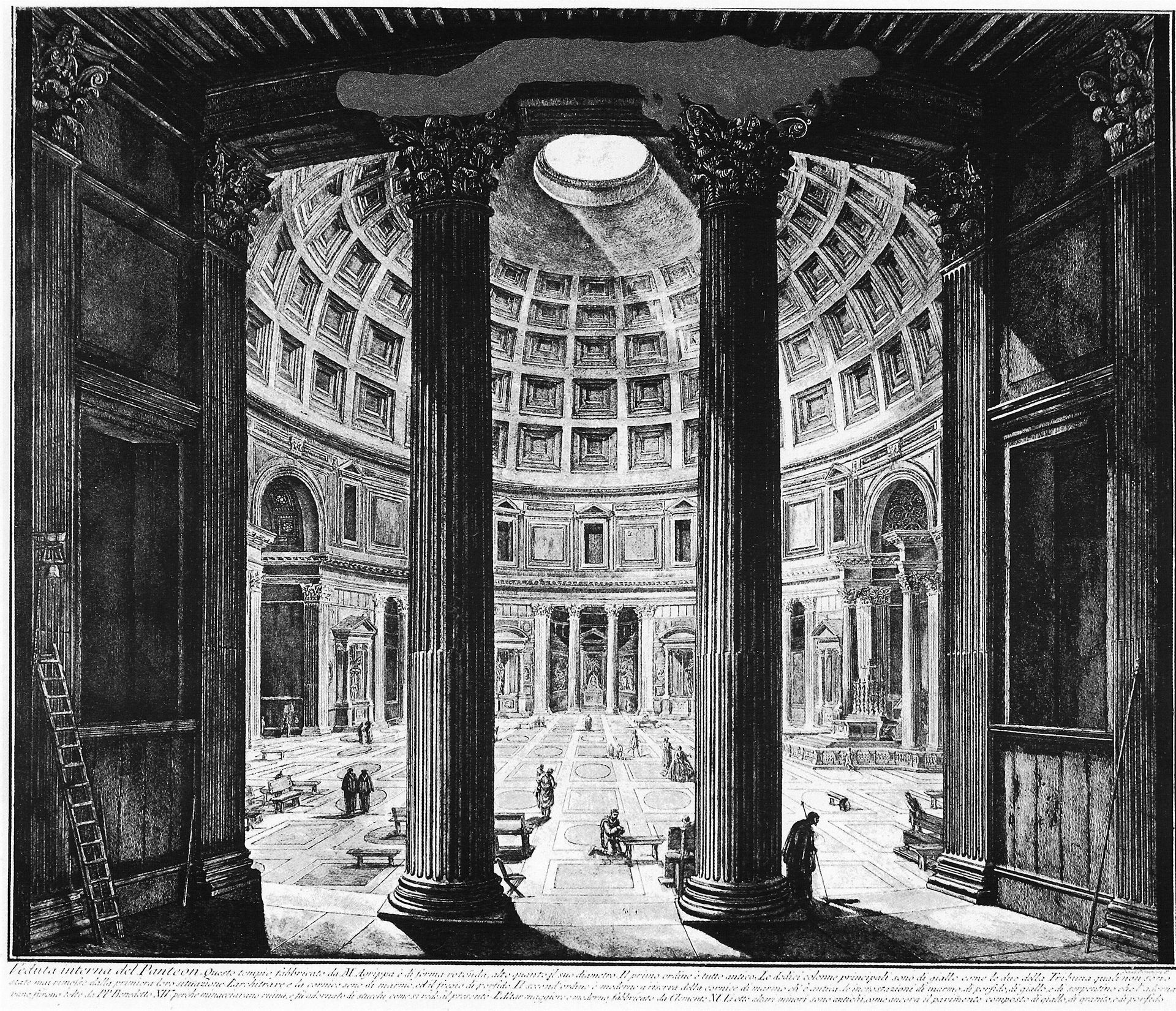
Curator: Here we have a print from Giovanni Battista Piranesi’s series, *Vedute di Roma*, showcasing an interior view of the Pantheon. Editor: It's intensely theatrical! The stark contrast and exaggerated perspective create a dramatic, almost dreamlike space. Curator: Piranesi masterfully uses etching and engraving to articulate the grandeur of Roman architecture. Notice the precision in rendering the coffered dome and the colossal columns. Editor: That grandeur, however, can be interpreted as a celebration of power structures. Rome, and indeed architectural feats such as this, carry complicated historical narratives— colonialism, conquest. The details, in all their precise glory, reflect this fraught history. Curator: Undoubtedly, yet look at the treatment of light. The oculus is a clear focal point, bathing the interior in what appears to be divine illumination. The way it defines form is masterful. Editor: I think it also reflects the artist’s agenda: Rome as the pinnacle of Western civilisation and aesthetic achievement. This perpetuates a narrative that centers European cultural heritage above all others, often marginalizing other histories. Curator: Regardless, the sheer scale of the space, conveyed so powerfully through perspective, forces a re-evaluation of how we situate ourselves within architectural history. Editor: Exactly! The perspective almost seems designed to remind us of the human cost of the society whose values and structures are embodied in stone all around us. Curator: The skill involved in creating these images and how Piranesi uses classical elements to invite the viewer into dialogue about timeless aesthetic questions – that’s what intrigues me the most. Editor: For me, it's about questioning why we still pedestalize this vision of Rome when the very stones whisper stories of privilege, patriarchy, and conquest.