About this artwork
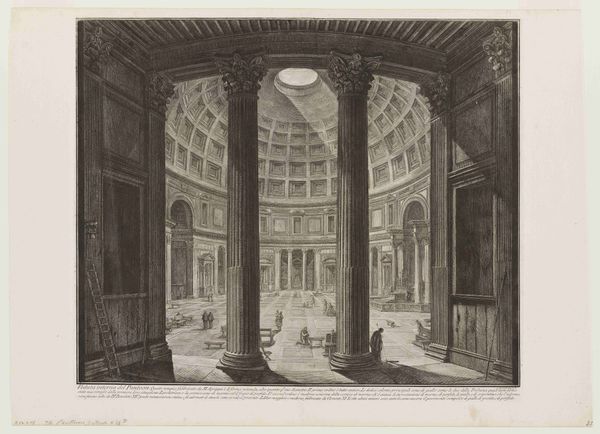
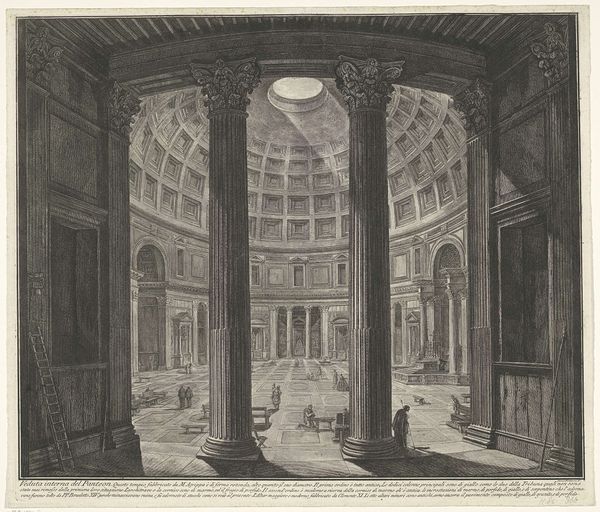
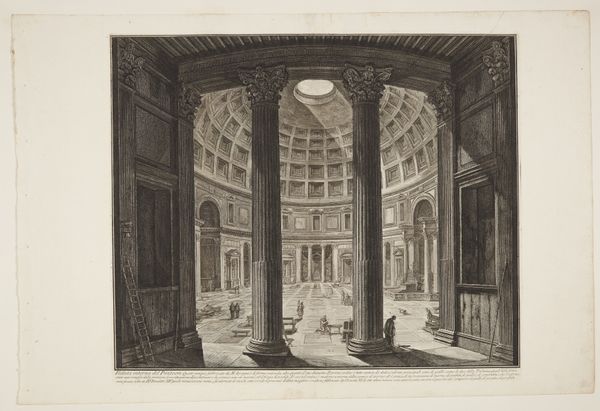
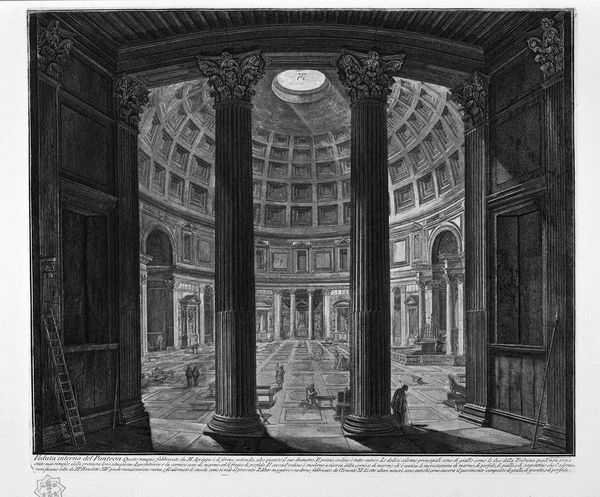
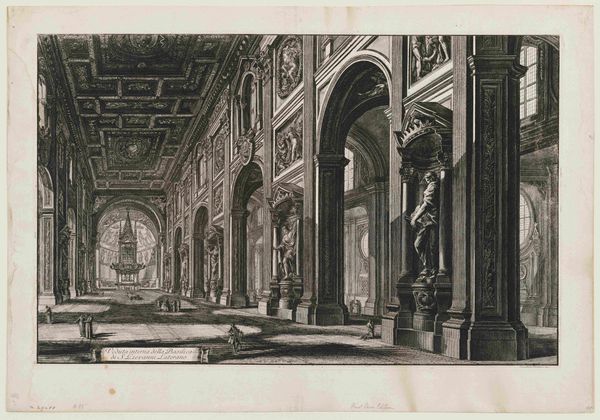
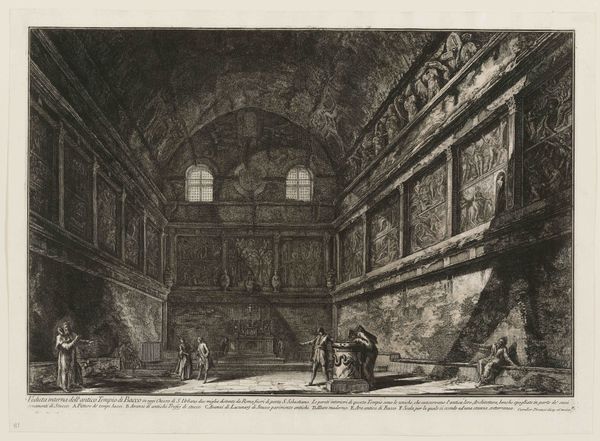
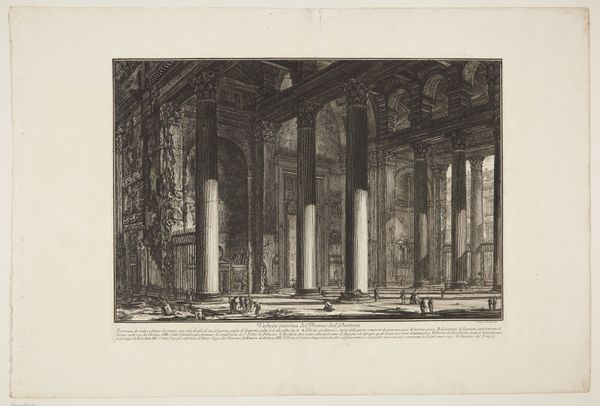
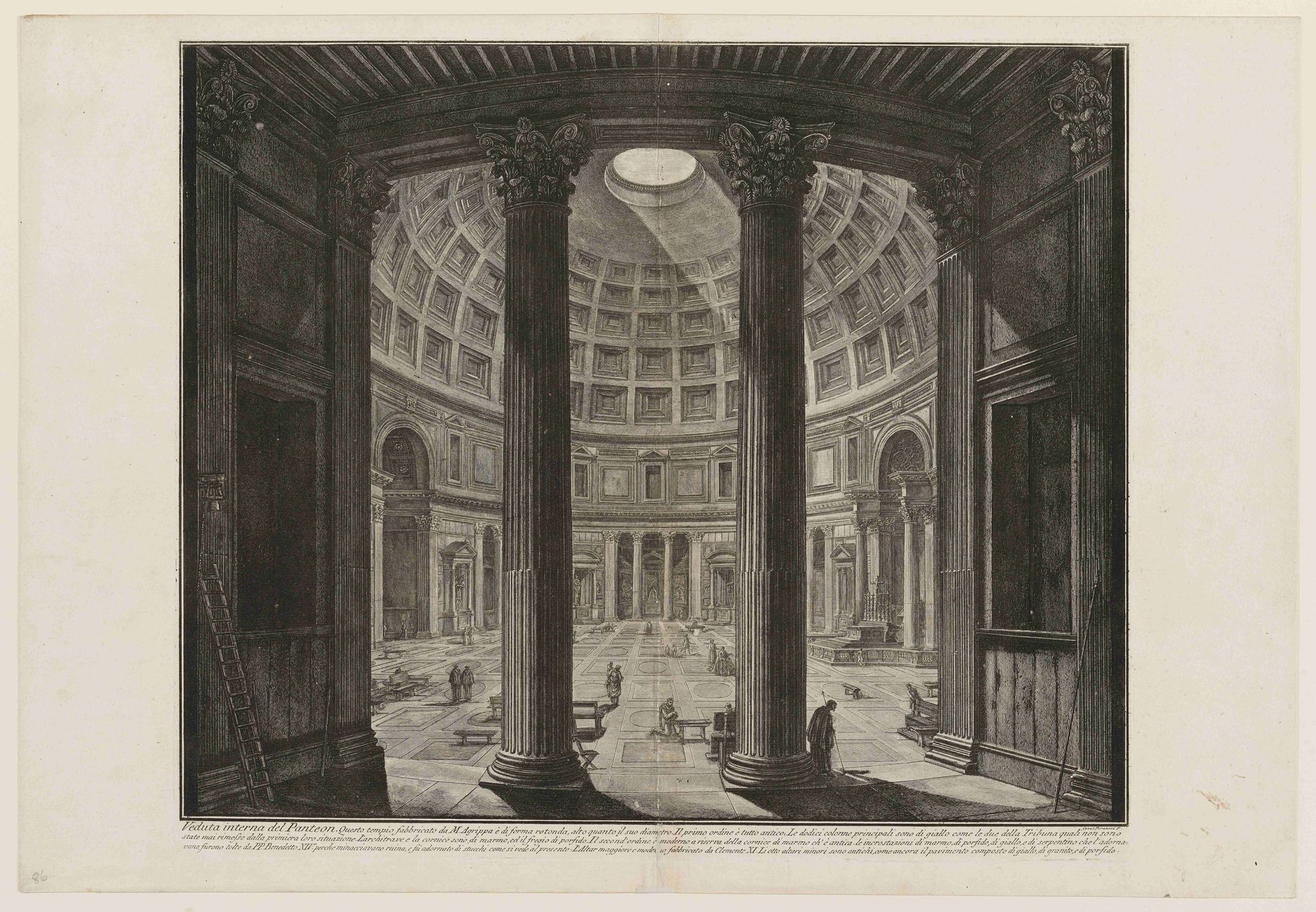
Giovanni Battista Piranesi created this etching of the Interior of the Pantheon sometime in the 18th century. The print presents a grand architectural space dominated by strong vertical lines and a vast, coffered dome, all rendered in meticulous detail. The stark contrast between light and shadow enhances the sense of depth and volume. Piranesi's print invites us to consider how architectural representation can convey meaning. The Pantheon, originally a Roman temple and later a church, embodies a synthesis of classical and Christian traditions. Piranesi’s emphasis on the building’s structural elements speaks to the Enlightenment's fascination with reason and order. By meticulously depicting the Pantheon’s geometry, Piranesi suggests its design as a testament to human intellect. Notice how the artist has placed figures within the space. They appear diminutive against the architecture, a deliberate choice that underscores the grandeur of human construction. Piranesi uses light and scale to not only document but also to interpret and celebrate the Pantheon as a symbol of historical and cultural significance.
Interior of the Pantheon
1768


Artwork details
- Dimensions
- 18 15/16 x 22 in. (48.1 x 55.88 cm) (plate)20 1/4 x 29 7/16 in. (51.44 x 74.77 cm) (sheet)
- Location
- Minneapolis Institute of Art
- Copyright
- Public Domain
Comments
Share your thoughts
About this artwork
Giovanni Battista Piranesi created this etching of the Interior of the Pantheon sometime in the 18th century. The print presents a grand architectural space dominated by strong vertical lines and a vast, coffered dome, all rendered in meticulous detail. The stark contrast between light and shadow enhances the sense of depth and volume. Piranesi's print invites us to consider how architectural representation can convey meaning. The Pantheon, originally a Roman temple and later a church, embodies a synthesis of classical and Christian traditions. Piranesi’s emphasis on the building’s structural elements speaks to the Enlightenment's fascination with reason and order. By meticulously depicting the Pantheon’s geometry, Piranesi suggests its design as a testament to human intellect. Notice how the artist has placed figures within the space. They appear diminutive against the architecture, a deliberate choice that underscores the grandeur of human construction. Piranesi uses light and scale to not only document but also to interpret and celebrate the Pantheon as a symbol of historical and cultural significance.
Comments
Share your thoughts