About this artwork
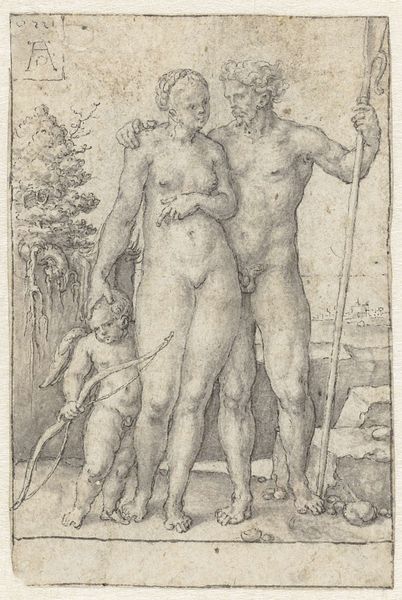
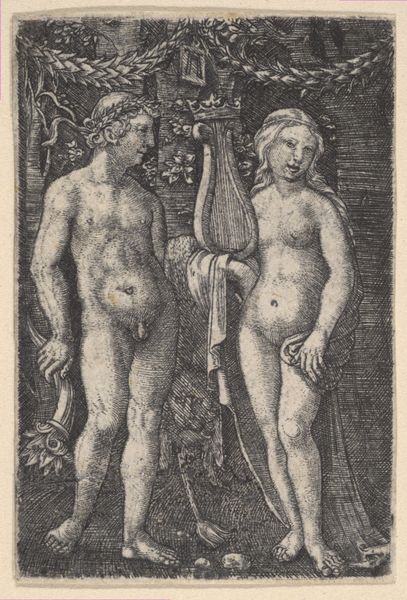
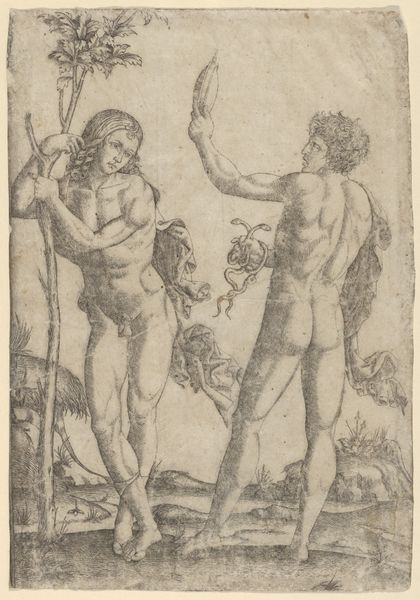
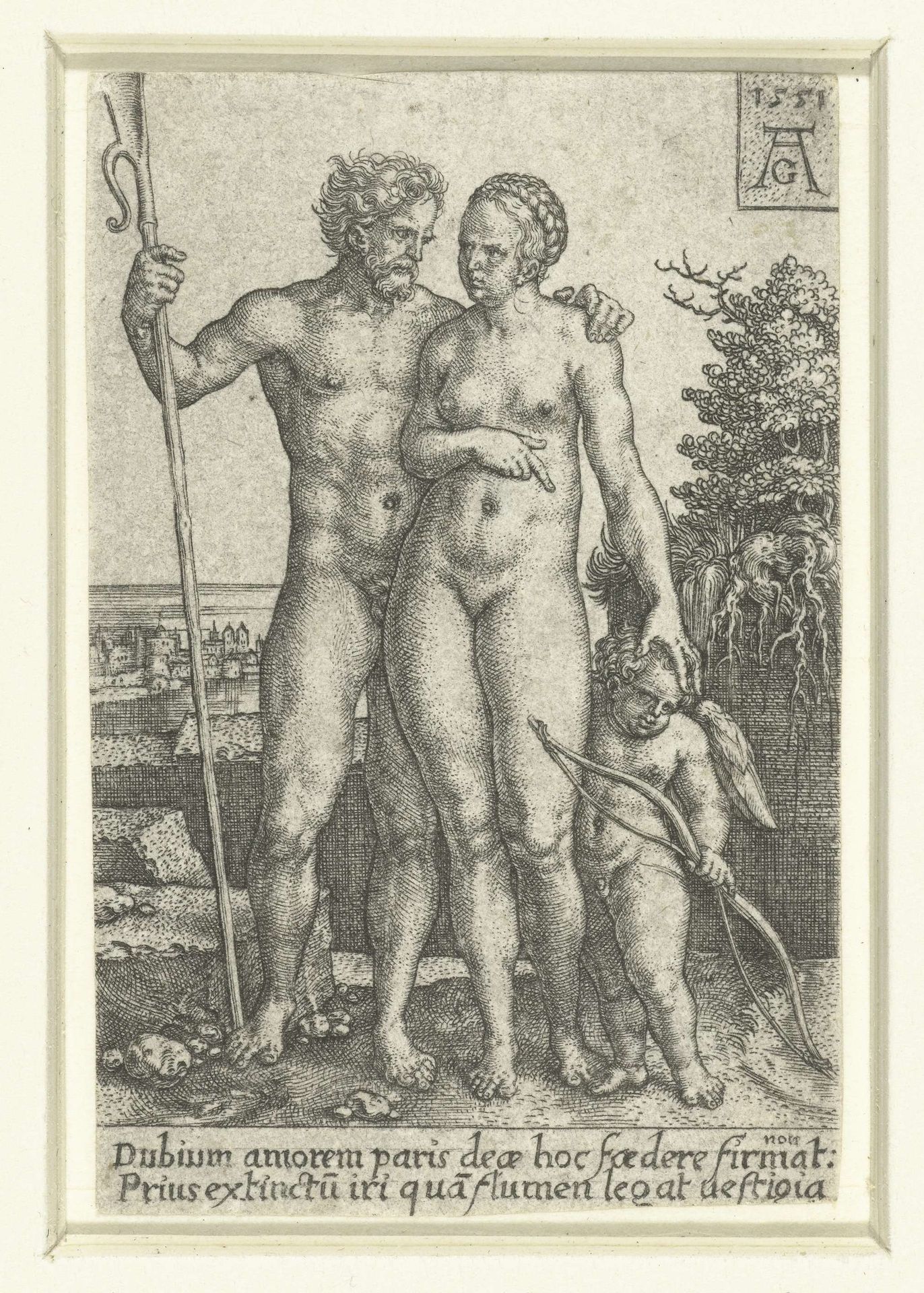
Heinrich Aldegrever etched "Paris, Oenone and Cupido," around 1551. It stages Paris, Oenone, and Cupid, steeped in symbolic meanings of love, destiny, and tragic choice. Note the pastoral staff carried by Paris, once a shepherd himself, symbolizing rustic life and authority. Cupid’s bow and arrow, of course, represent desire and its often uncontrollable force, linking back to classical antiquity. We see Cupid in countless variations throughout art history; his form shifts, but the core idea remains: love as a potent, sometimes painful force. Consider the gesture of Oenone, pointing, perhaps indicating a path or a decision. Gestures, like symbols, carry weight. They trigger deep-seated emotional reactions, tapping into our shared human experiences. The faces of the figures are imbued with melancholy, as if to hint at the tragic choice Paris will have to make between the three goddesses. It is an image of choices and consequences, recurring throughout art.

Artwork details
- Medium
- print, engraving
- Dimensions
- height 76 mm, width 50 mm
- Location
- Rijksmuseum
- Copyright
- Rijks Museum: Open Domain
Tags
Comments
Share your thoughts
About this artwork
Heinrich Aldegrever etched "Paris, Oenone and Cupido," around 1551. It stages Paris, Oenone, and Cupid, steeped in symbolic meanings of love, destiny, and tragic choice. Note the pastoral staff carried by Paris, once a shepherd himself, symbolizing rustic life and authority. Cupid’s bow and arrow, of course, represent desire and its often uncontrollable force, linking back to classical antiquity. We see Cupid in countless variations throughout art history; his form shifts, but the core idea remains: love as a potent, sometimes painful force. Consider the gesture of Oenone, pointing, perhaps indicating a path or a decision. Gestures, like symbols, carry weight. They trigger deep-seated emotional reactions, tapping into our shared human experiences. The faces of the figures are imbued with melancholy, as if to hint at the tragic choice Paris will have to make between the three goddesses. It is an image of choices and consequences, recurring throughout art.
Comments
Share your thoughts