print, engraving
baroque
cityscape
engraving
Dimensions: height 124 mm, width 138 mm
Copyright: Rijks Museum: Open Domain
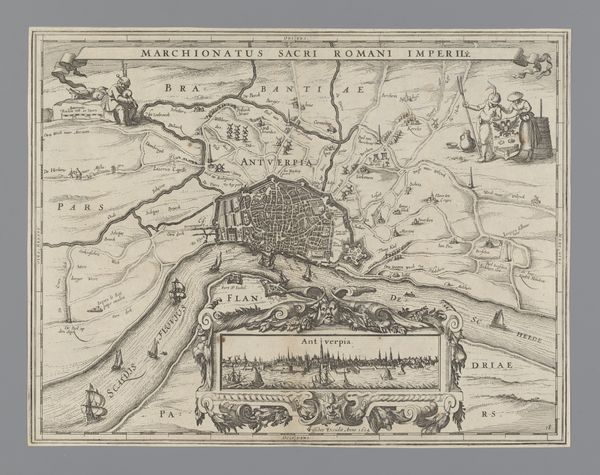
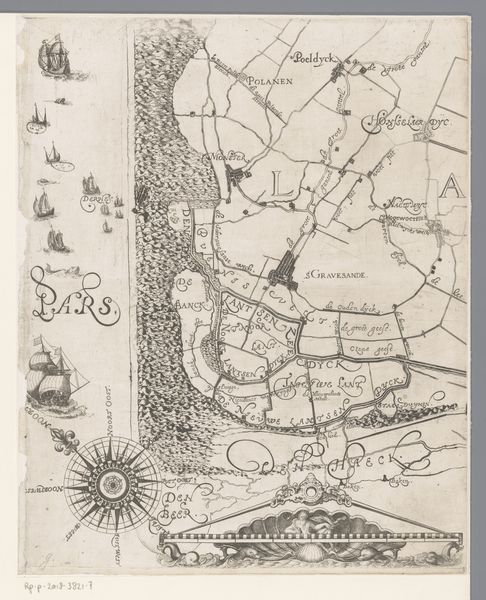
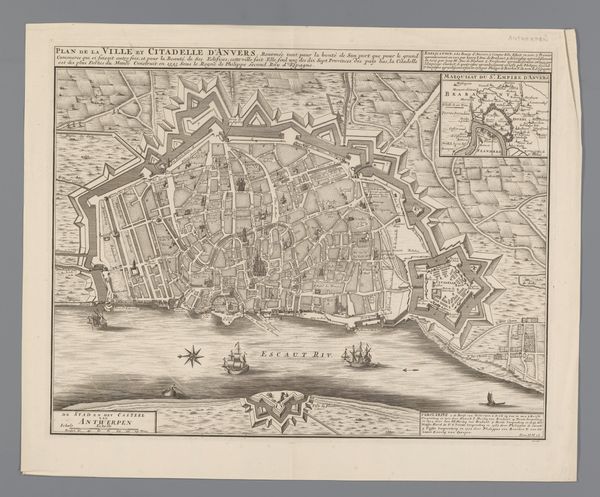
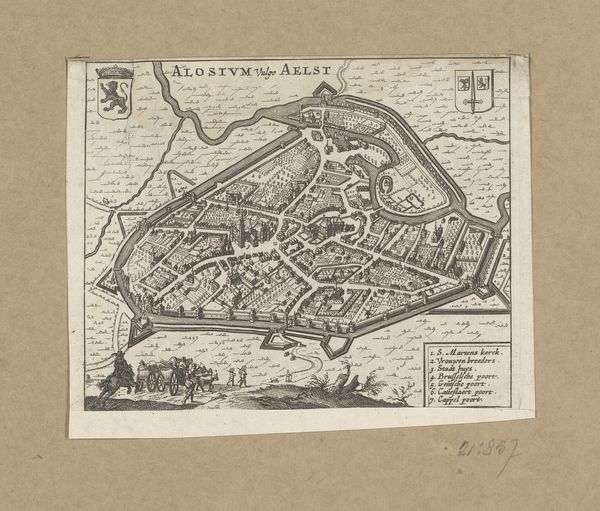
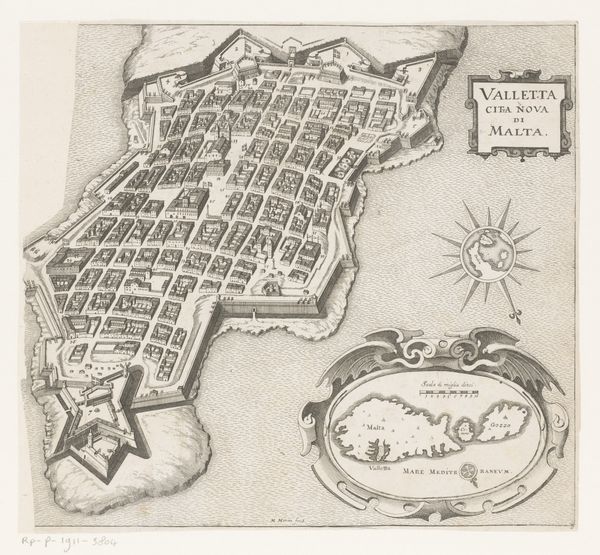
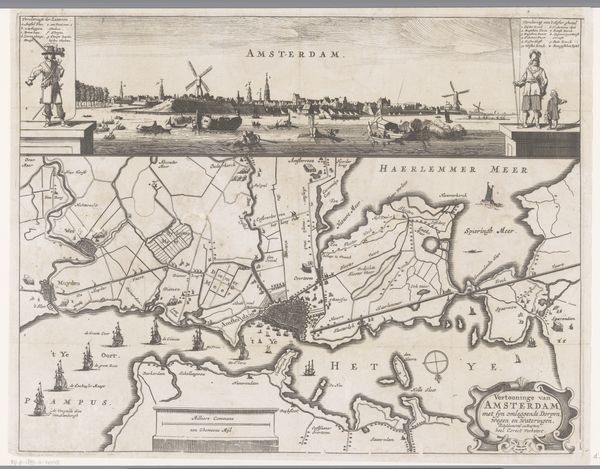
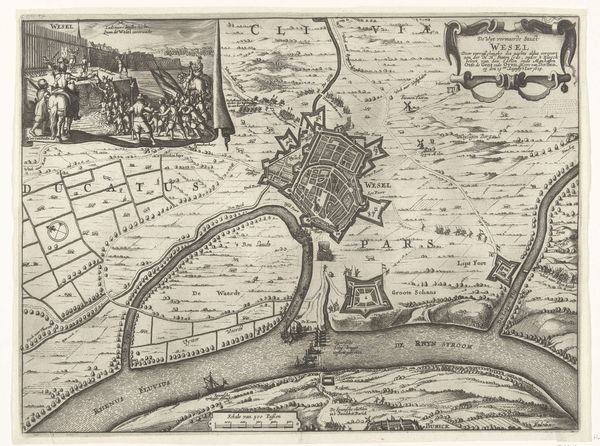
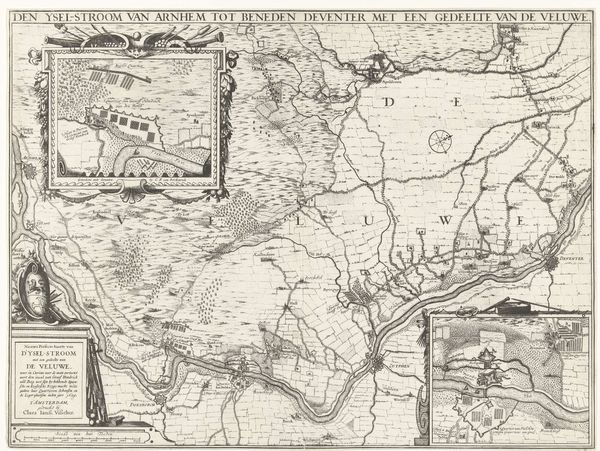
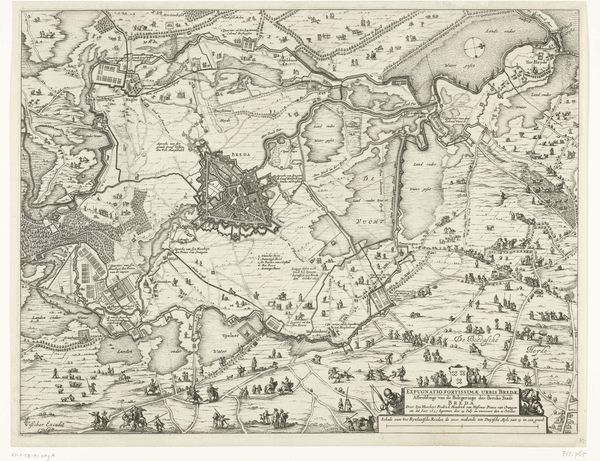
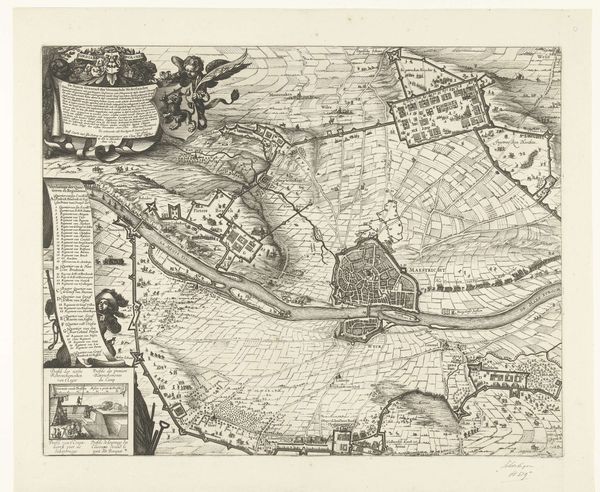
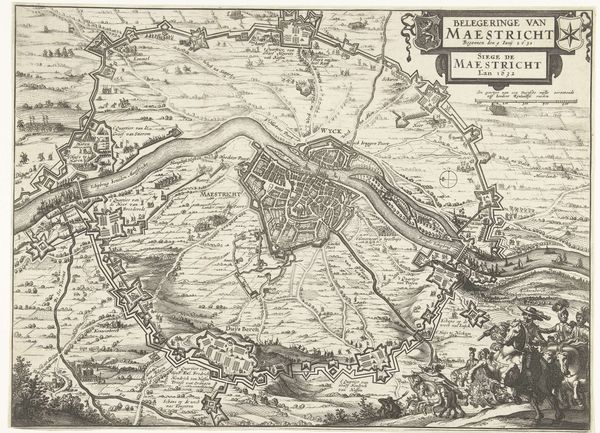
Curator: Here we have an engraving from 1652 titled "Plattegrond van Bergen op Zoom," created by an anonymous artist. The level of detail is astounding, considering the process. Editor: It's fascinating to see a city depicted this way, almost like a military blueprint. What aspects of the materials and production do you find most interesting in this particular piece? Curator: I am drawn to the idea that the production of this city plan was born from the intersection of power, cartography, and craft. This isn't just a guide; it is also an assertion of control and ownership over space. Engravings were time-consuming and meticulous, requiring specialized skill. The availability of this type of printed material, how would it affect the access of ordinary people at that time? Editor: I imagine they would feel both informed and, perhaps, a little governed by it. Knowing every street laid out perfectly… I hadn't considered the implications of simply having the knowledge it contains. Curator: Precisely. Now, think about the labor involved. Who were these engravers? Were they artisans celebrated for their skills, or simply anonymous workers fulfilling commissions? Editor: That makes you wonder about the relationship between the artist, the subject – the city – and the commissioner. If it was designed as a tool for control, were they even concerned with artistic merit or with precision in their means of depiction? Curator: Exactly! And what about the economy supporting such a production? The paper, the ink, the tools – it all speaks to the growing commodification of information in the 17th century. Each print represents both a reproduction and consumption of these materials. It’s also Baroque; how are the intricacies and ornamentation reflected in the Baroque style influencing our ideas about wealth and excess in mapmaking during the era? Editor: I see it differently now. The Baroque embellishments make me think about status and the idealisation of control. I wouldn't have noticed those themes without this context. Thanks!
Comments
No comments
Be the first to comment and join the conversation on the ultimate creative platform.
 React
React Comment