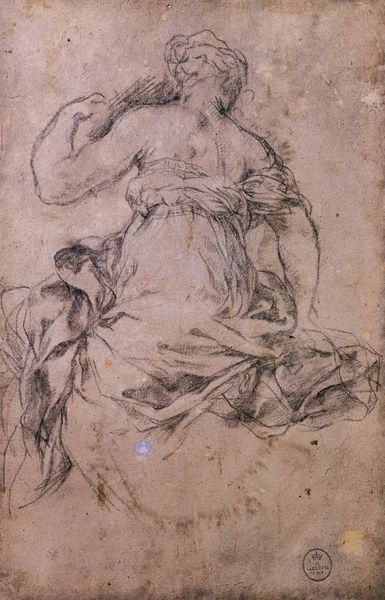
drawing, charcoal
#
portrait
#
drawing
#
charcoal drawing
#
figuration
#
11_renaissance
#
line
#
charcoal
#
italian-renaissance
#
nude
Copyright: Public domain
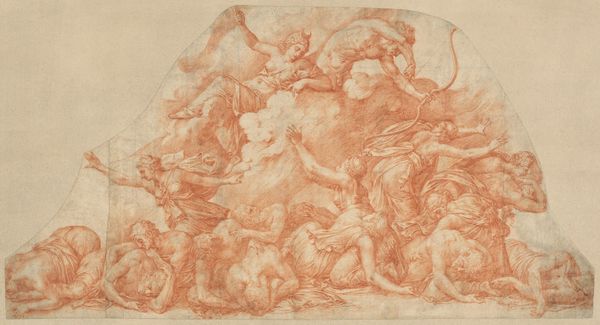
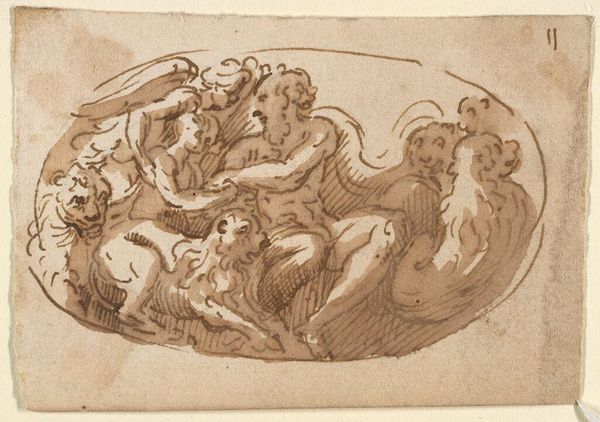
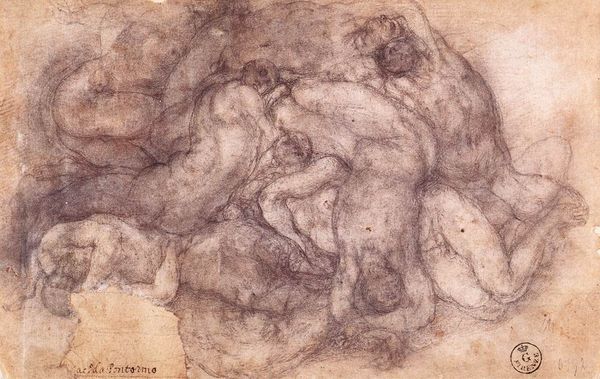
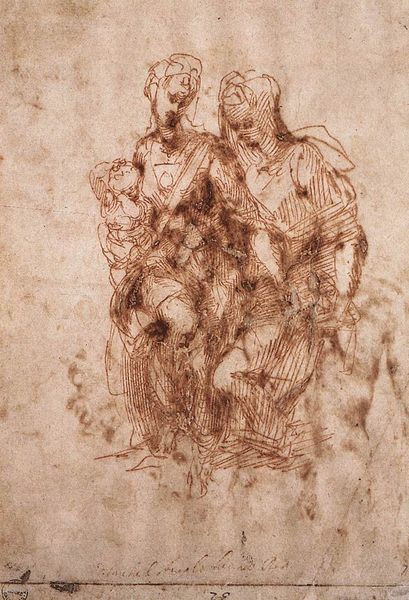
Jacopo Pontormo made this drawing, in pen and brown ink, as a preparatory study for a fresco depicting the biblical flood. It's a compelling example of how art in 16th-century Florence engaged with religious and social upheaval. Pontormo’s style, part of what we call Mannerism, rejected the High Renaissance’s emphasis on balance, harmony, and idealization. Instead, he embraced distortion and emotional intensity. Here, the figures are crowded, their bodies twisted in anguish as they try to escape the rising waters. The Deluge was part of a larger cycle of frescoes commissioned for the church of San Lorenzo. To understand it fully, we have to consider the religious climate of the time, as well as the patronage networks in Florence. Pontormo’s art reflects a society grappling with uncertainty, and the institutions which attempted to make sense of it. Art historians sift through archival documents, letters, and other historical sources to reconstruct these complex social and institutional contexts. This helps us to grasp the original meanings of art.
Comments
No comments
Be the first to comment and join the conversation on the ultimate creative platform.
 Collect
 React
React Comment
More like this