About this artwork
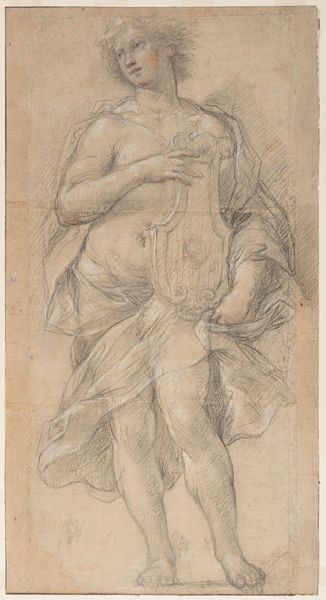
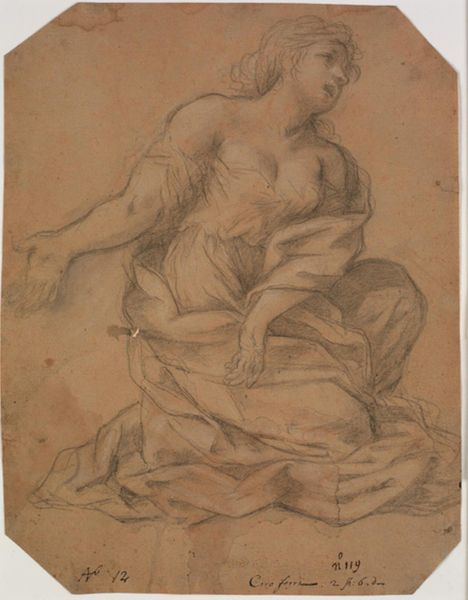
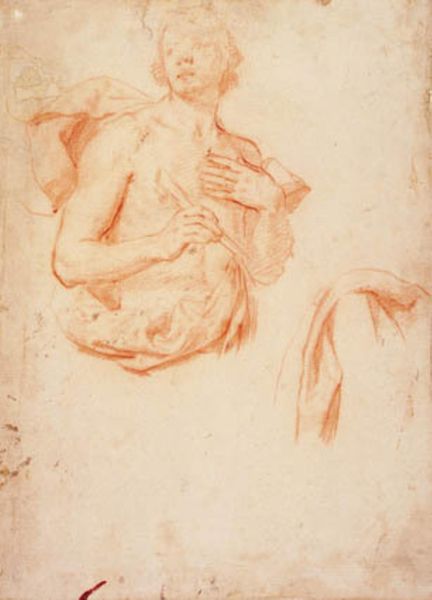
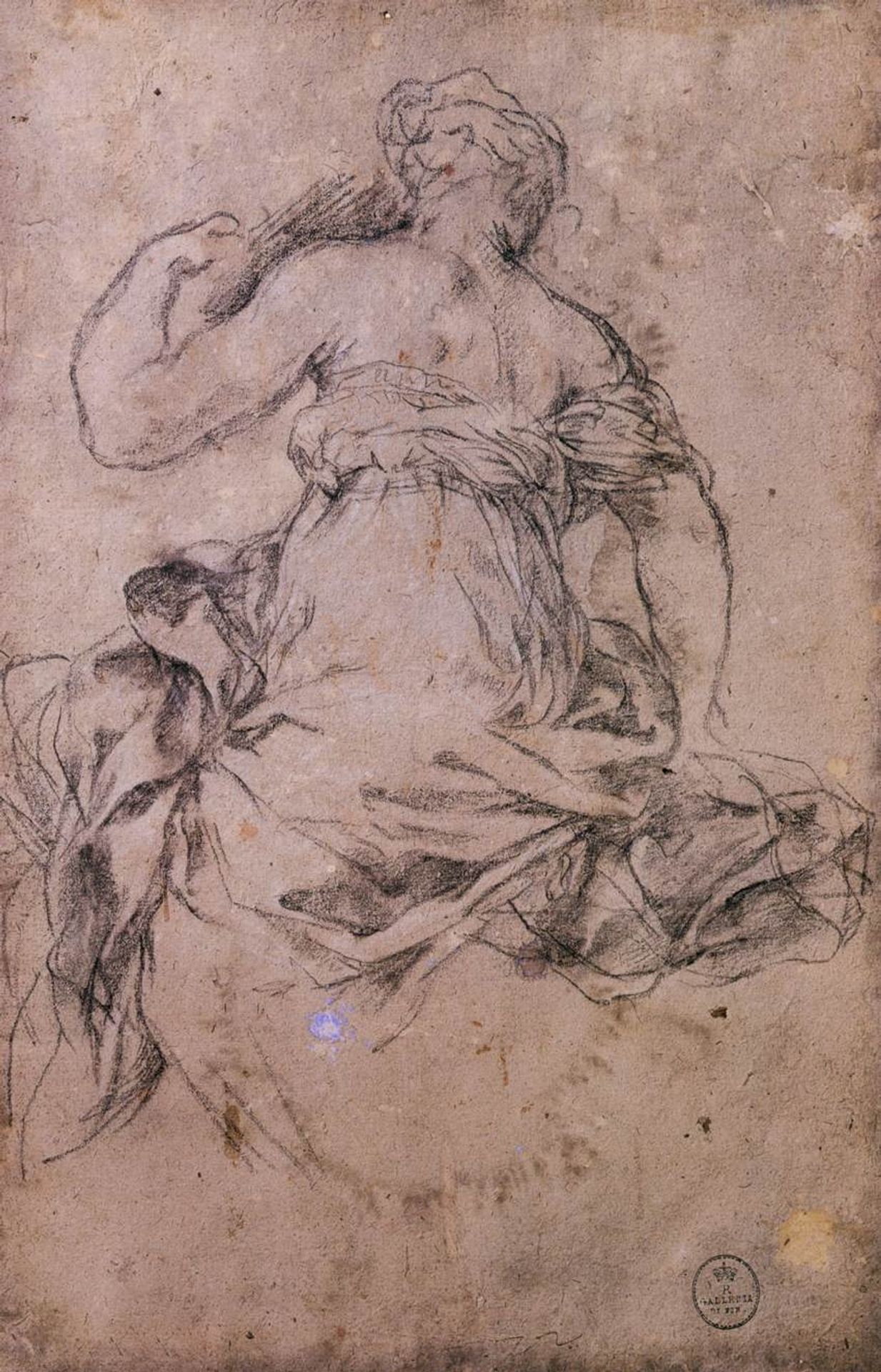
Pietro da Cortona rendered this preparatory drawing in Florence, a study for what would become ‘The Age of Silver.' Observe the figure’s raised arm and hand holding what seems to be a bundle of wheat. This is a potent symbol of fertility, abundance, and the earth’s bounty. Across cultures, from ancient Egypt where sheaves of wheat were offered to Osiris, to its appearance in classical Roman iconography with Ceres, the goddess of agriculture, this motif speaks of nature’s life-giving force. This gesture and emblem transcend time. Consider, how it resurfaces, transformed, in medieval Christian art as an attribute of saints associated with harvest and charity. The motif, in all its iterations, taps into our collective memory, a primal recognition of the earth's capacity to sustain life, evoking both gratitude and a deep-seated psychological connection to the natural world. It becomes a cyclical symbol—reappearing and evolving, charged with emotional significance.
Study for the Age of Silver
1635

Pietro da Cortona
1596 - 1669Location
Palazzo Pitti, Florence, ItalyArtwork details
- Medium
- drawing, charcoal
- Dimensions
- 40 x 25.1 cm
- Location
- Palazzo Pitti, Florence, Italy
- Copyright
- Public domain
Tags
Comments
Share your thoughts
About this artwork
Pietro da Cortona rendered this preparatory drawing in Florence, a study for what would become ‘The Age of Silver.' Observe the figure’s raised arm and hand holding what seems to be a bundle of wheat. This is a potent symbol of fertility, abundance, and the earth’s bounty. Across cultures, from ancient Egypt where sheaves of wheat were offered to Osiris, to its appearance in classical Roman iconography with Ceres, the goddess of agriculture, this motif speaks of nature’s life-giving force. This gesture and emblem transcend time. Consider, how it resurfaces, transformed, in medieval Christian art as an attribute of saints associated with harvest and charity. The motif, in all its iterations, taps into our collective memory, a primal recognition of the earth's capacity to sustain life, evoking both gratitude and a deep-seated psychological connection to the natural world. It becomes a cyclical symbol—reappearing and evolving, charged with emotional significance.
Comments
Share your thoughts