before 1917
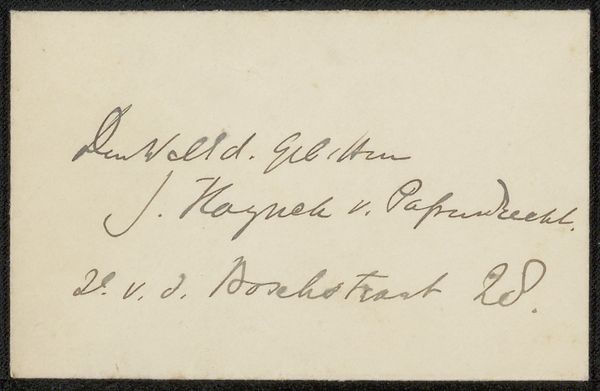
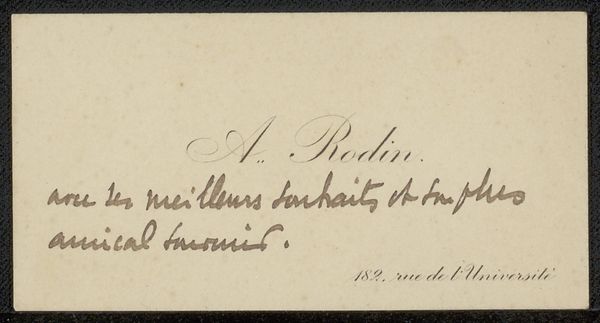
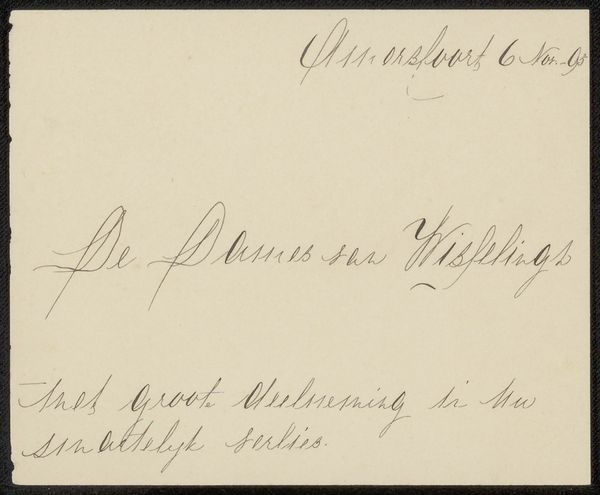
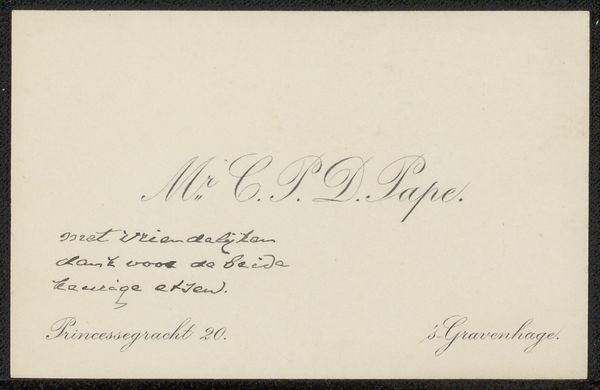
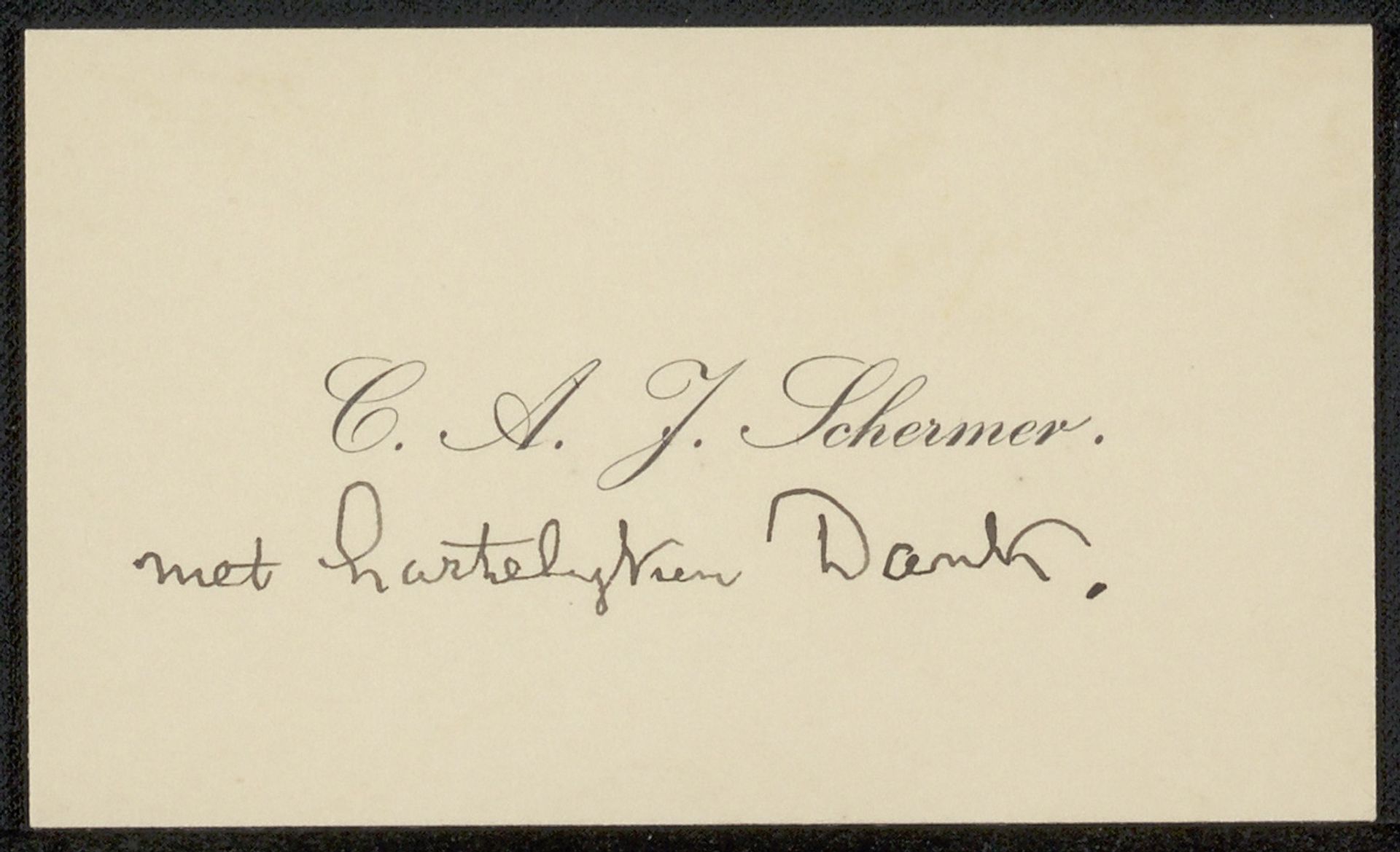
Visitekaartje aan Philip Zilcken

Listen to curator's interpretation
Curatorial notes
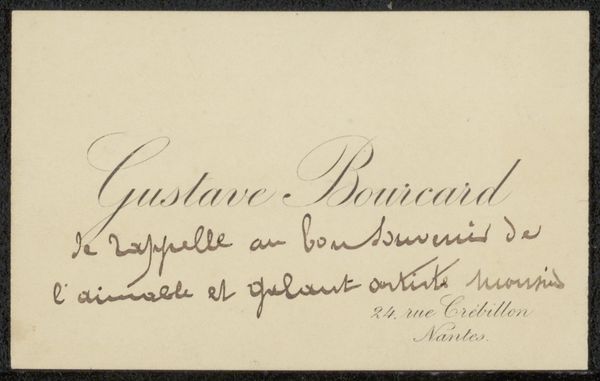
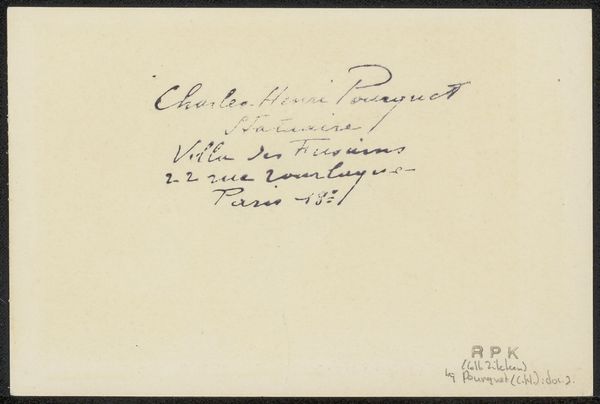
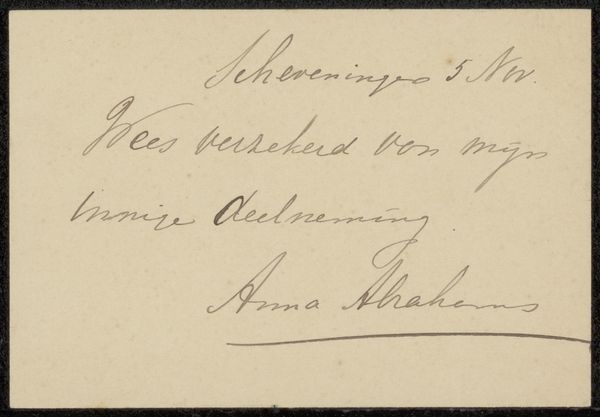
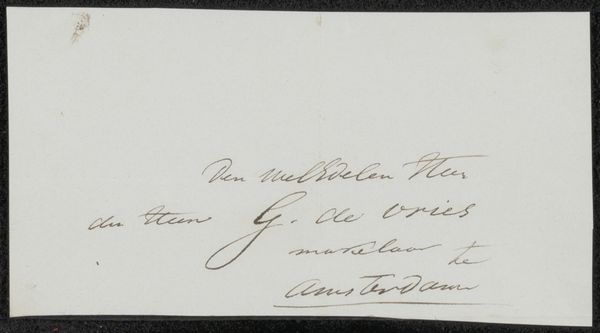
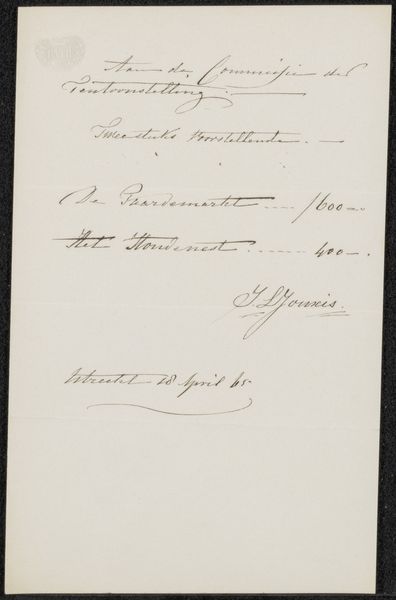
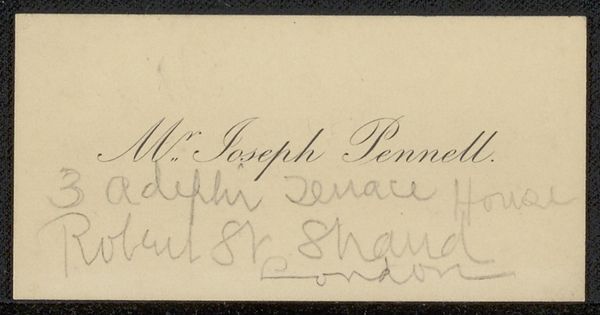
Editor: So, here we have Cornelis Schermer's "Visitekaartje aan Philip Zilcken," a calling card made before 1917, using ink on paper. It's basically just text, a name and a thank you note, but the calligraphy feels so elegant. How do you interpret this work, considering its apparent simplicity? Curator: Well, beyond the elegant script, I think this piece speaks to a whole history of social rituals and class dynamics. Think about it: a calling card signifies access, social standing, and the delicate dance of maintaining relationships within a particular societal stratum. What does it mean to express gratitude so formally, within that context? Editor: So, it's not just a thank you; it's about maintaining a social connection, almost a power dynamic, isn’t it? The act of physically presenting the card is a performance. Curator: Precisely. And the artistry involved - the specific choice of script, the quality of the paper and ink - all these details further communicate Schermer’s own social and artistic sensibilities. It is an announcement. How would this exchange play out differently today with an email or a text? The implications for privacy and performativity shift drastically. Editor: That's fascinating. The shift to digital communication really has changed these dynamics completely. I guess I hadn’t considered the power structures inherent in something that seems as simple as a thank you note. Curator: It’s easy to overlook. This card represents the artist’s carefully constructed persona within a specific societal frame, begging us to question: who had access to express themselves, and who was denied such opportunities? This is more than a simple gesture; it's a cultural artifact loaded with social meaning. Editor: This has given me a completely new way of looking at everyday objects! It's really eye-opening. Curator: Exactly, art can exist in any mundane setting. The power resides in understanding how even the smallest act is interwoven with social fabric.