1870 - 1926
Visitekaartje aan Philip Zilcken

Listen to curator's interpretation
Curatorial notes
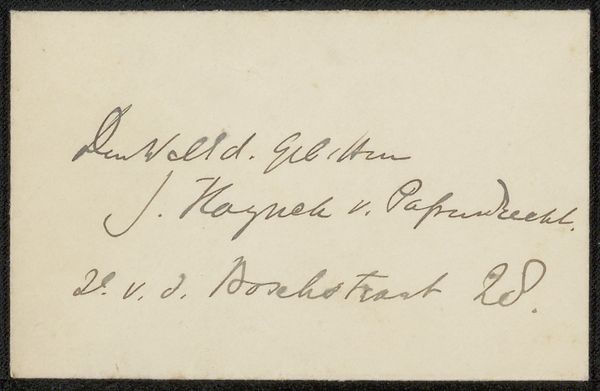
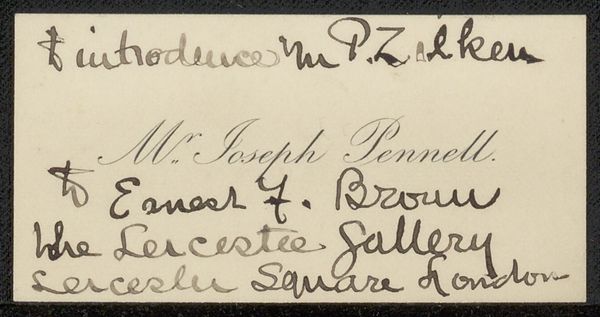
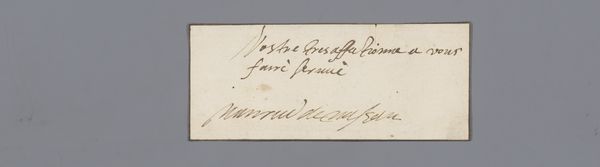
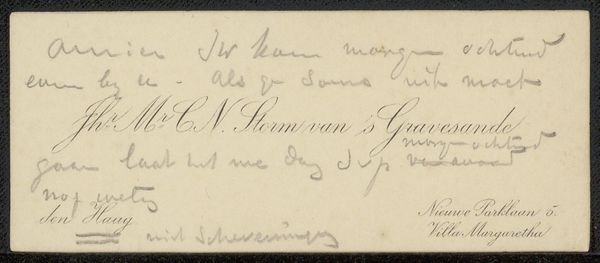
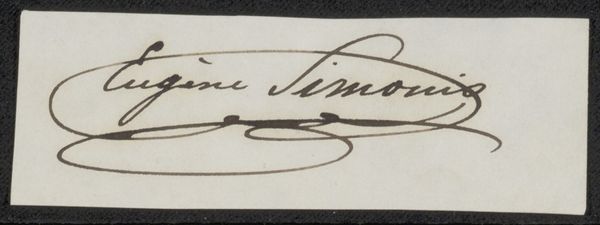
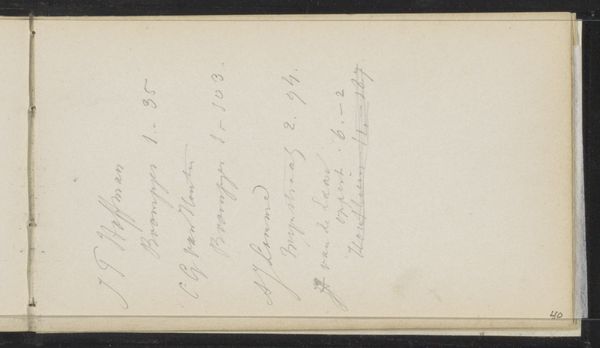
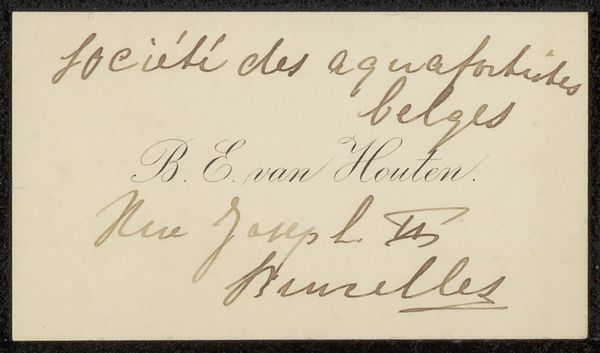
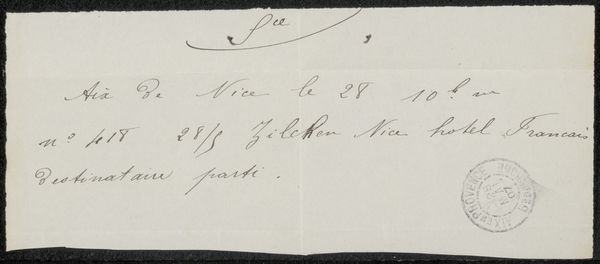
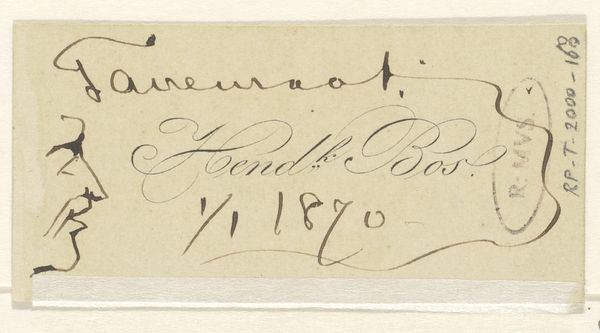
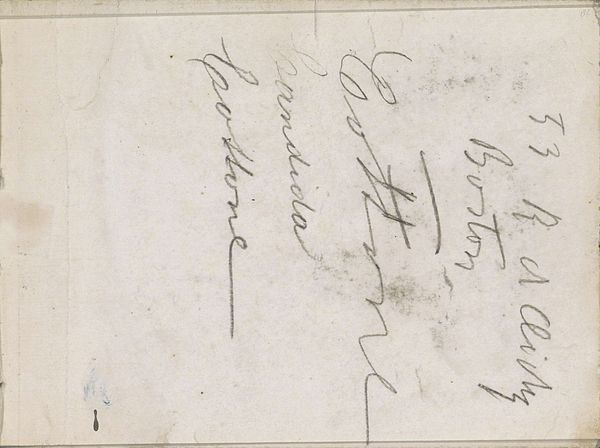
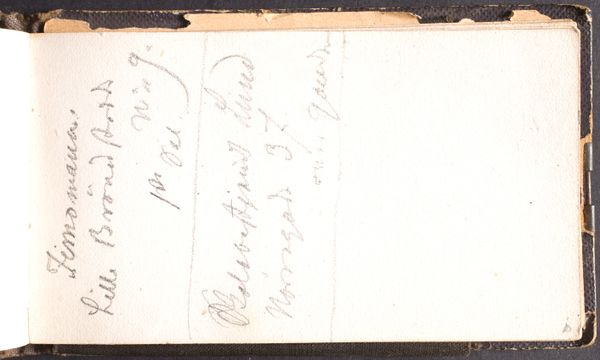
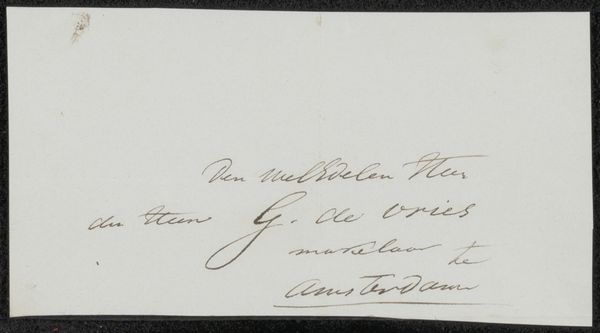
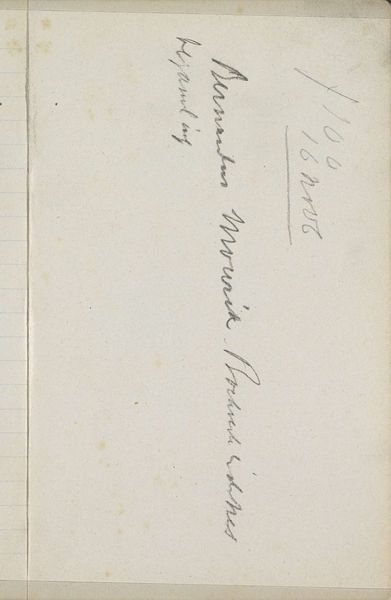
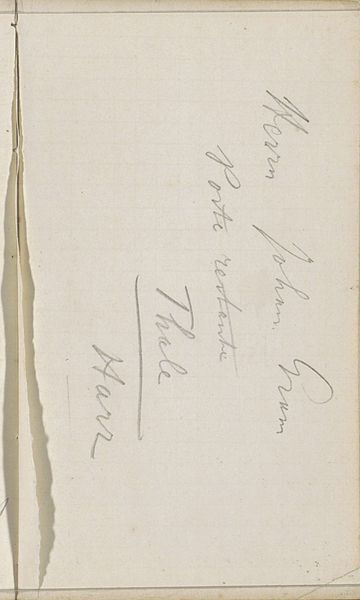
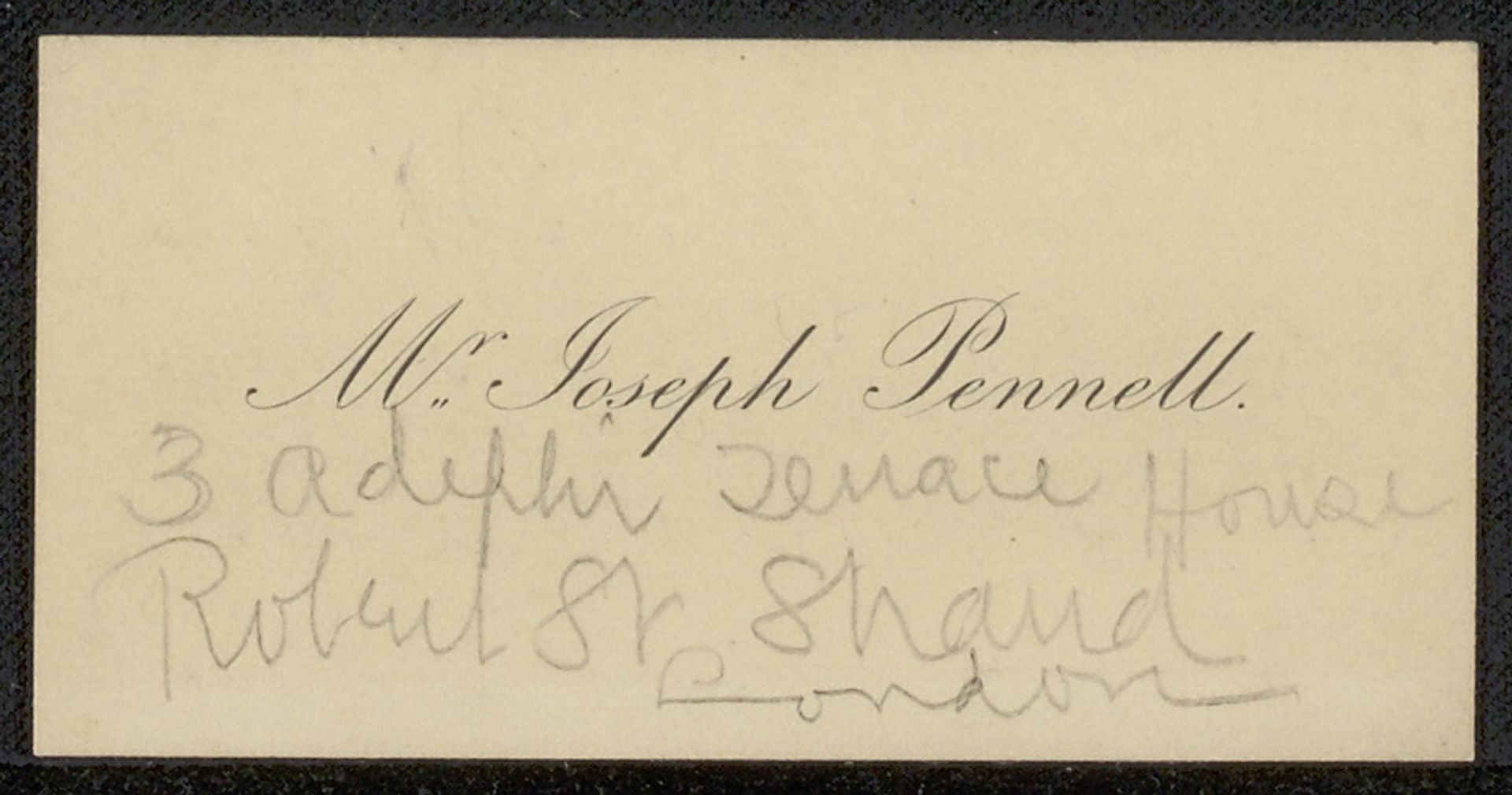
Curator: Let's turn our attention to a fascinating piece titled "Visitekaartje aan Philip Zilcken" which translates to “Visiting Card to Philip Zilcken”, dating from between 1870 and 1926, attributed to Joseph Pennell. We see a delicate rendering using pen and pencil on paper. Editor: It feels so personal, doesn’t it? Like stumbling upon a secret message tucked away in an old book. The lightness of the pencil makes it seem ephemeral, as if the words could vanish at any moment. Curator: Precisely. This piece is compelling when considered within the larger context of 19th and early 20th-century artistic networks. Visiting cards, like this one, functioned as social currency, conveying status and facilitating introductions. Pennell, as an artist with international connections, likely used such cards extensively. Editor: And that swirling script! It’s both formal and intimate, as though the hand that penned it hesitated between business and friendship. I can almost imagine him practicing the flourishes, wanting to make just the right impression. Curator: Indeed. Moreover, the very act of creating a hand-drawn card—especially a self-portrait—challenges conventional notions of artistic labor. Pennell inserts himself into this network, literally inscribing his identity within this exchange. It serves to explore ideas of authorship, branding and identity through this everyday item. Editor: You know, it makes me think about the lost art of letter writing. Now everything is so instant and digital. There's a real charm to this deliberate, crafted piece, the imperfections become endearing instead of flaws. Curator: Absolutely. Consider the power dynamics inherent in this small gesture. Pennell presents himself, his address, offering connection while simultaneously defining himself as a professional entity. This also highlights how access was socially dictated through means of cultural capital like this. Editor: There’s something profoundly human about it. Imperfect and slightly faded, but radiating personality and intention. Like a little relic whispering stories from the past. Curator: A poignant intersection of art, identity, and social practice, “Visitekaartje aan Philip Zilcken” serves as a micro-historical text on the machinations of artistic success, providing insight to broader understanding of the history of visual culture. Editor: This definitely gave me a refreshing outlook! Seeing the modern relevance, yet appreciation of tradition!