About this artwork
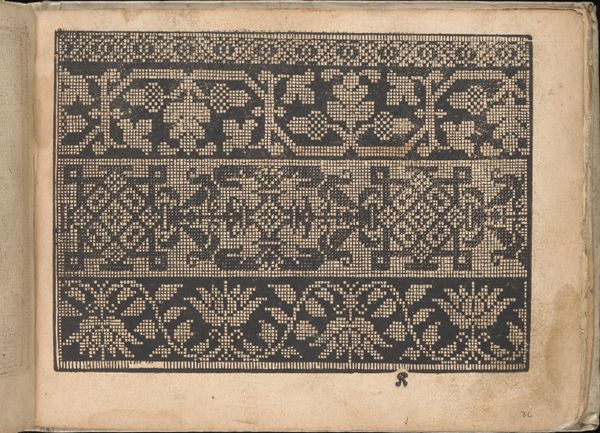
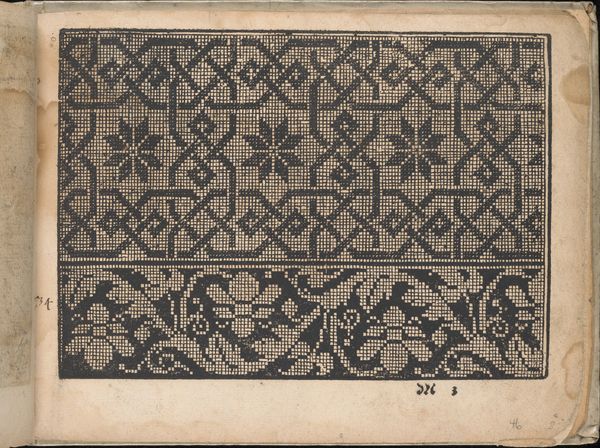
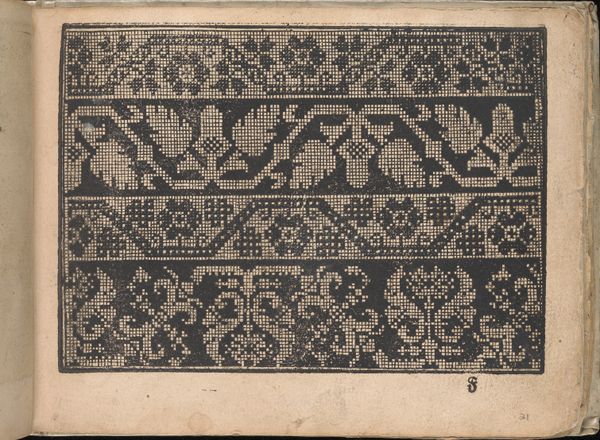
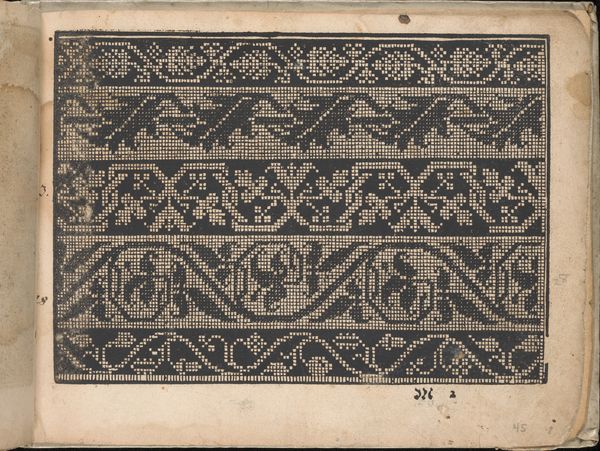
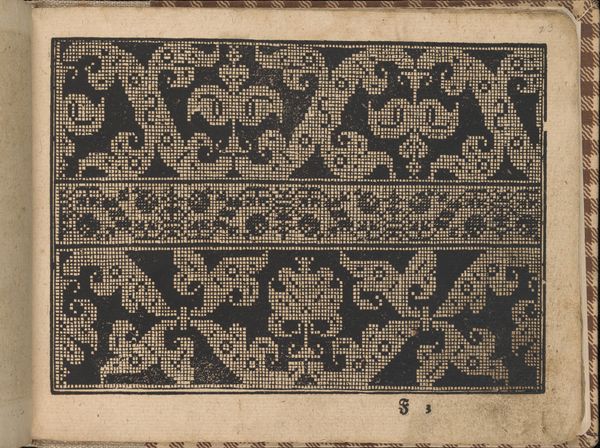
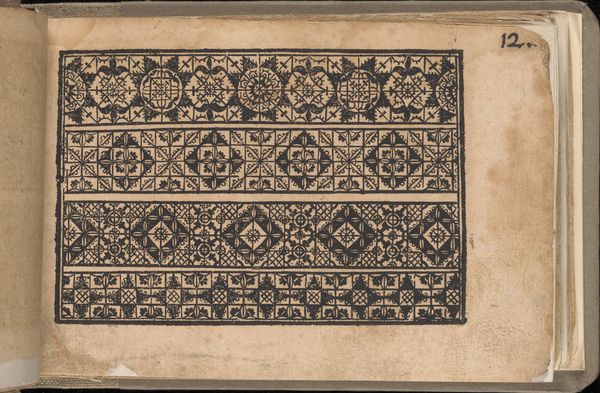
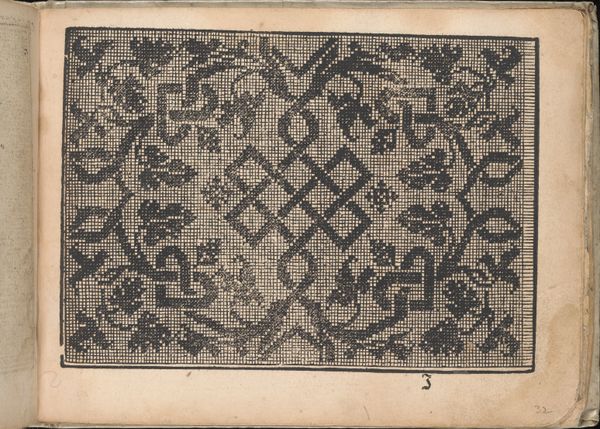
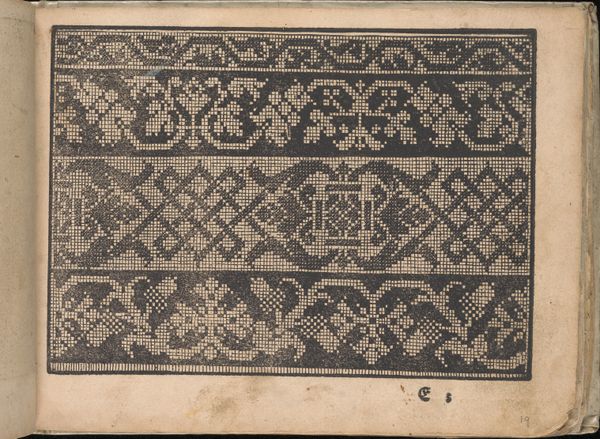
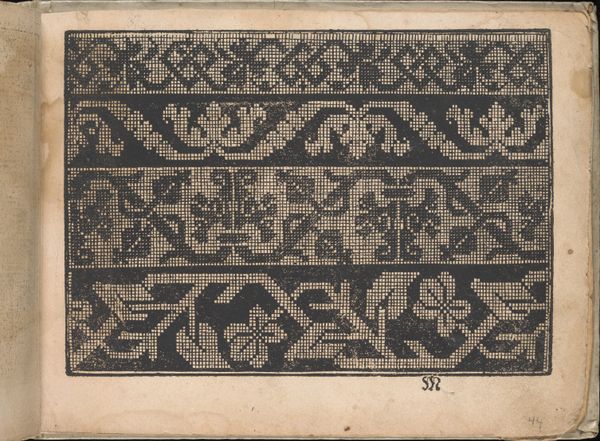
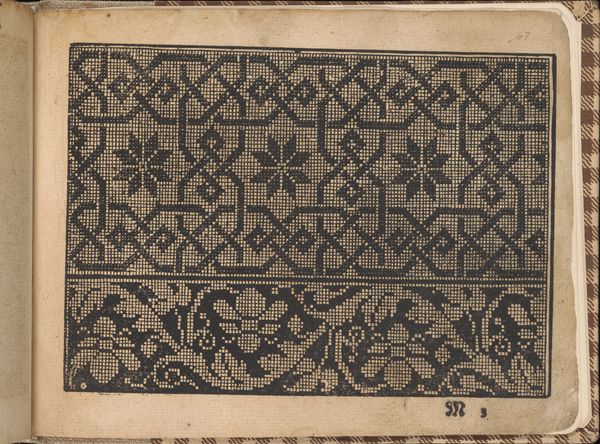
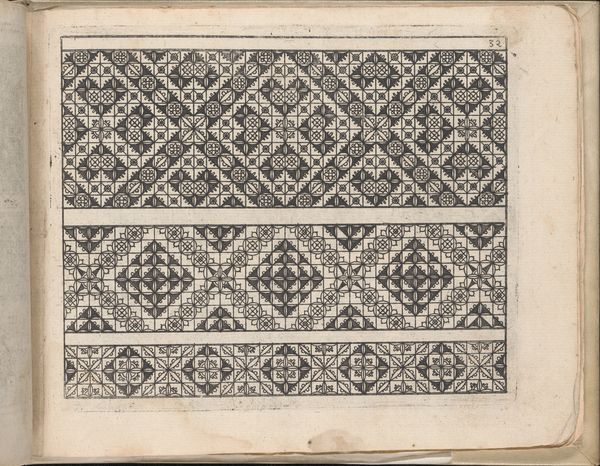
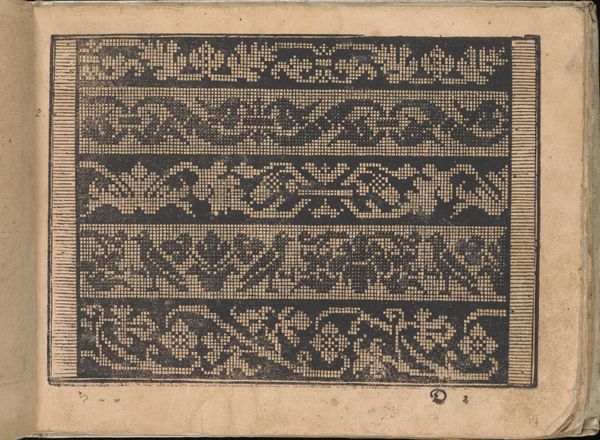
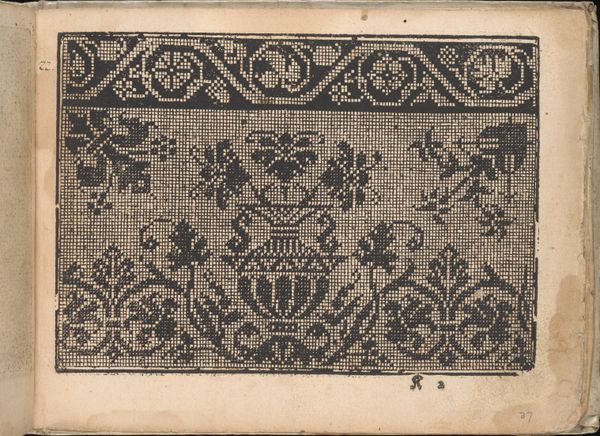
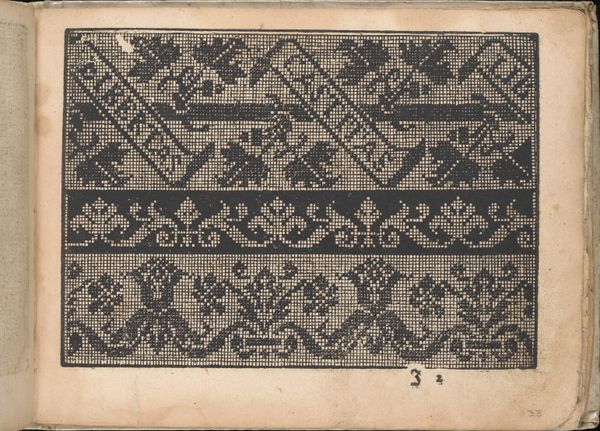
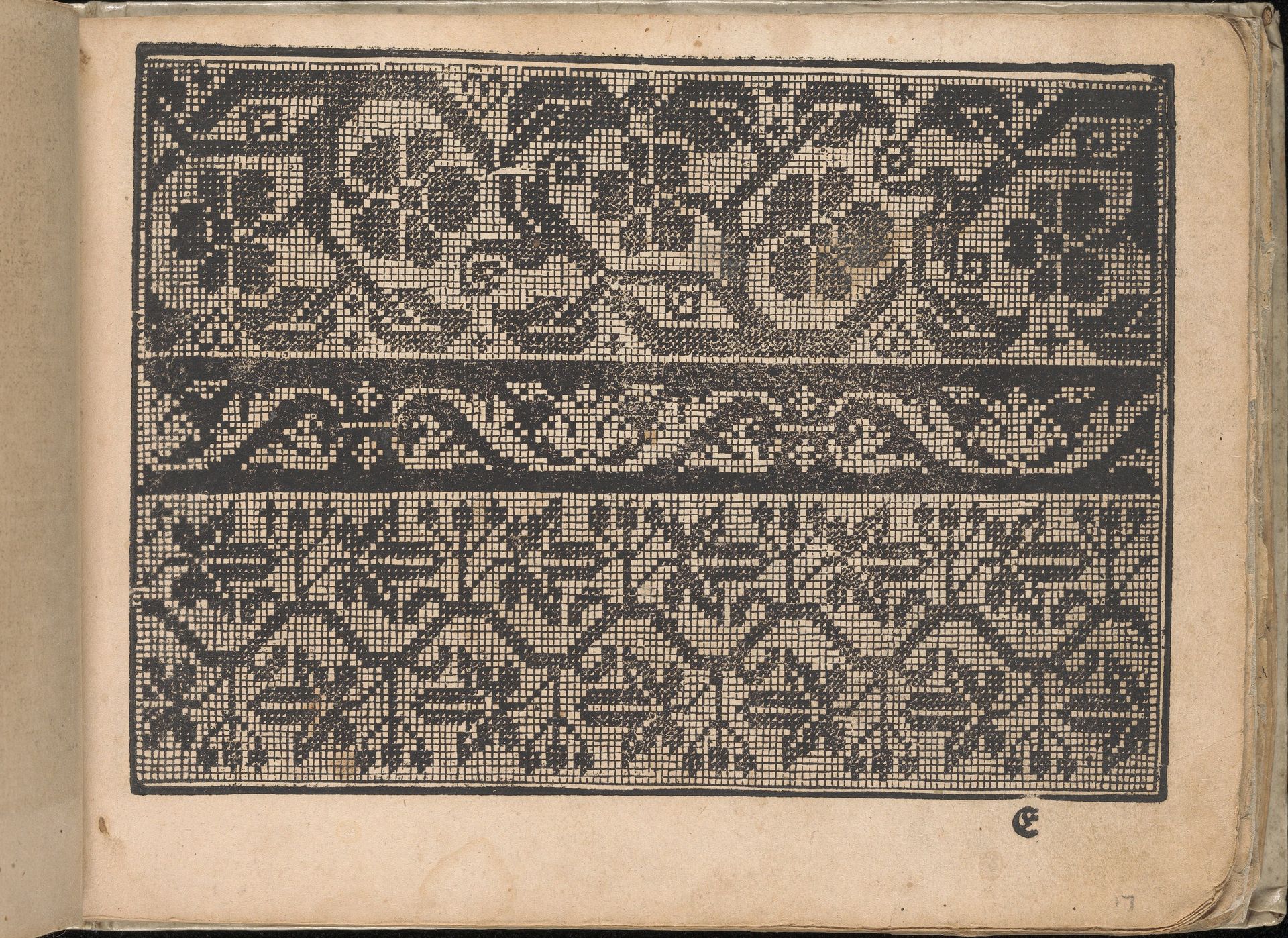
This is page 17 from 'New Artificial Pattern Book,' printed around 1577 by Bernhard Jobin in Strasbourg. It’s a woodcut pattern book intended as a guide for lacemakers and embroiderers. Books like these circulated widely in Europe from the 16th century onward, playing a crucial role in the development of textile design. Through the circulation of these pattern books, we can see how design motifs traveled across Europe and shaped the visual culture of domestic life. The rigid geometry reflects the influence of the printing press on design. The grid-like structure of the image mirrors the way that printmakers carefully transferred images using a system of measured points. The book demonstrates how the emerging print industry shaped not only the production but also the form of art and craft. Understanding this image requires that we look to the social and technological conditions in which it was produced. Catalogues, inventories and other archival documents can help us trace the movement and influence of these designs across different social classes and geographic regions.
Neu künstlich Modelbuch (page 17r) 1598


Artwork details
- Medium
- drawing, graphic-art, ornament, print, woodcut
- Dimensions
- Overall: 6 1/8 x 7 7/8 in. (15.5 x 20 cm)
- Location
- Metropolitan Museum of Art, New York, NY
- Copyright
- Public Domain
Tags
drawing
graphic-art
ornament
11_renaissance
woodcut
Comments
No comments
About this artwork
This is page 17 from 'New Artificial Pattern Book,' printed around 1577 by Bernhard Jobin in Strasbourg. It’s a woodcut pattern book intended as a guide for lacemakers and embroiderers. Books like these circulated widely in Europe from the 16th century onward, playing a crucial role in the development of textile design. Through the circulation of these pattern books, we can see how design motifs traveled across Europe and shaped the visual culture of domestic life. The rigid geometry reflects the influence of the printing press on design. The grid-like structure of the image mirrors the way that printmakers carefully transferred images using a system of measured points. The book demonstrates how the emerging print industry shaped not only the production but also the form of art and craft. Understanding this image requires that we look to the social and technological conditions in which it was produced. Catalogues, inventories and other archival documents can help us trace the movement and influence of these designs across different social classes and geographic regions.
Comments
No comments