About this artwork
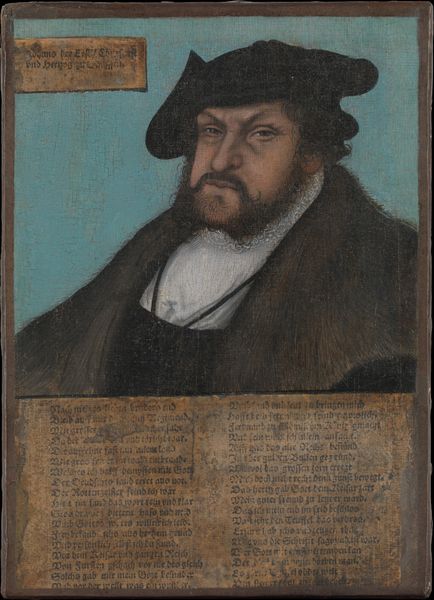
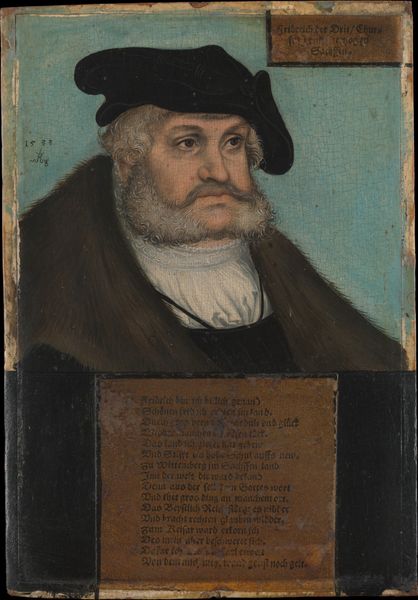
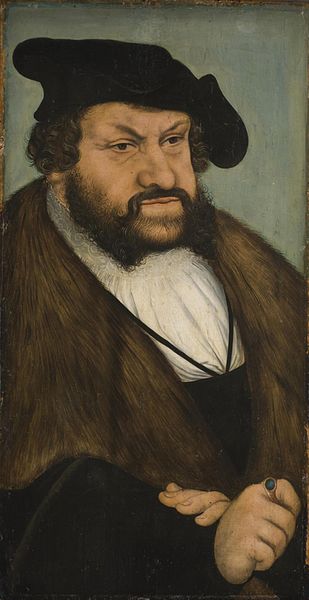
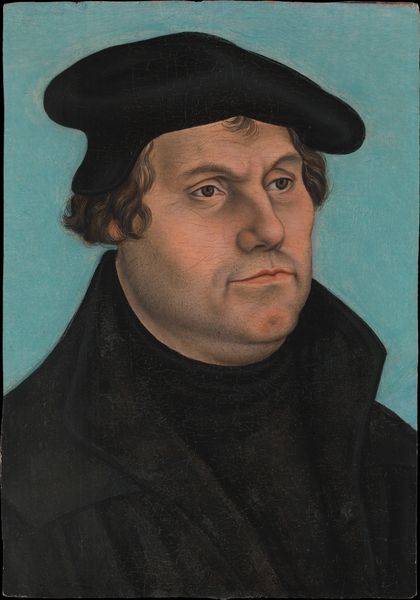
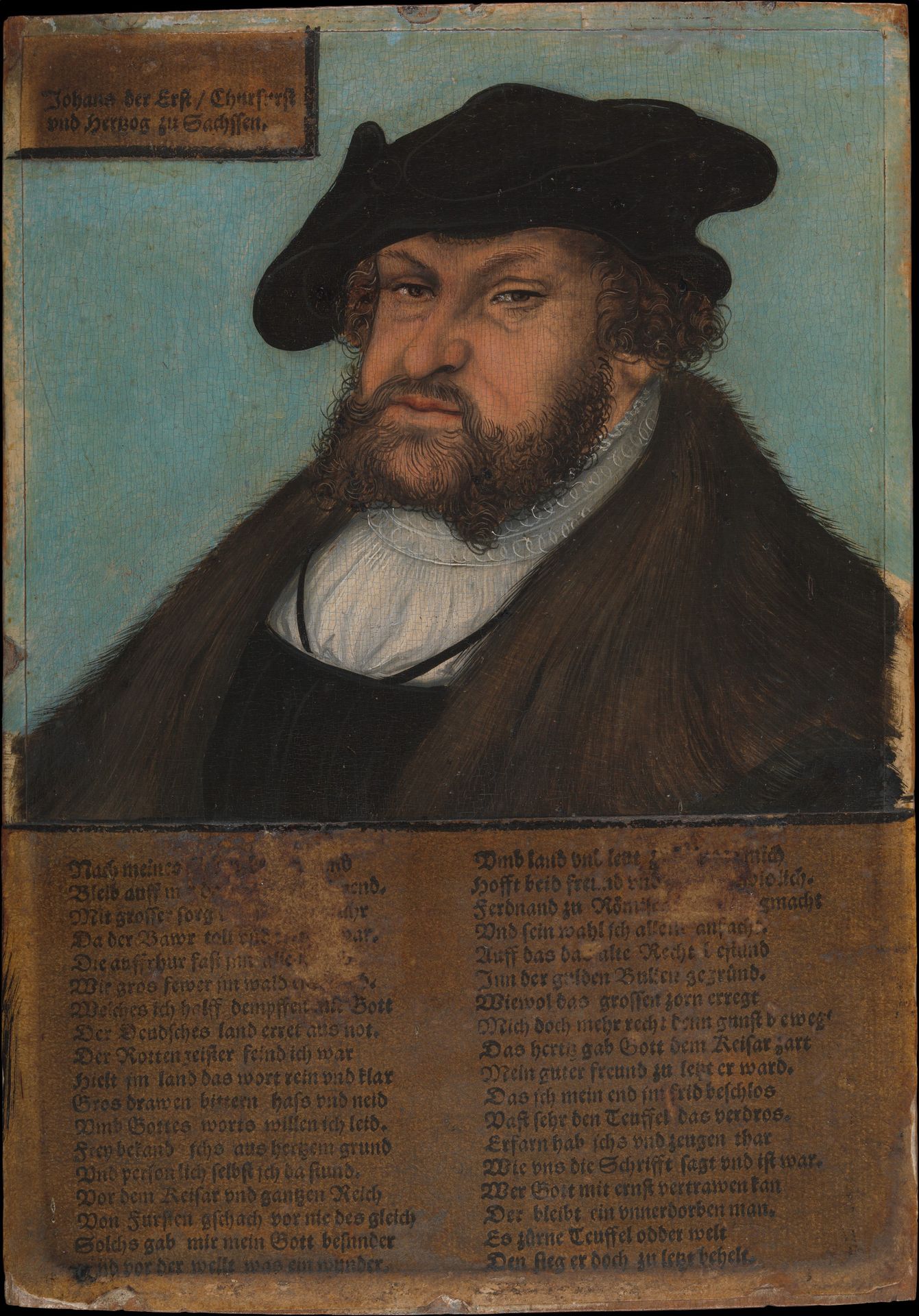
Lucas Cranach the Elder painted this portrait of Johann the Steadfast, Elector of Saxony, in 1500s using oil on wood. The composition is divided horizontally, with the upper two-thirds dominated by the imposing figure of Johann, set against a serene turquoise backdrop. This cool colour contrasts with the warm, earthy tones of Johann's face and fur-lined coat, drawing the viewer's eye to the textures and materiality of the painting. Cranach's technique blends close observation with symbolic representation. Note how the sitter's gaze and the detailed rendering of his garments establish his status and authority. The lower third of the painting features dense, Gothic script, acting as a textual anchor. It invites a deeper engagement with the cultural codes of the time. The painting operates within a semiotic system where every detail—from the subject's clothing to the text—communicates complex social, religious, and political meanings. Cranach uses this formal arrangement to explore themes of power, identity, and the relationship between the individual and the divine during the Reformation.
Johann I (1468–1532), the Constant, Elector of Saxony
1532 - 1533

Lucas Cranach the Elder
1472 - 1553
The Metropolitan Museum of Art
Metropolitan Museum of Art, New York, NYArtwork details
- Dimensions
- 8 x 5 5/8 in. (20.3 x 14.3 cm)
- Location
- Metropolitan Museum of Art, New York, NY
- Copyright
- Public Domain
Comments
Be the first to share your thoughts about this work.
About this artwork
Lucas Cranach the Elder painted this portrait of Johann the Steadfast, Elector of Saxony, in 1500s using oil on wood. The composition is divided horizontally, with the upper two-thirds dominated by the imposing figure of Johann, set against a serene turquoise backdrop. This cool colour contrasts with the warm, earthy tones of Johann's face and fur-lined coat, drawing the viewer's eye to the textures and materiality of the painting. Cranach's technique blends close observation with symbolic representation. Note how the sitter's gaze and the detailed rendering of his garments establish his status and authority. The lower third of the painting features dense, Gothic script, acting as a textual anchor. It invites a deeper engagement with the cultural codes of the time. The painting operates within a semiotic system where every detail—from the subject's clothing to the text—communicates complex social, religious, and political meanings. Cranach uses this formal arrangement to explore themes of power, identity, and the relationship between the individual and the divine during the Reformation.
Comments
Be the first to share your thoughts about this work.