About this artwork
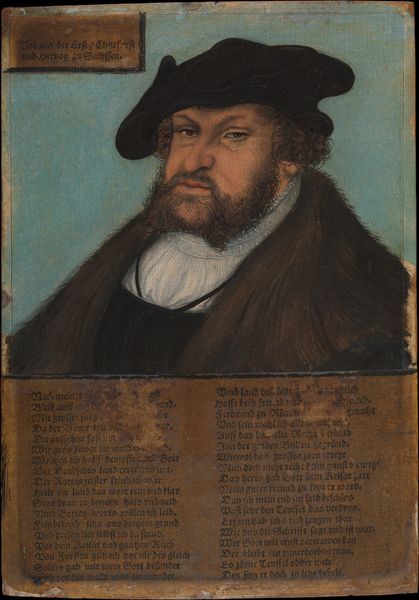
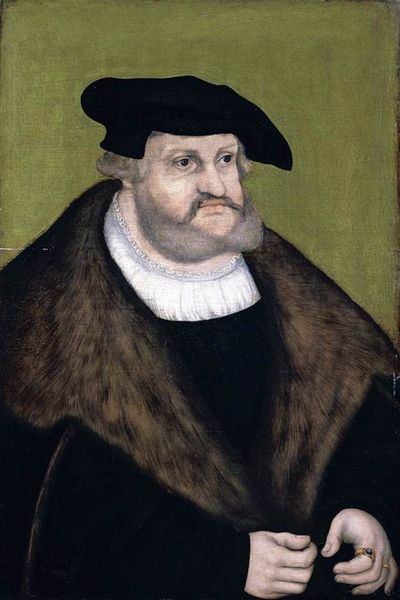
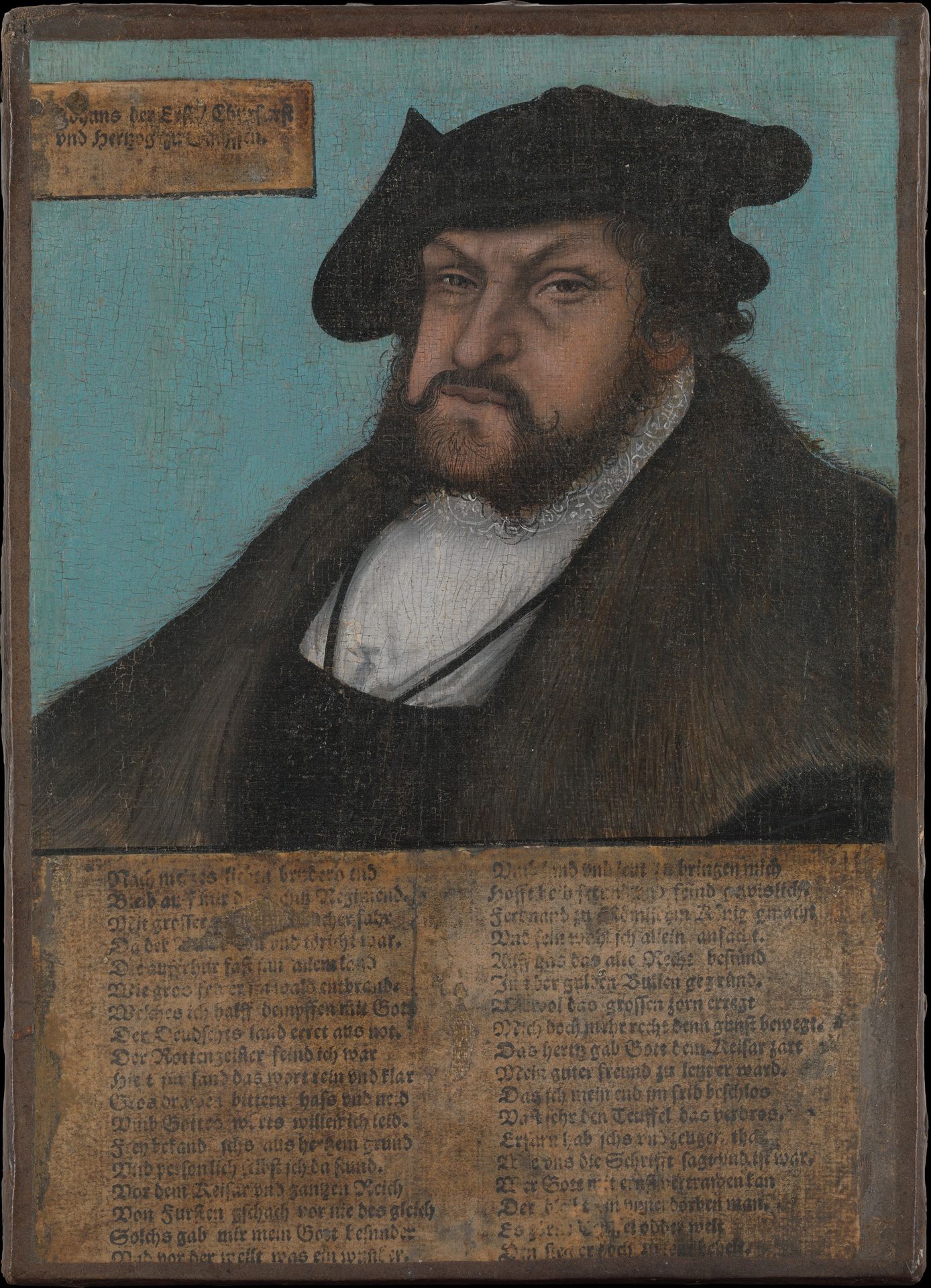
Painted by Lucas Cranach the Elder, this portrait depicts Johann I, Elector of Saxony. It gives us a glimpse into the world of the Reformation and the complex interplay of politics, religion, and identity. During the 16th century, Saxony was a hotbed of religious and political change. As Elector, Johann was a key figure in the Protestant Reformation, a movement that challenged the authority of the Catholic Church and reshaped European society. What does it mean to be a ruler at such a time? Johann's heavy clothing and stern expression seem to suggest the gravity of his position, while the verses beneath the portrait appear to hint at the virtues expected of him. Cranach, as court painter, played a crucial role in shaping the visual identity of the Reformation. How does this portrait reflect not only Johann's personal identity but also his role in a larger historical narrative? It's a reminder that art is never created in a vacuum. Ultimately, this small portrait is a window into a world in transition, where faith, power, and identity were constantly being negotiated.
Johann I (1468–1532), the Constant, Elector of Saxony
1532 - 1533

Lucas Cranach the Elder
1472 - 1553
The Metropolitan Museum of Art
Metropolitan Museum of Art, New York, NYArtwork details
- Medium
- painting, oil-paint
- Dimensions
- 8 1/4 x 5 7/8 in. (21 x 14.9 cm)
- Location
- Metropolitan Museum of Art, New York, NY
- Copyright
- Public Domain
Tags
Comments
Share your thoughts
About this artwork
Painted by Lucas Cranach the Elder, this portrait depicts Johann I, Elector of Saxony. It gives us a glimpse into the world of the Reformation and the complex interplay of politics, religion, and identity. During the 16th century, Saxony was a hotbed of religious and political change. As Elector, Johann was a key figure in the Protestant Reformation, a movement that challenged the authority of the Catholic Church and reshaped European society. What does it mean to be a ruler at such a time? Johann's heavy clothing and stern expression seem to suggest the gravity of his position, while the verses beneath the portrait appear to hint at the virtues expected of him. Cranach, as court painter, played a crucial role in shaping the visual identity of the Reformation. How does this portrait reflect not only Johann's personal identity but also his role in a larger historical narrative? It's a reminder that art is never created in a vacuum. Ultimately, this small portrait is a window into a world in transition, where faith, power, and identity were constantly being negotiated.
Comments
Share your thoughts