1750 - 1752
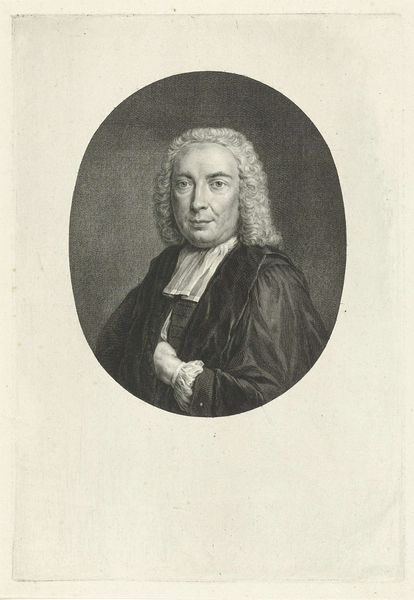
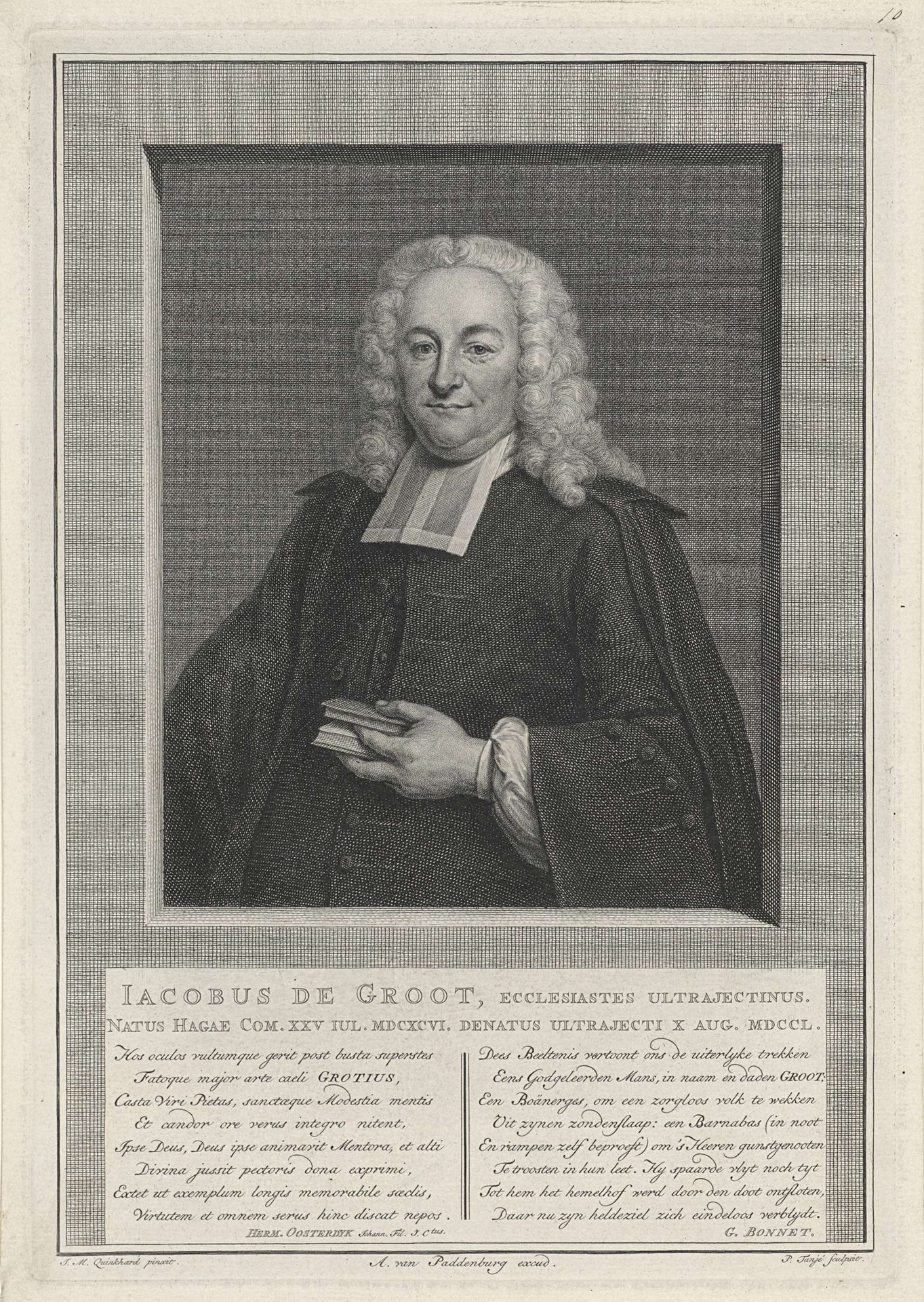
Portret van Jacobus de Groot

Pieter Tanjé
1706 - 1761Location
RijksmuseumListen to curator's interpretation
Curatorial notes
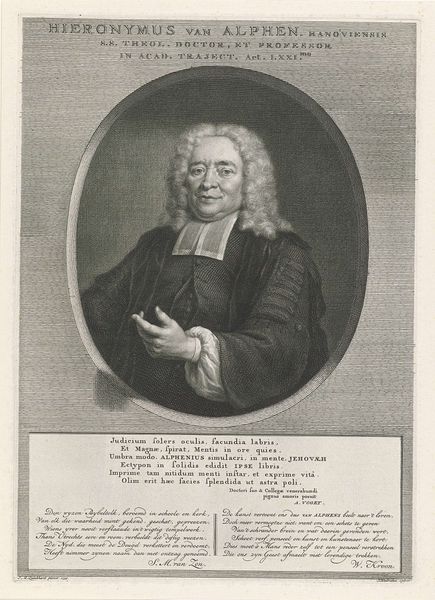
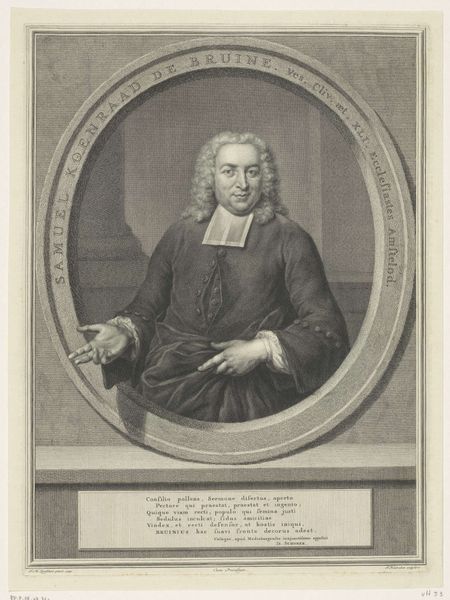
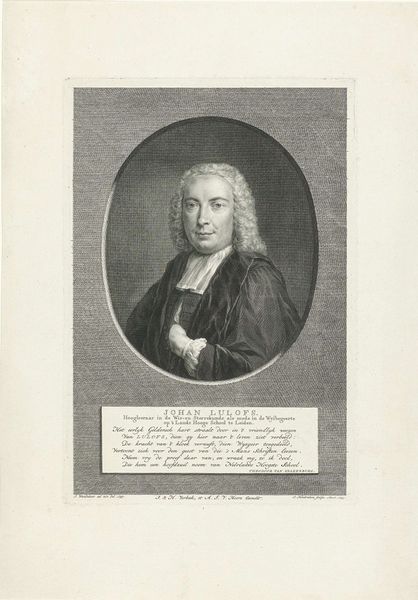
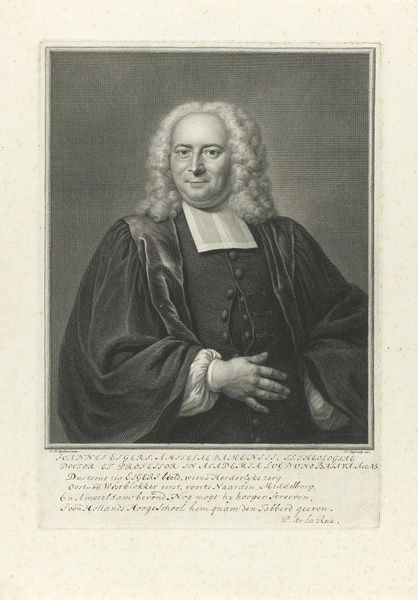
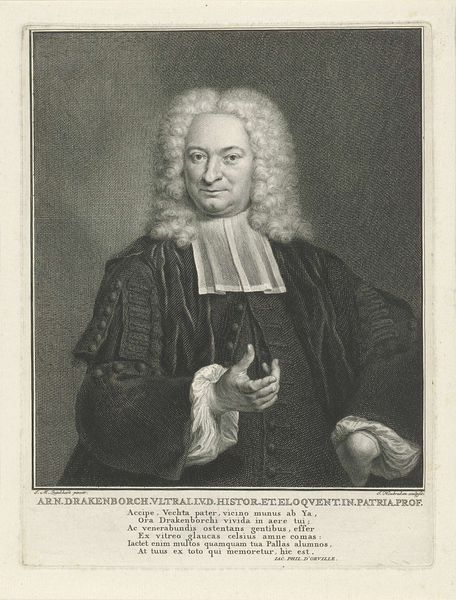
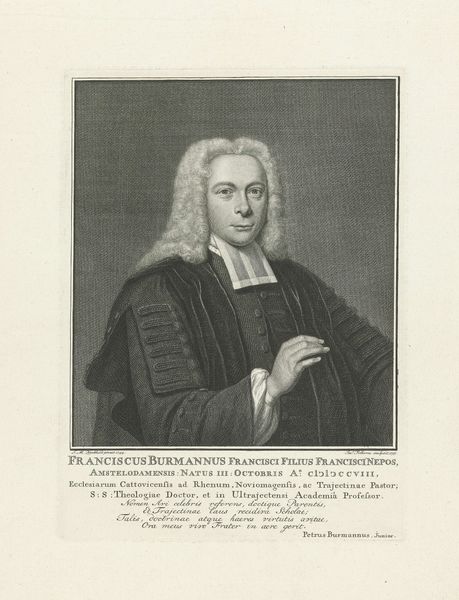
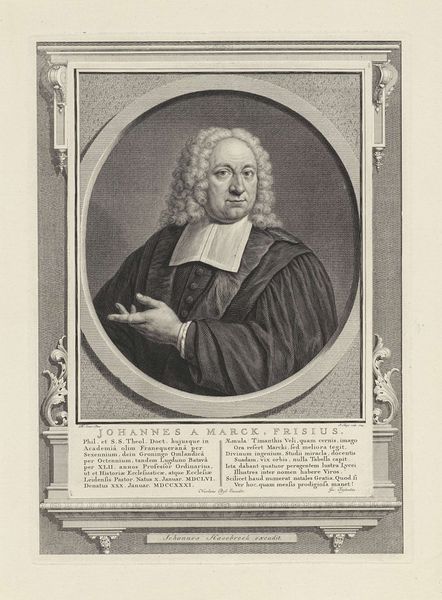
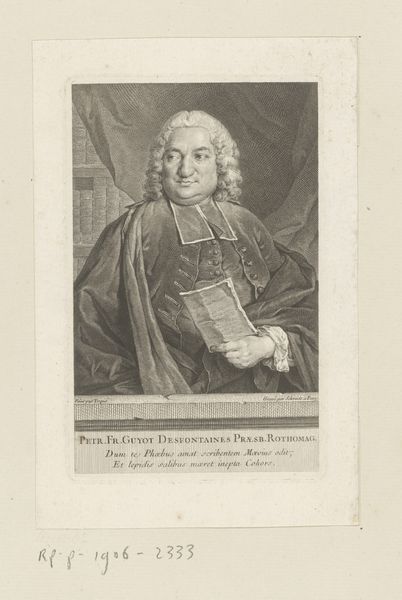
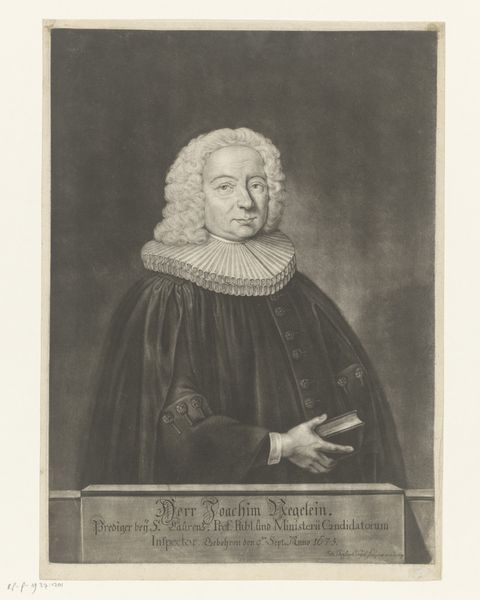
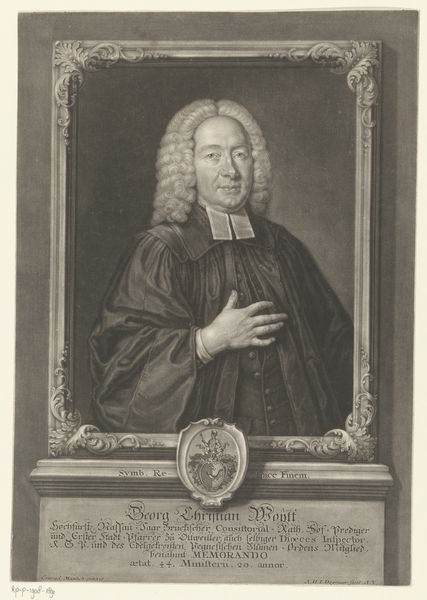
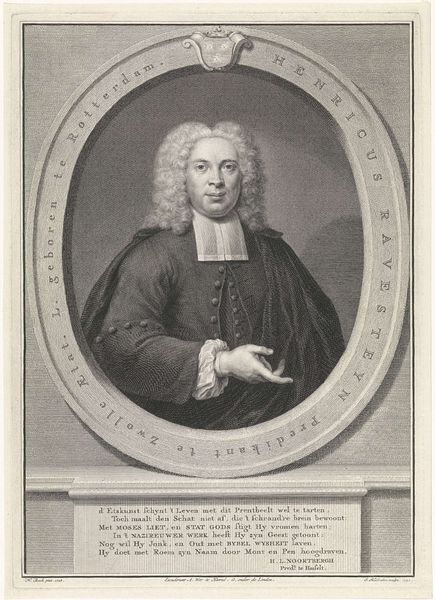
This is Pieter Tanjé’s portrait of Jacobus de Groot, made with engraving techniques sometime in the mid-18th century. Engraving is an intaglio process, where the artist uses a tool called a burin to incise a design into a metal plate. This is painstaking work. The lines that you see on the print weren't drawn directly. Instead, each one had to be carved into the metal, to hold the ink. Because of the labor involved, prints like this would have been relatively costly. The real subject of the artwork isn't just Jacobus de Groot, but also the technologies that allowed his image to be disseminated. In contrast to painting, which was one-of-a-kind, prints could be made in relatively large numbers. They are a perfect medium for spreading ideas, or in this case, celebrating a notable man. Considering the materials and processes used in creating this portrait broadens our understanding of its cultural and social impact. It reminds us that even images, like this one, are deeply intertwined with the labor, politics, and consumption patterns of their time.