About this artwork
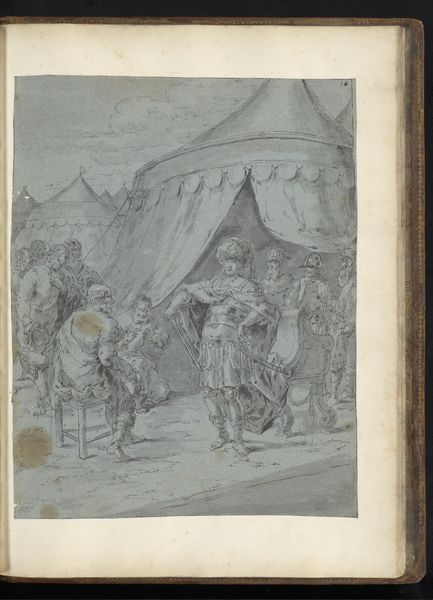
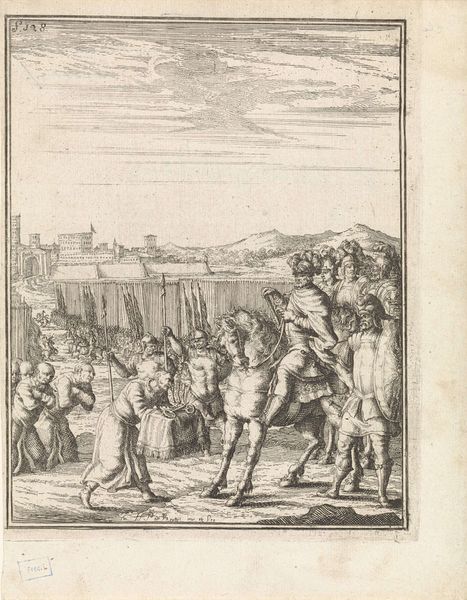
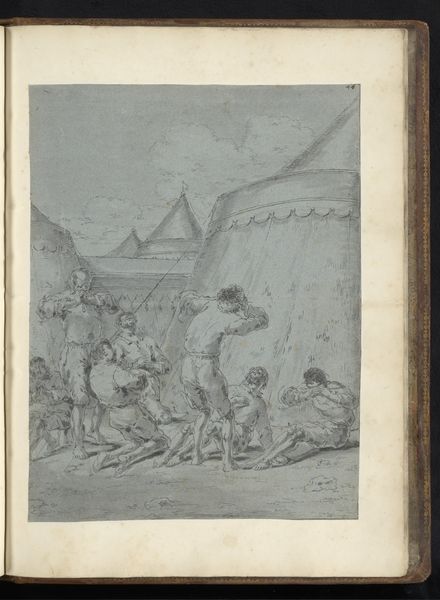
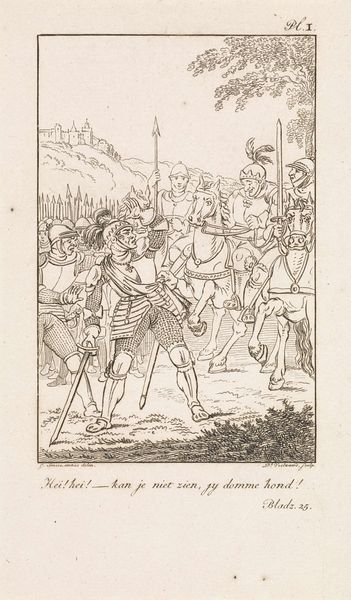
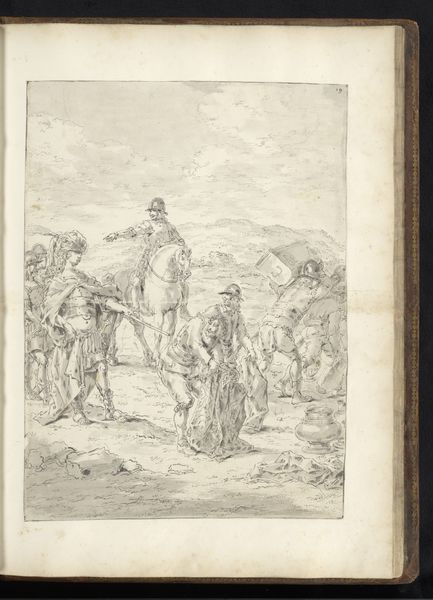
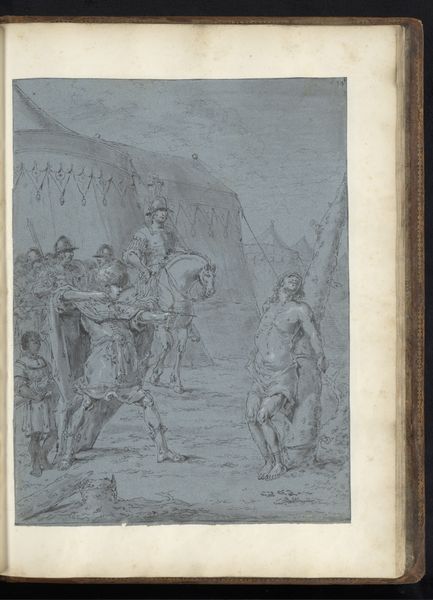
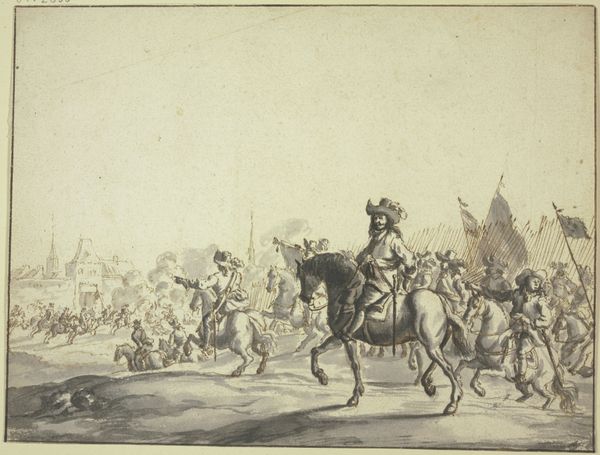
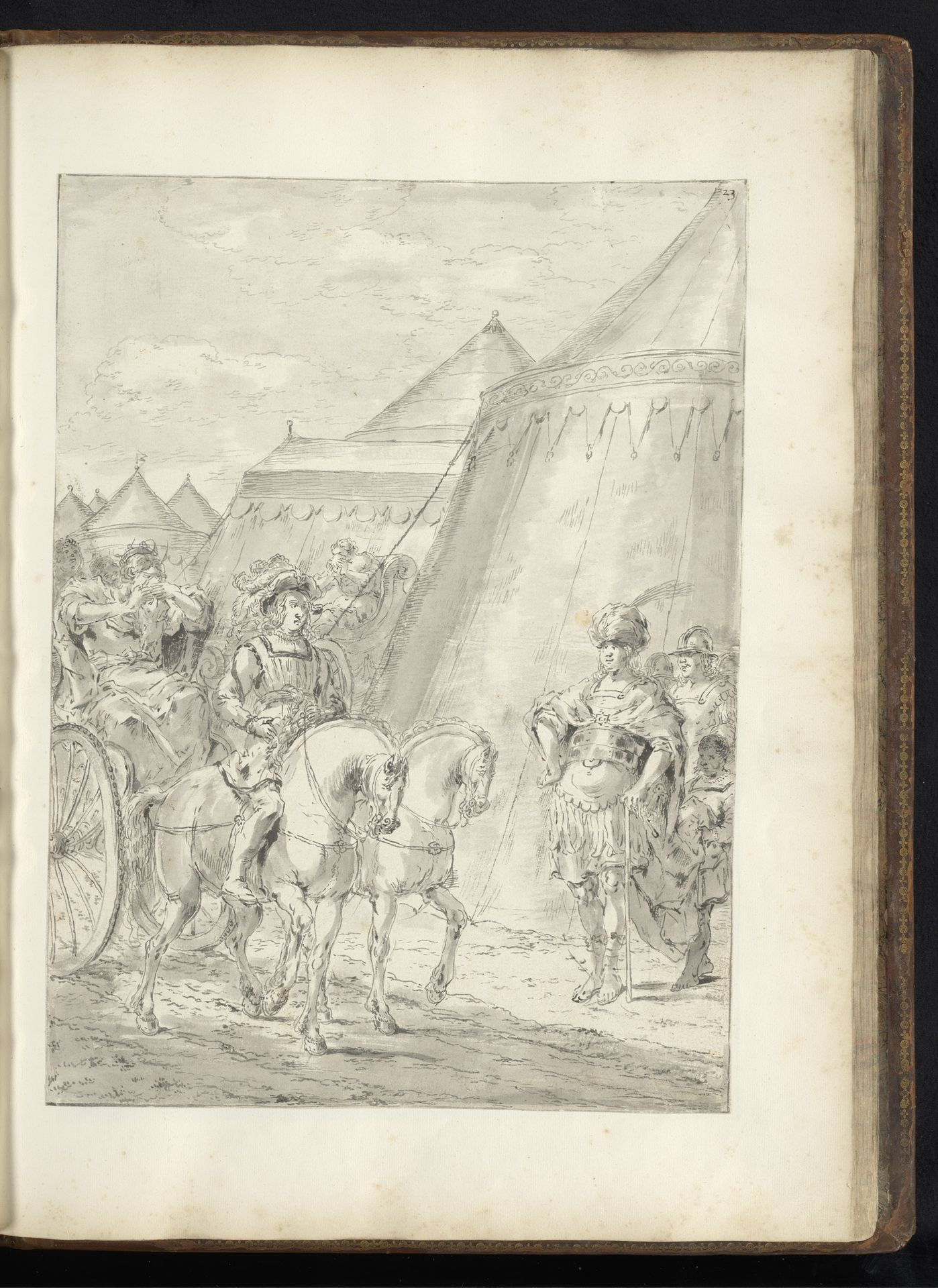
Leonaert Bramer made this pen and wash drawing depicting Stateira and her daughter being brought to Alexander the Great, sometime in the 17th century. The drawing presents a vision of ancient history, filtered through the lens of Bramer’s own time. The scene is framed by the trappings of military power: soldiers, tents, and horses. Alexander stands in the foreground, while Stateira arrives by horse-drawn carriage, a spectacle of conquest and submission. This dynamic reflects the interests of Bramer’s Dutch Republic, a society preoccupied with trade, exploration, and military expansion, but the grandeur and violence of the scene also comments on the brutal realities of colonial power. To understand the image more fully, we might look at period sources on Dutch colonialism, military history, and the cultural fascination with classical antiquity. Considering the context, we see that the meaning of this image lies not only in its aesthetic qualities, but also in its complex relationship to the social and institutional forces of its time.
Stateira en haar dochter worden naar Alexander de Grote gebracht
c. 1655 - 1665

Leonaert Bramer
1596 - 1674Location
RijksmuseumArtwork details
- Medium
- drawing, paper, ink
- Dimensions
- height 406 mm, width 300 mm
- Location
- Rijksmuseum
- Copyright
- Rijks Museum: Open Domain
Tags
Comments
Share your thoughts
About this artwork
Leonaert Bramer made this pen and wash drawing depicting Stateira and her daughter being brought to Alexander the Great, sometime in the 17th century. The drawing presents a vision of ancient history, filtered through the lens of Bramer’s own time. The scene is framed by the trappings of military power: soldiers, tents, and horses. Alexander stands in the foreground, while Stateira arrives by horse-drawn carriage, a spectacle of conquest and submission. This dynamic reflects the interests of Bramer’s Dutch Republic, a society preoccupied with trade, exploration, and military expansion, but the grandeur and violence of the scene also comments on the brutal realities of colonial power. To understand the image more fully, we might look at period sources on Dutch colonialism, military history, and the cultural fascination with classical antiquity. Considering the context, we see that the meaning of this image lies not only in its aesthetic qualities, but also in its complex relationship to the social and institutional forces of its time.
Comments
Share your thoughts