About this artwork
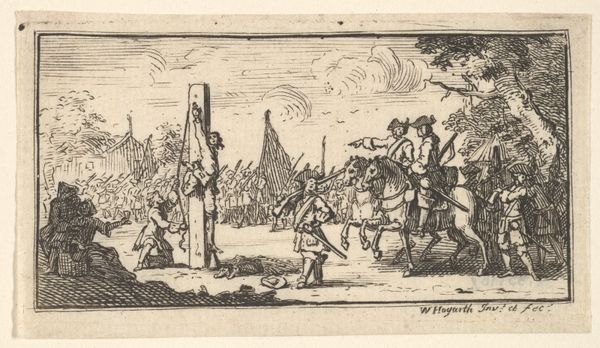
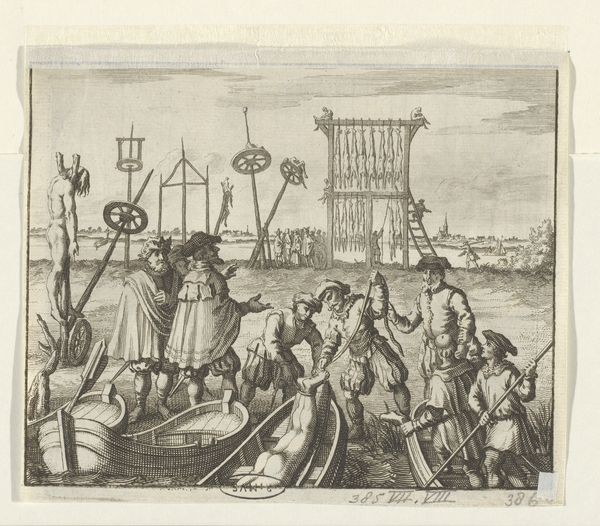
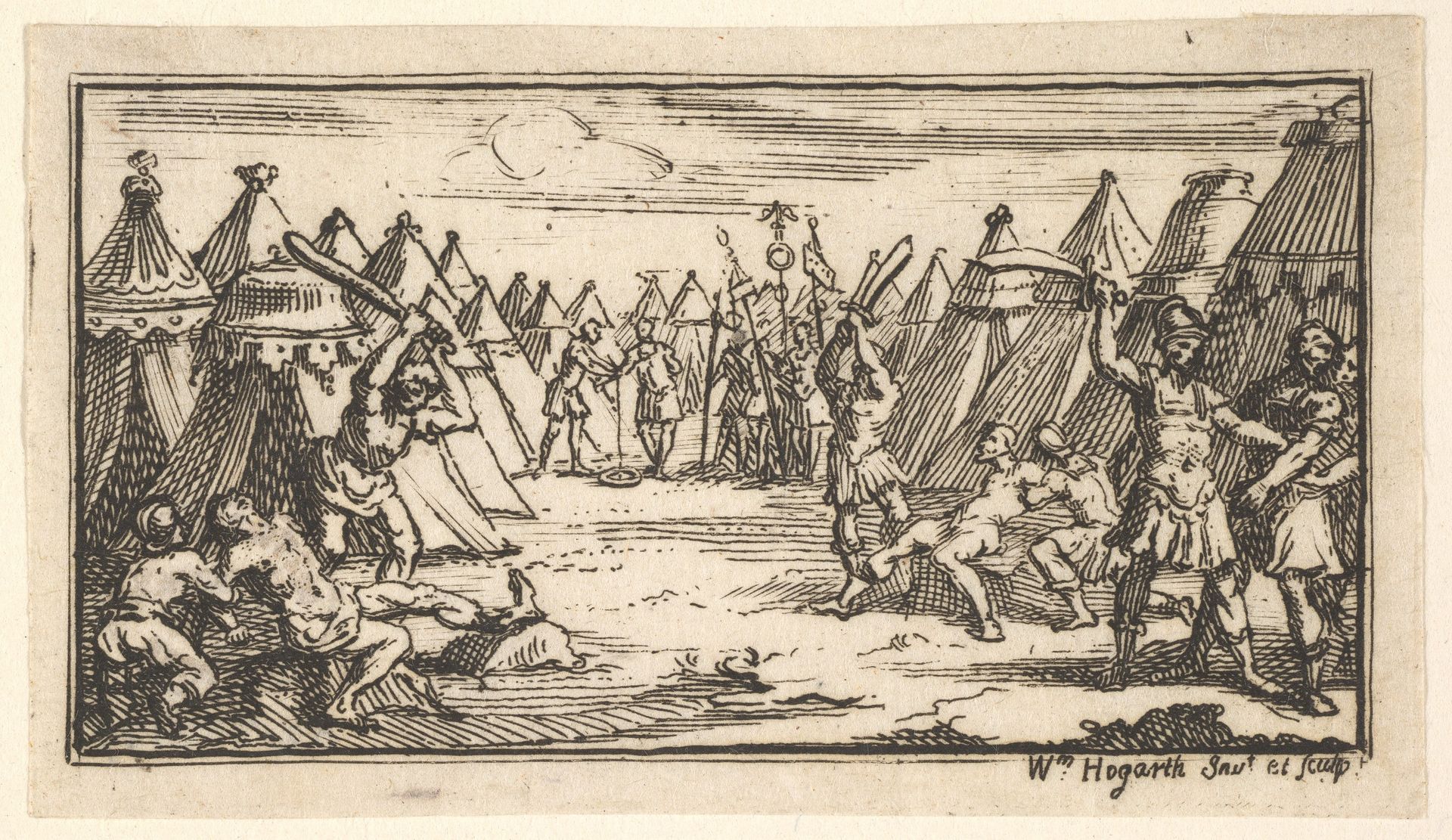
William Hogarth created this etching titled 'Breaking the Legs' around 1725. It depicts a brutal scene of Roman military punishment, a reflection of the artist's interest in social critique. Notice how Hogarth illustrates the raw violence inflicted upon the soldiers, highlighting the abuse of power within the military structure. The image resonates with the artist's broader commentary on social injustices. In eighteenth-century England, the military was a complex institution, often preying on the working classes, promising opportunity but delivering harsh realities. Hogarth himself came from a background marked by financial struggles. Consider how the artist uses the graphic imagery to elicit a sense of horror and empathy in the viewer. He challenges the traditional glorification of military might. Hogarth invites us to confront the darker aspects of authority and the human cost of conflict.
Breaking the Legs (John Beaver, Roman Military Punishments, 1725)
1725 - 1779


Artwork details
- Medium
- drawing, print
- Dimensions
- sheet: 1 3/4 x 3 1/16 in. (4.4 x 7.7 cm)
- Location
- Metropolitan Museum of Art, New York, NY
- Copyright
- Public Domain
Tags
Comments
Share your thoughts
About this artwork
William Hogarth created this etching titled 'Breaking the Legs' around 1725. It depicts a brutal scene of Roman military punishment, a reflection of the artist's interest in social critique. Notice how Hogarth illustrates the raw violence inflicted upon the soldiers, highlighting the abuse of power within the military structure. The image resonates with the artist's broader commentary on social injustices. In eighteenth-century England, the military was a complex institution, often preying on the working classes, promising opportunity but delivering harsh realities. Hogarth himself came from a background marked by financial struggles. Consider how the artist uses the graphic imagery to elicit a sense of horror and empathy in the viewer. He challenges the traditional glorification of military might. Hogarth invites us to confront the darker aspects of authority and the human cost of conflict.
Comments
Share your thoughts