About this artwork
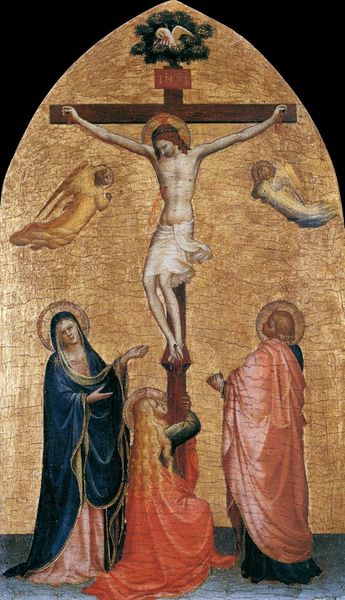
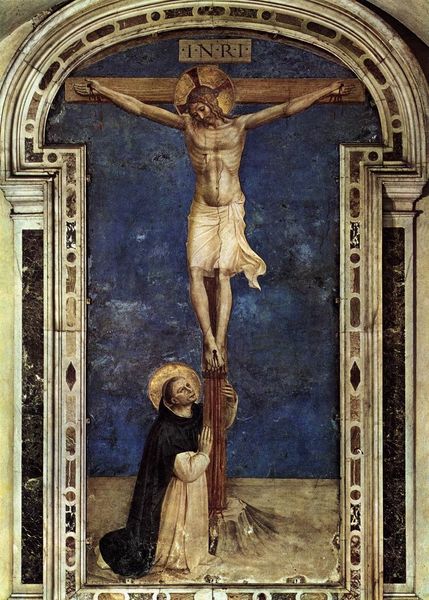
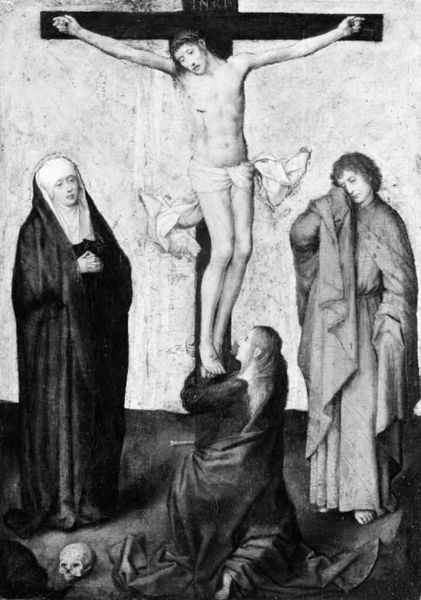
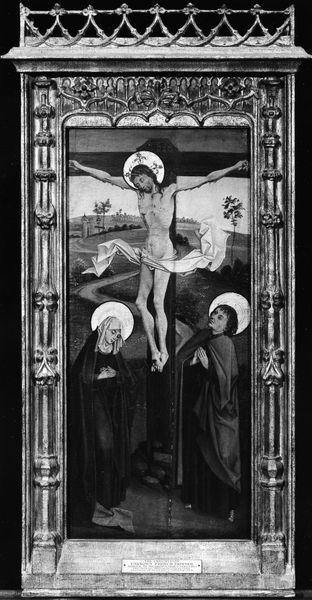
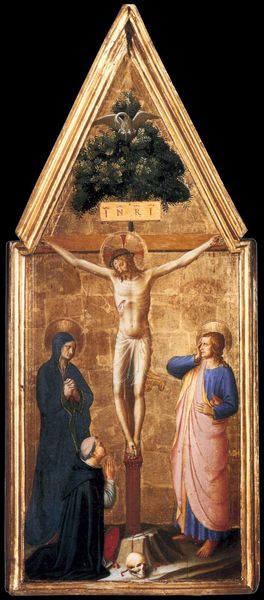
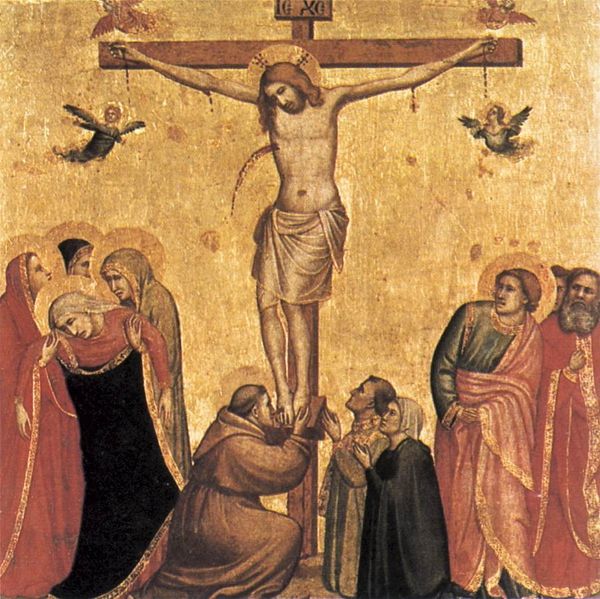
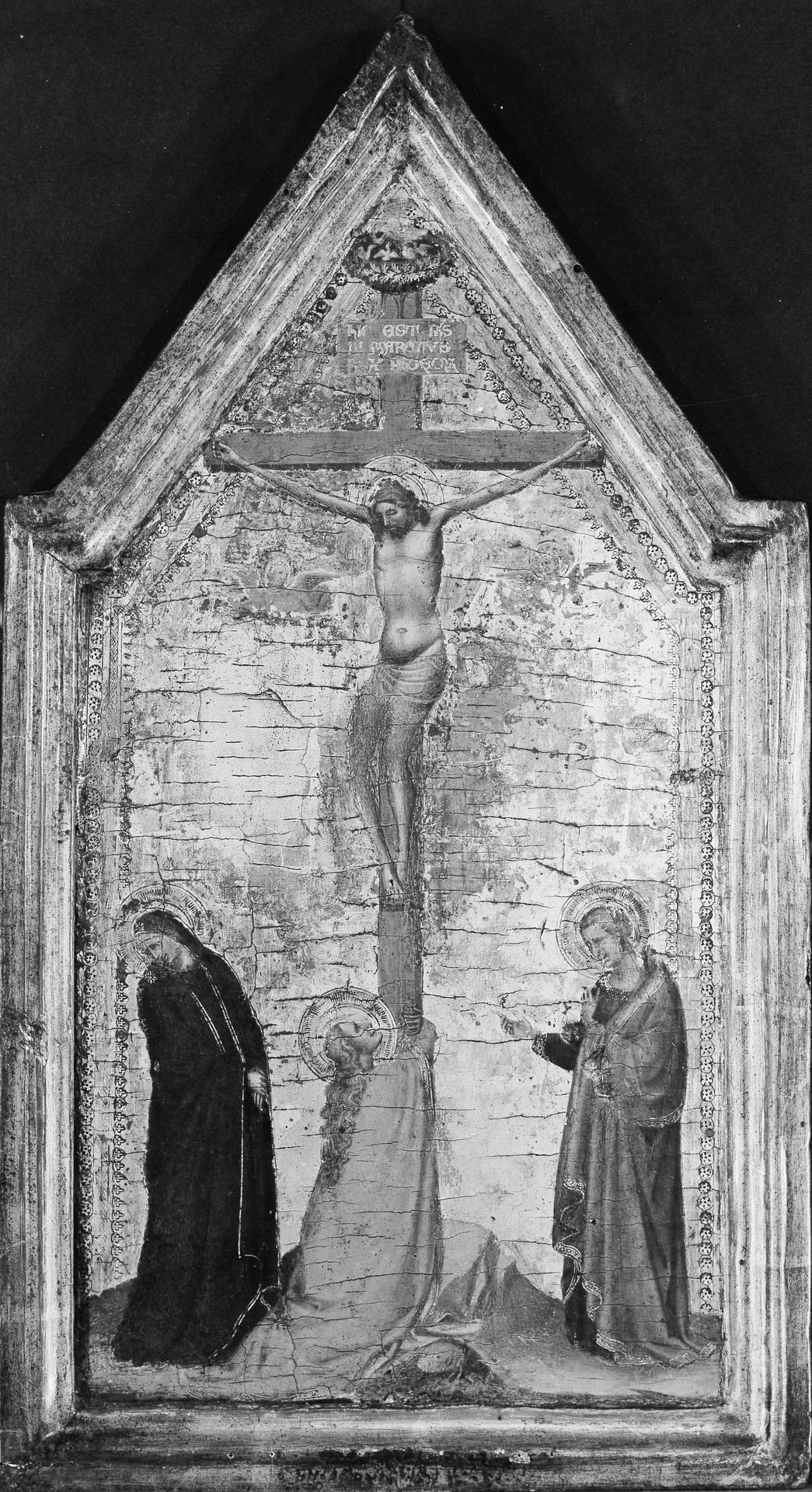
Bernardo Daddi created this small panel painting titled "The Crucifixion," in the early 14th century. Painted during a period of intense religious devotion, the work reflects the profound intersection of faith, identity, and socio-political realities of the time. In this intimate depiction, Daddi departs from traditional, more distanced representations of the crucifixion. He instead focuses on the raw, human emotion of the event. The Virgin Mary Magdalene is shown kneeling at the base of the cross, grief etched into her posture. Her and the other figures’ presence reflects the communal mourning and shared identity within the Christian faith. Daddi’s emotional and sympathetic representation humanizes a divine narrative, making it deeply relatable. The painting encourages an emotional connection, and highlights the communal and personal experience of faith during the 1300's.
The Crucifixion
1327 - 1348


Artwork details
- Medium
- tempera, painting
- Dimensions
- Arched top, 18 3/4 x 10 1/4 in. (47.6 x 26 cm)
- Location
- Metropolitan Museum of Art, New York, NY
- Copyright
- Public Domain
Tags
Comments
Share your thoughts
About this artwork
Bernardo Daddi created this small panel painting titled "The Crucifixion," in the early 14th century. Painted during a period of intense religious devotion, the work reflects the profound intersection of faith, identity, and socio-political realities of the time. In this intimate depiction, Daddi departs from traditional, more distanced representations of the crucifixion. He instead focuses on the raw, human emotion of the event. The Virgin Mary Magdalene is shown kneeling at the base of the cross, grief etched into her posture. Her and the other figures’ presence reflects the communal mourning and shared identity within the Christian faith. Daddi’s emotional and sympathetic representation humanizes a divine narrative, making it deeply relatable. The painting encourages an emotional connection, and highlights the communal and personal experience of faith during the 1300's.
Comments
Share your thoughts