1920 - 1925
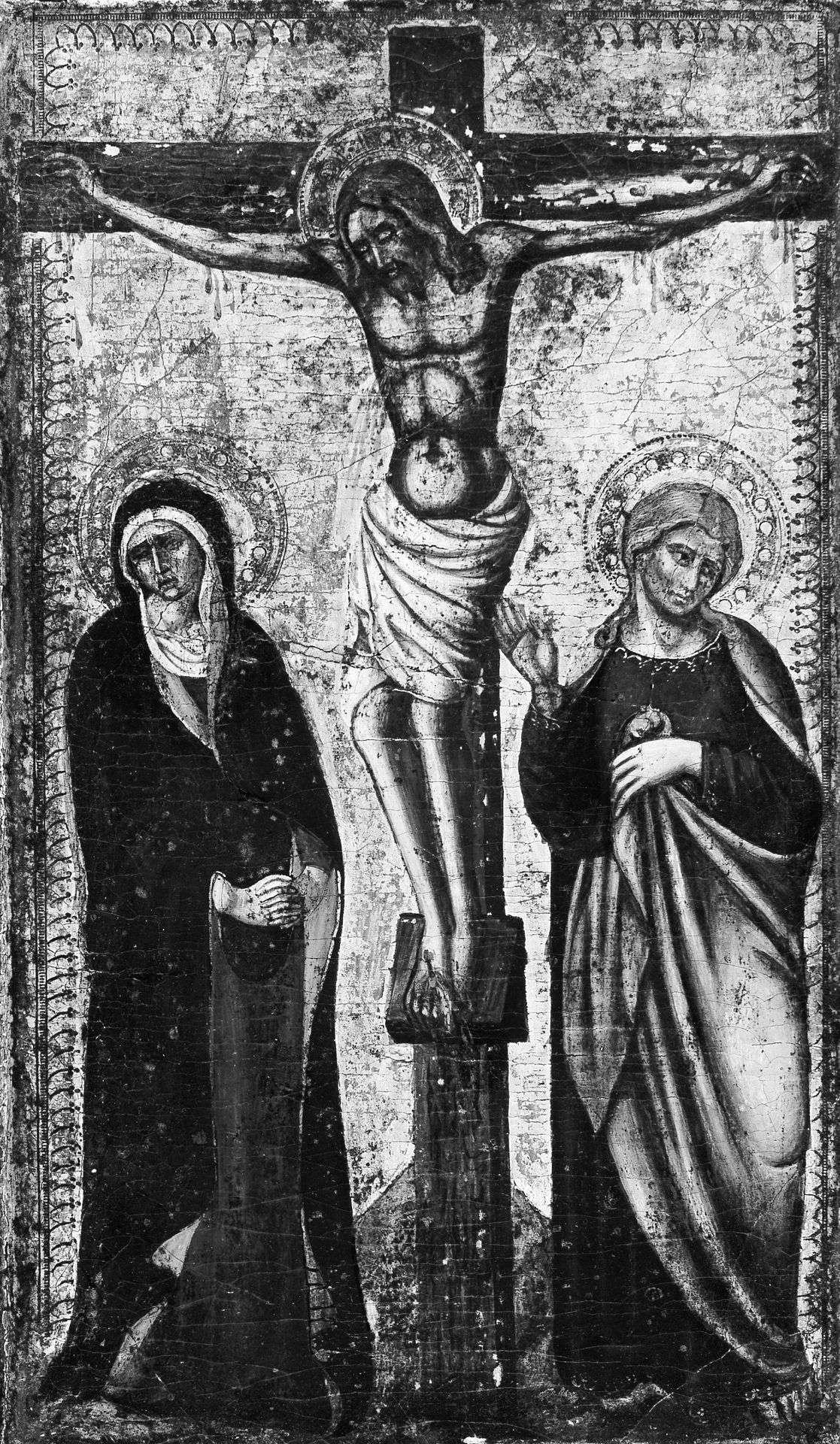
The Crucifixion


Listen to curator's interpretation
Curatorial notes
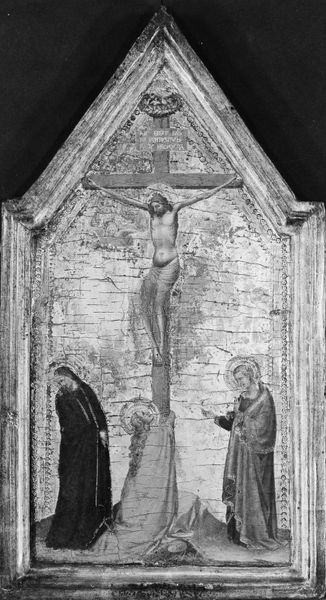
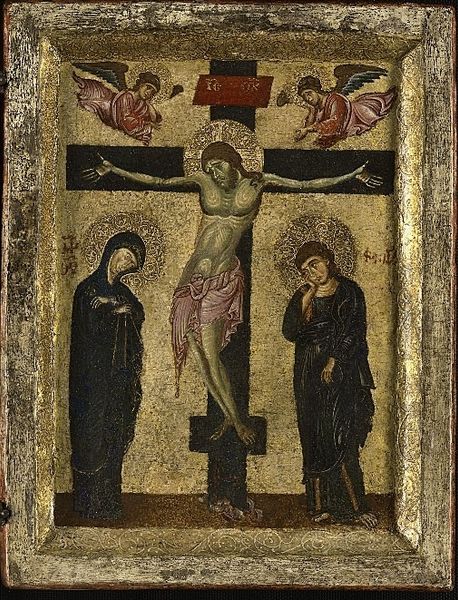
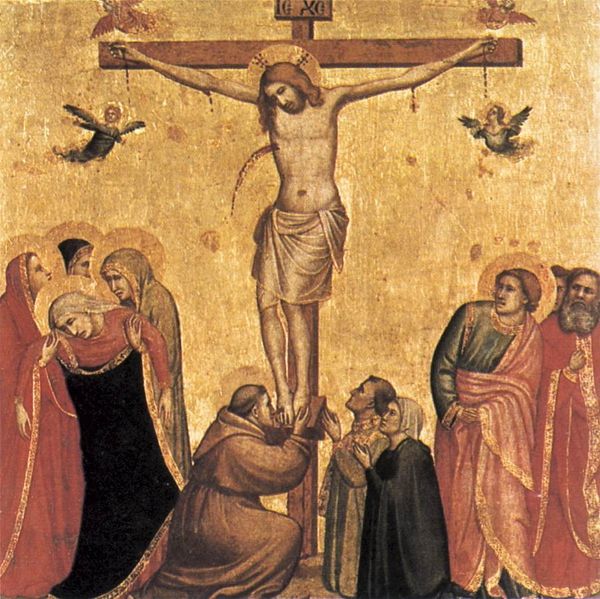
Luca di Tommé painted this Crucifixion sometime in the 14th century, using tempera and gold on wood. What strikes me is the stark palette, the limited range of blacks and whites, giving it this ghostly, ancient feel. It's a good reminder that art is always a process of layering, physically and conceptually. If you look closely, you can see the wear and tear, the cracks in the surface. Each of these imperfections tells a story about the artwork's journey through time. The way the paint is applied – thin and deliberate – contrasts with the raw emotion of the scene. There's something incredibly moving about the Virgin Mary, her face etched with grief, her hands clasped in prayer. The folds of her robe are rendered with such care, they almost seem to have a life of their own. This piece reminds me a little of Giotto, though di Tommé brings his own unique sensibility to the subject. It's like a conversation across centuries, each artist adding their own voice to the ongoing dialogue of art. It’s in these conversations that the art really lives.