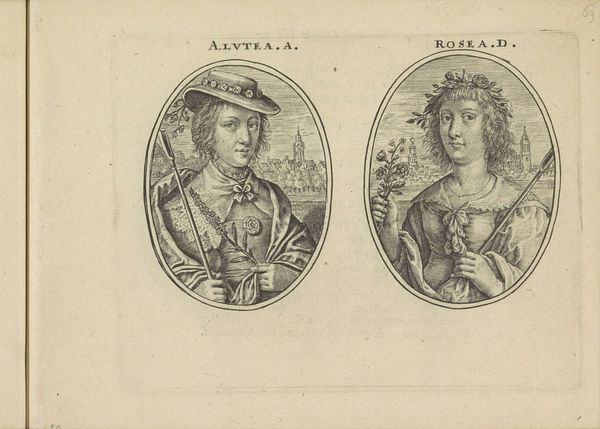
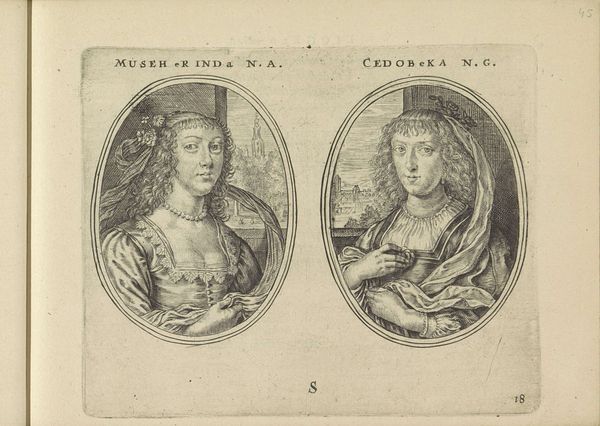
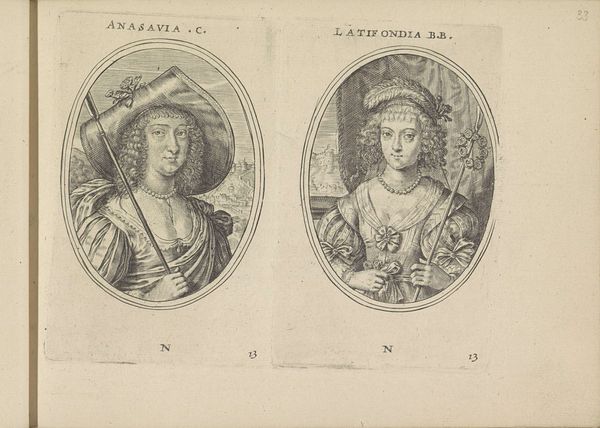
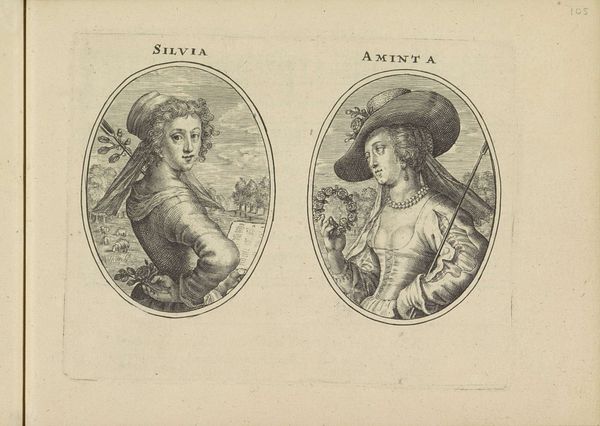
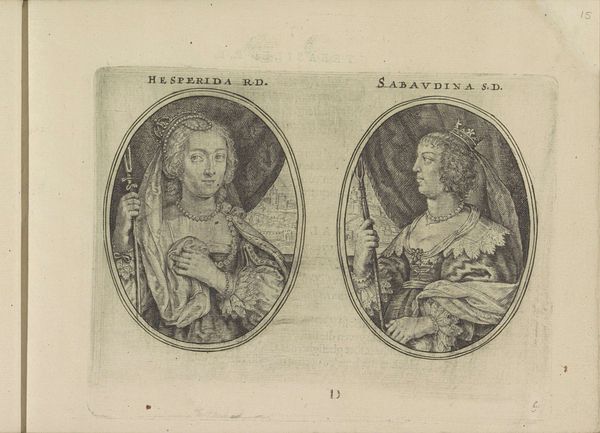
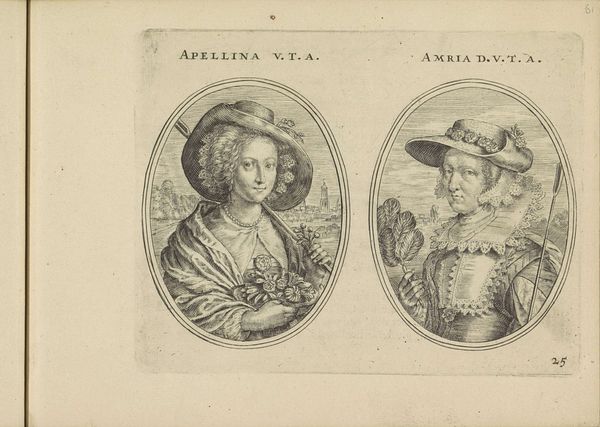
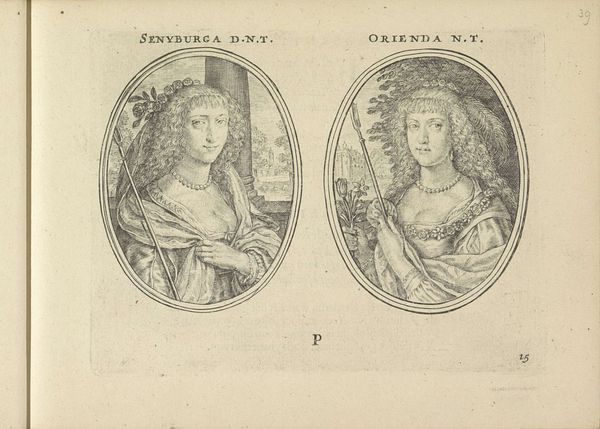
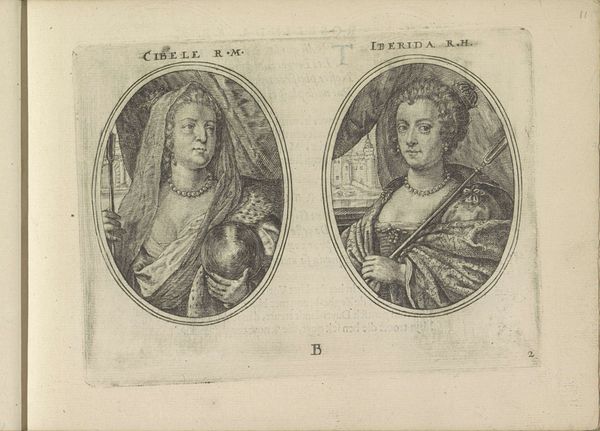
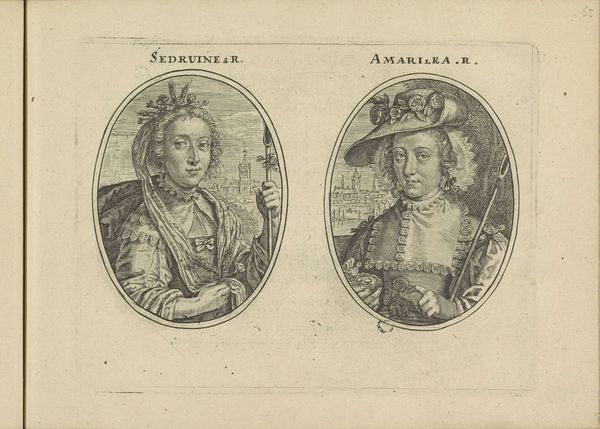
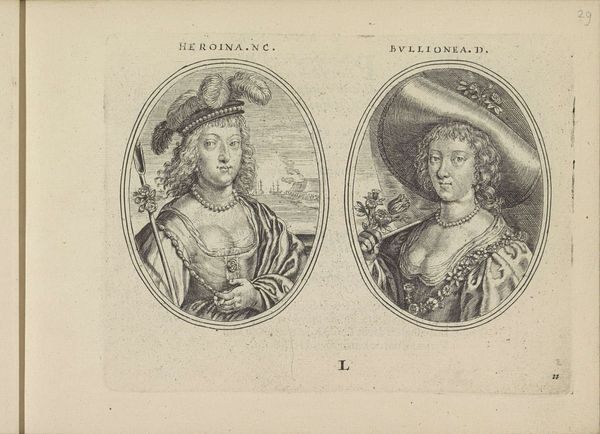
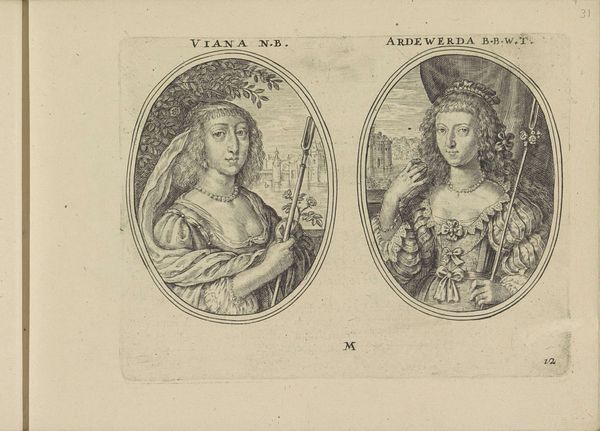
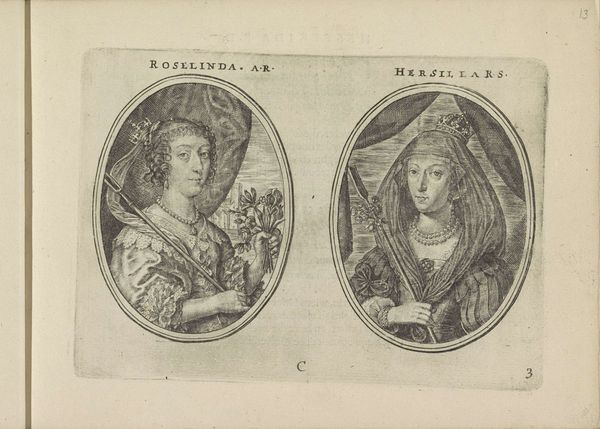
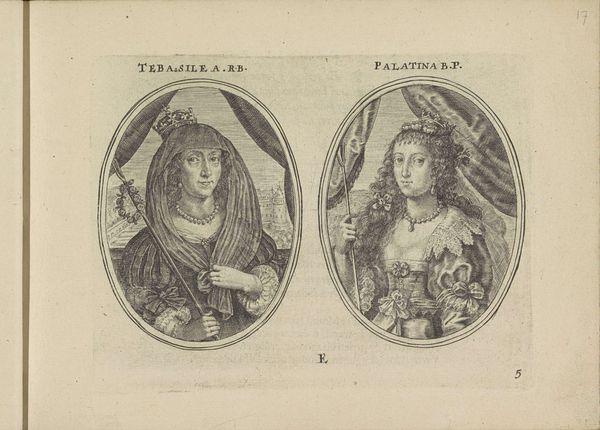
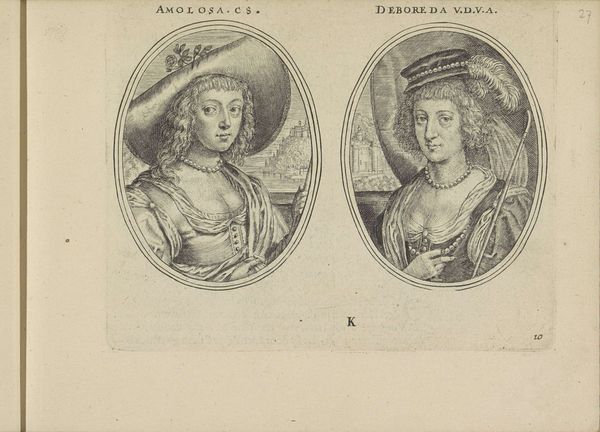
Portretten van twee onbekende vrouwen, beiden als herderin 1640

crispijnvandeiipasse
Rijksmuseum
pencil drawn
toned paper
light pencil work
pencil sketch
old engraving style
personal sketchbook
pen-ink sketch
sketchbook drawing
pencil work
sketchbook art
Dimensions: height 114 mm, width 146 mm
Copyright: Rijks Museum: Open Domain
Crispijn van de Passe the Younger made this engraving, 'Portraits of two unknown women, both as shepherdesses', sometime in the 17th century. The work is an intriguing example of how pastoral imagery served as a vehicle for social commentary in the Dutch Golden Age. The women, identified as ‘Berulostia’ and ‘Apura,’ are depicted in idealized, theatrical garb, holding symbolic flowers and crooks. Though appearing as humble shepherdesses, their fine clothing and jewelry betray their true social standing. Van de Passe was an incredibly successful printmaker and publisher in Amsterdam. He would have been acutely aware of the rise of a wealthy merchant class and the ways they used portraiture to project status and respectability. This print hints at the complex interplay between art, identity, and social mobility in 17th-century Netherlands. To fully understand these nuances, historians often turn to period literature, fashion studies, and archival records. The image itself only gives us a glimpse into the rich fabric of the past. It is only through interdisciplinary historical research that we can truly understand art’s role in shaping social perceptions and power structures.
Comments
No comments
Be the first to comment and join the conversation on the ultimate creative platform.
 Collect
 React
React Comment
More like this