1560 - 1620
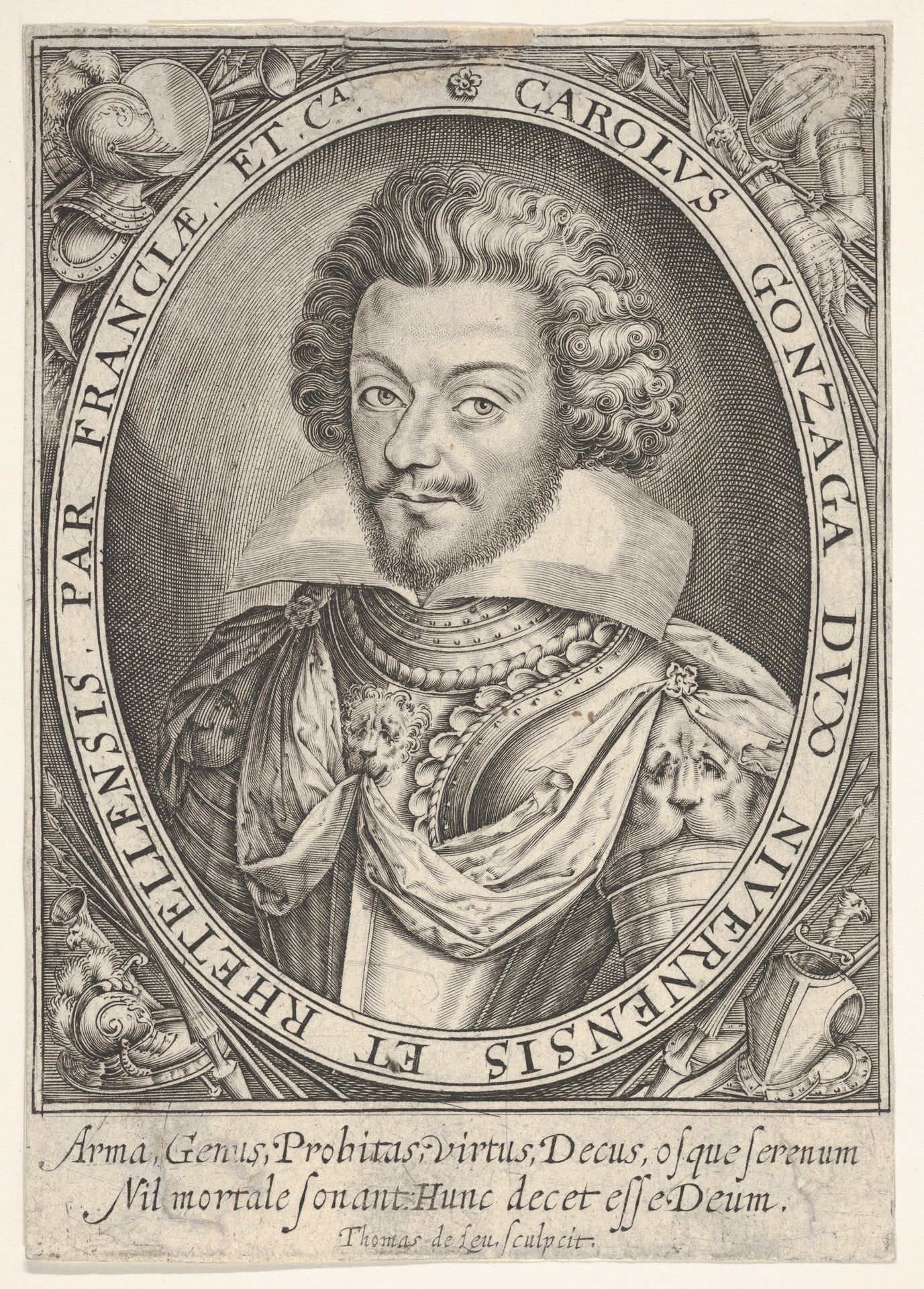
Charles de Gonzague, Duc de Nevers


Listen to curator's interpretation
Curatorial notes
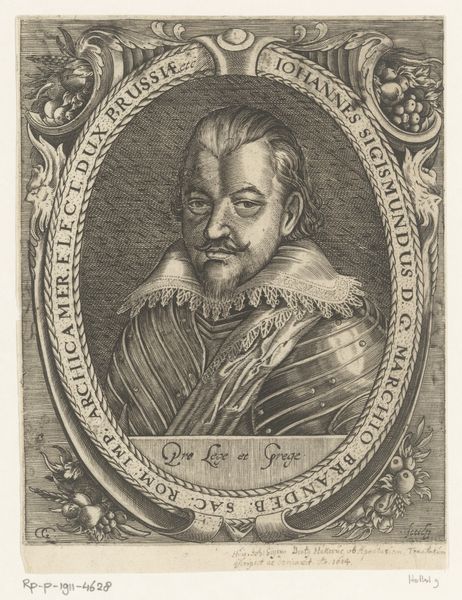
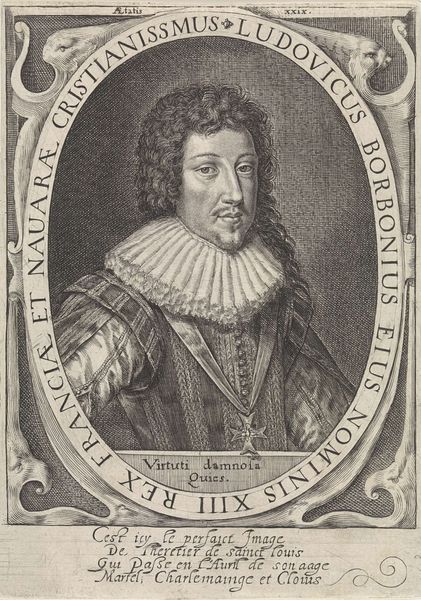
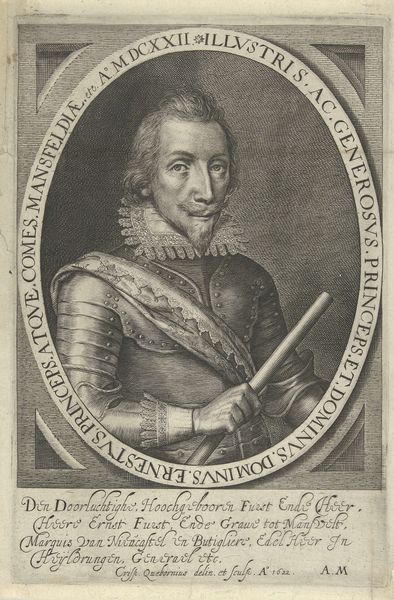
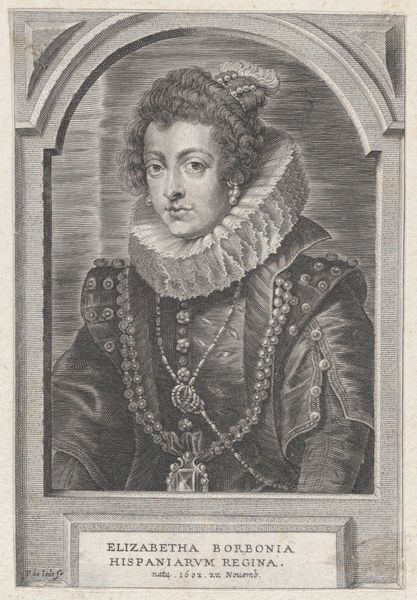
Editor: Here we have Thomas de Leu’s engraving, "Charles de Gonzague, Duc de Nevers," created sometime between 1560 and 1620. It's incredibly detailed for such a small print! I'm immediately drawn to the symbolism around the portrait - what do you make of it all? Curator: The weight of imagery here is almost overwhelming, isn't it? Every element, from the armor to the laurel wreath and the inscription, contributes to a constructed identity, a visual argument for Charles de Gonzague's power and legitimacy. Editor: I noticed the lion heads on his armor, what do they represent? Curator: The lions signify courage, nobility, and royal authority—common symbolic associations going back millennia. Think of how often lions appear in heraldry. And consider the context. This was during a time of intense political maneuvering and religious conflict. Visual symbols like these reinforced one’s claim to power. Doesn’t the phrase *Hunc decet esse Deum*—"It is fitting that he be a God"—down at the bottom drive that point home? Editor: Absolutely! The artist really packed in layers of meaning. The armor, the lions, even the lettering – all working to create a powerful impression. Thanks for clarifying all of the embedded symbolic associations. Curator: My pleasure! Seeing these historical figures as constructs of carefully curated symbolism can tell us much about the eras in which they lived, and how power was both wielded and perceived.