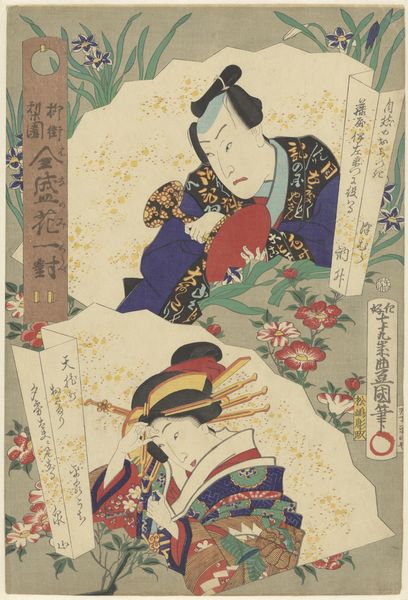
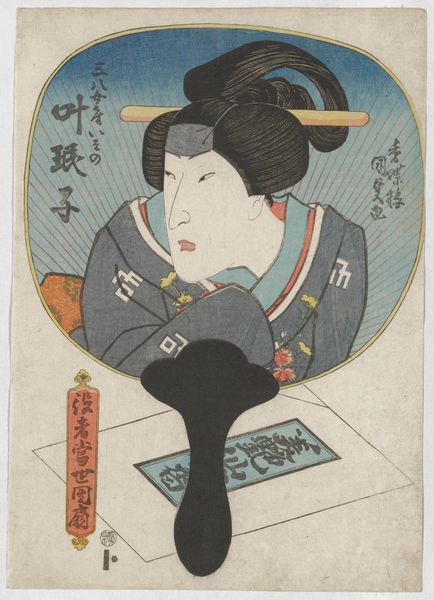
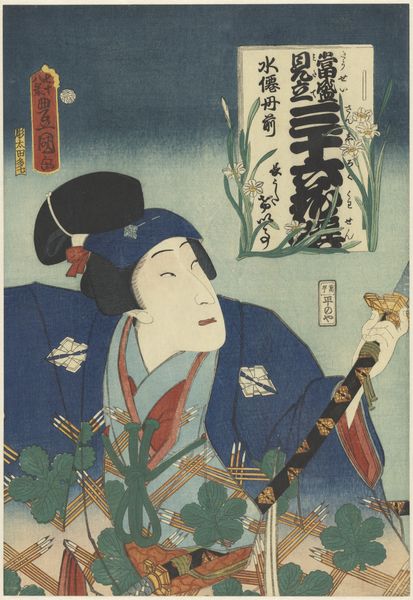
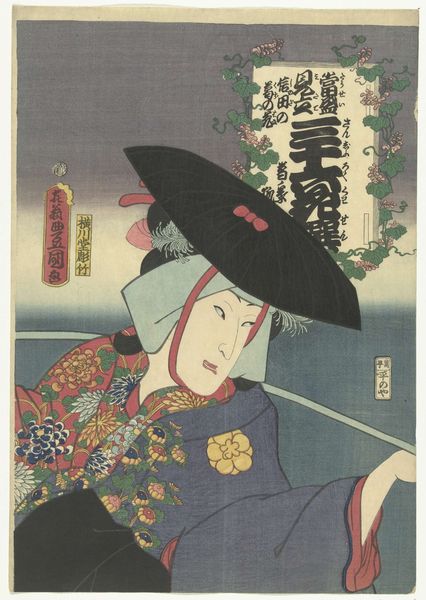
![['Tadanobu holding a fan', 'Famous people of today with their own calligraphy'] by Utagawa Kunisada](https://d2w8kbdekdi1gv.cloudfront.net/eyJidWNrZXQiOiAiYXJ0ZXJhLWltYWdlcy1idWNrZXQiLCAia2V5IjogImFydHdvcmtzL2RlOWI4ODc5LWMzZGUtNDhjNC1hMjg2LWQxYTY4YTQxZjI5NC9kZTliODg3OS1jM2RlLTQ4YzQtYTI4Ni1kMWE2OGE0MWYyOTRfZnVsbC5qcGciLCAiZWRpdHMiOiB7InJlc2l6ZSI6IHsid2lkdGgiOiAxOTIwLCAiaGVpZ2h0IjogMTkyMCwgImZpdCI6ICJpbnNpZGUifX19)
About this artwork
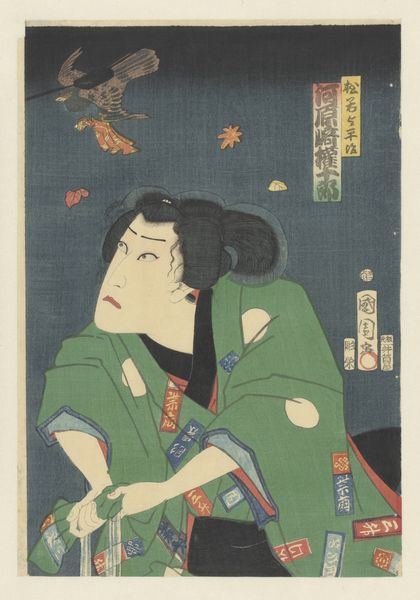
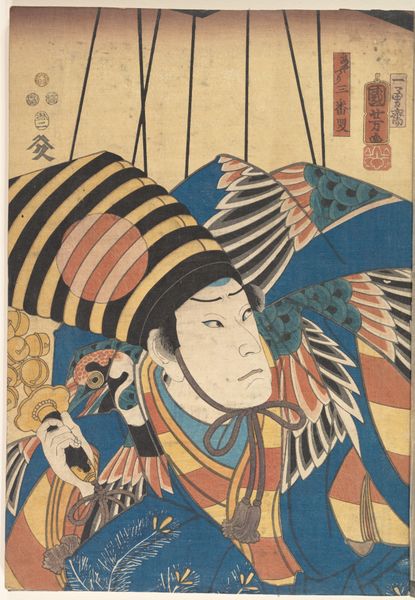
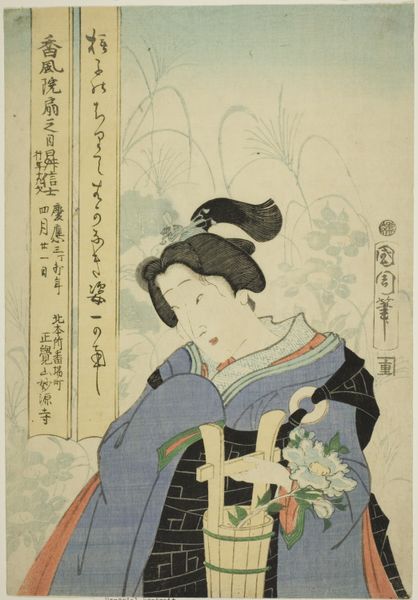
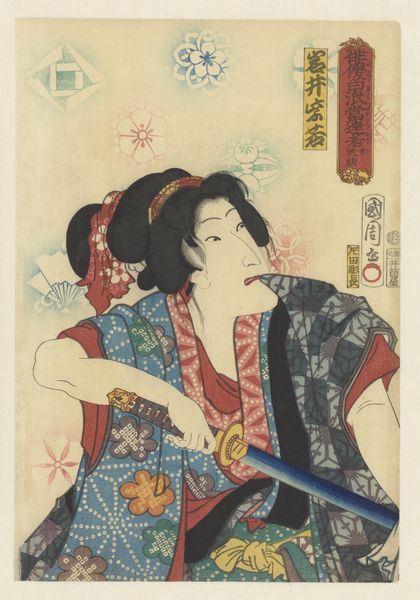
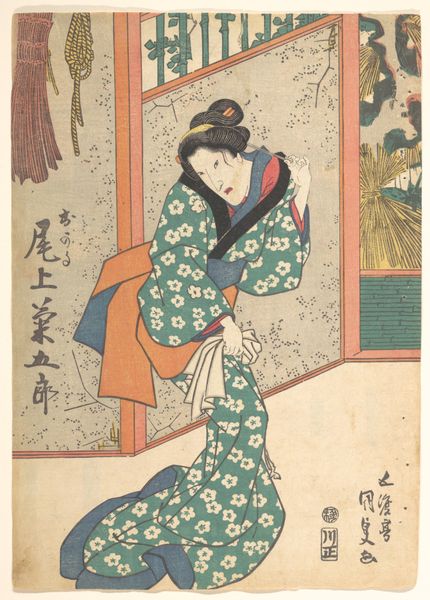
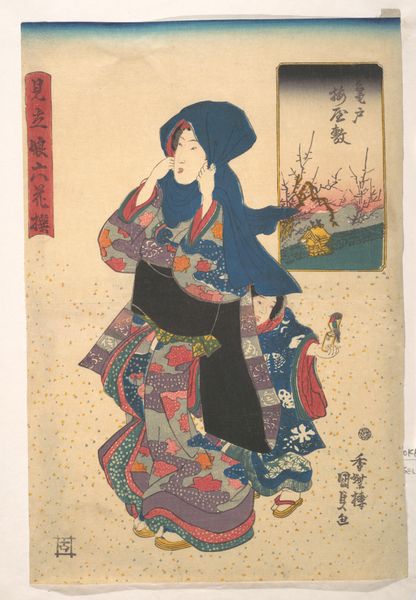
Utagawa Kunisada created this woodblock print, now at the Rijksmuseum, using a technique called *ukiyo-e*. This process relies on a division of labor, beginning with the artist's design, which is then carved into cherry wood blocks by specialist artisans, with a separate block for each color. These blocks are meticulously inked and printed onto paper, building up layers of pigment and line. Look closely at the details – the intricate patterns on the actor's robe, the calligraphy on the fan, all achieved through this exacting process. The *ukiyo-e* tradition was very much embedded in the consumer culture of Edo-period Japan, catering to a burgeoning merchant class eager for images of popular actors and fashionable life. The print served as a kind of advertisement, blurring the boundaries between art, celebrity, and commercial exchange. Each stage of the *ukiyo-e* printmaking process reflects a specific skill, labor, and artistry. Thinking about the networks of production surrounding this print helps us see it as a collaborative achievement, rather than the vision of a single artist.
['Tadanobu holding a fan', 'Famous people of today with their own calligraphy']
1860 - 1862

Utagawa Kunisada
1786 - 1865Location
RijksmuseumArtwork details
- Medium
- Dimensions
- height 361 mm, width 241 mm
- Location
- Rijksmuseum
- Copyright
- Rijks Museum: Open Domain
Tags
Comments
Share your thoughts
About this artwork
Utagawa Kunisada created this woodblock print, now at the Rijksmuseum, using a technique called *ukiyo-e*. This process relies on a division of labor, beginning with the artist's design, which is then carved into cherry wood blocks by specialist artisans, with a separate block for each color. These blocks are meticulously inked and printed onto paper, building up layers of pigment and line. Look closely at the details – the intricate patterns on the actor's robe, the calligraphy on the fan, all achieved through this exacting process. The *ukiyo-e* tradition was very much embedded in the consumer culture of Edo-period Japan, catering to a burgeoning merchant class eager for images of popular actors and fashionable life. The print served as a kind of advertisement, blurring the boundaries between art, celebrity, and commercial exchange. Each stage of the *ukiyo-e* printmaking process reflects a specific skill, labor, and artistry. Thinking about the networks of production surrounding this print helps us see it as a collaborative achievement, rather than the vision of a single artist.
Comments
Share your thoughts