c. 1833
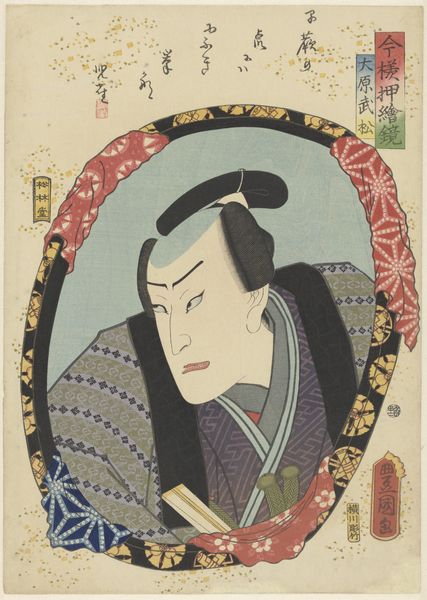
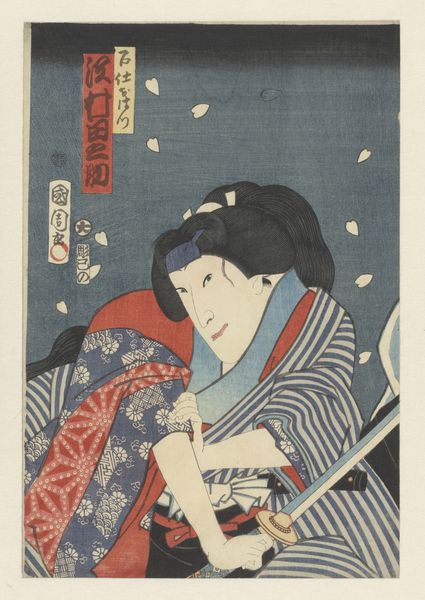
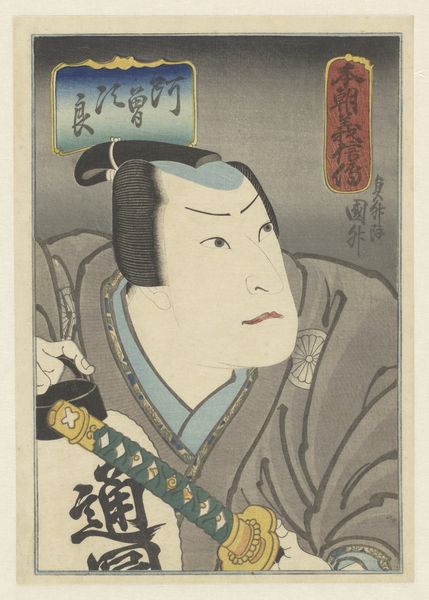
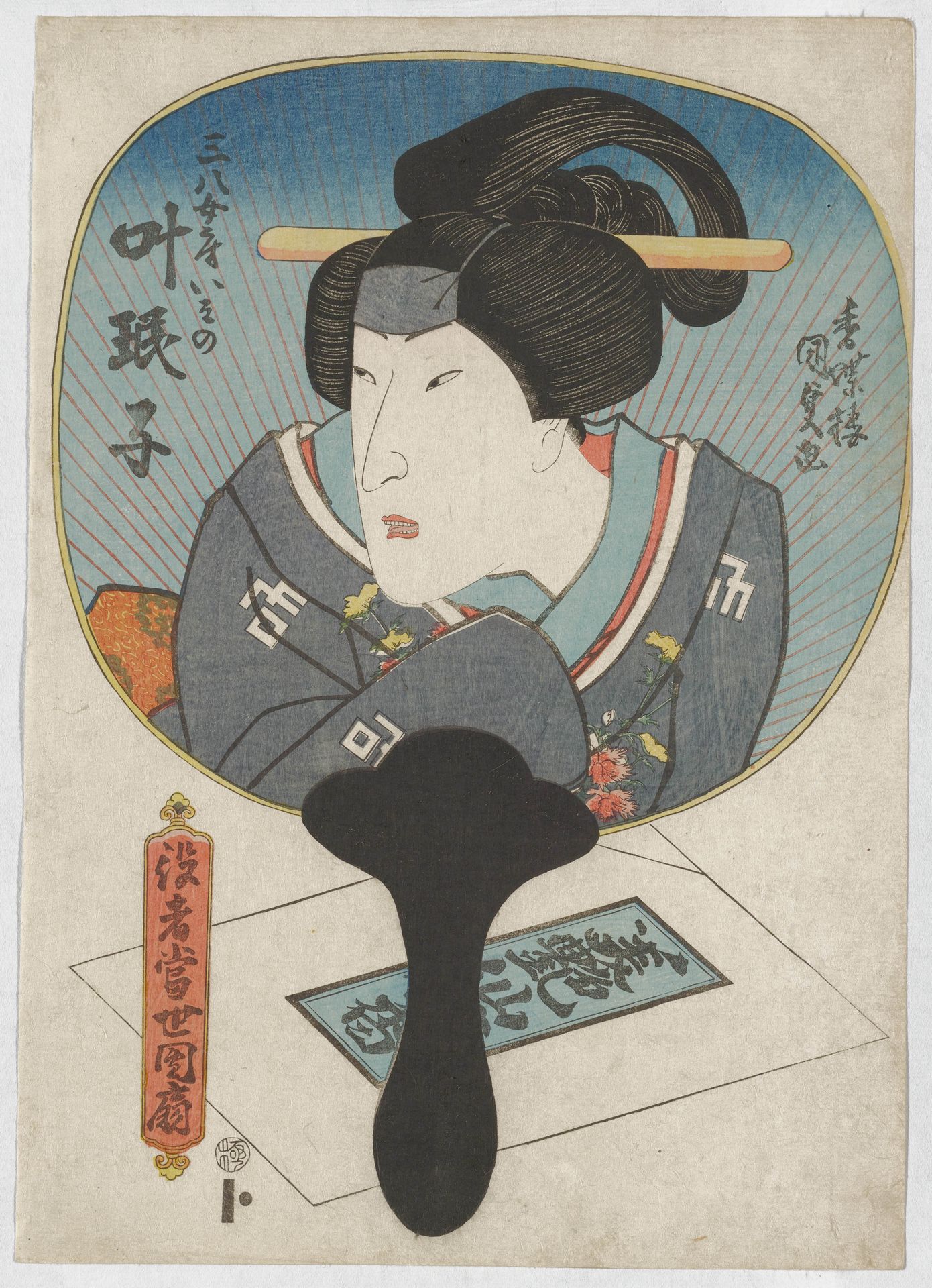
Actor Kanō Minshi II as Isono


Listen to curator's interpretation
Curatorial notes
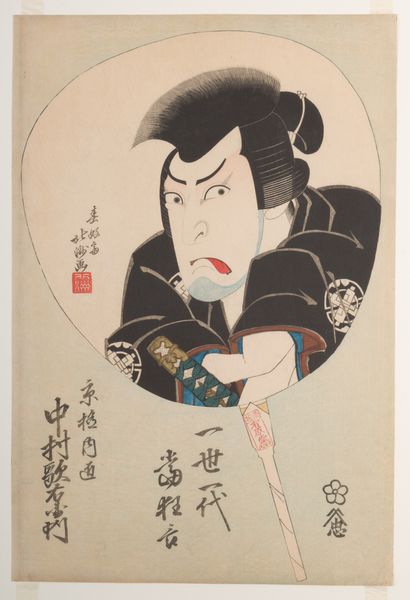
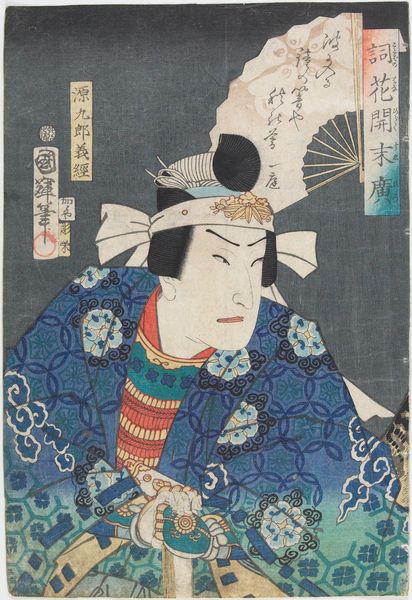
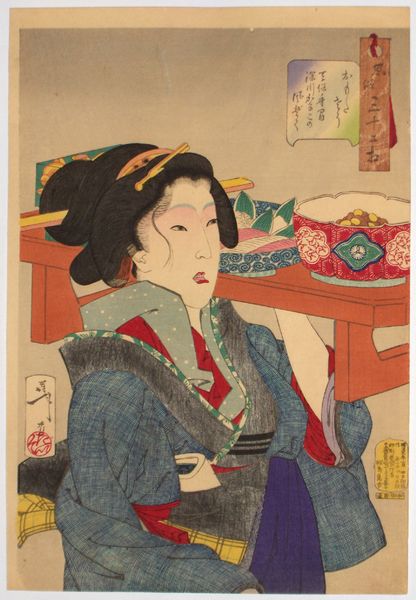
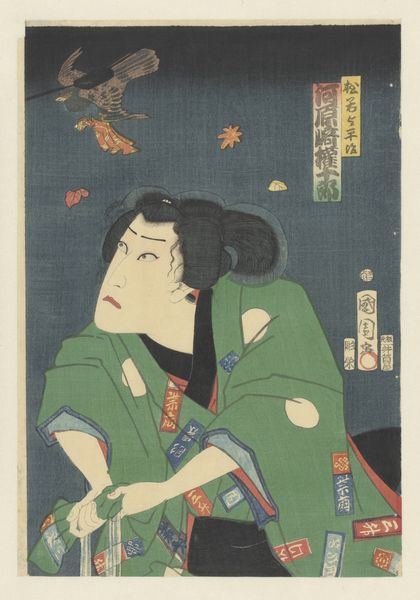
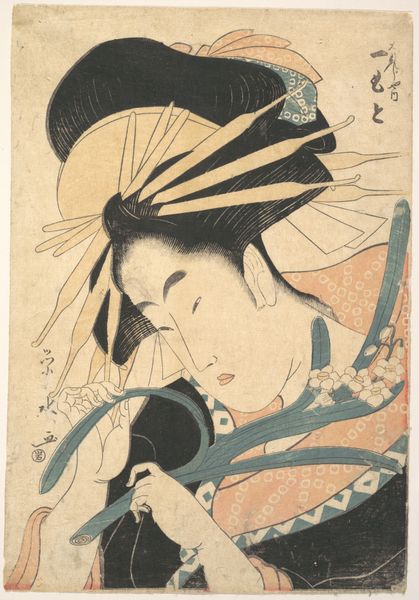
Editor: So, this print is "Actor Kanō Minshi II as Isono" from around 1833 by Utagawa Kunisada. It's a woodblock print, and it looks like ink on paper. It strikes me as quite stylized, especially the actor's face and hair. What can you tell me about this artwork? Curator: The production process of these Ukiyo-e prints are intrinsically tied to its social function. The use of woodblock printing as a readily available means to reproduce and disseminate images connects to both the popularity and the ephemeral nature of these images. Kabuki actors were the celebrities of their time. Editor: So it was mass produced, in a way. Curator: Yes, and understanding this context gives the portrait another layer of meaning. Notice the texture and color achieved through the woodblock process, each meticulously carved block contributing to the final image. Consider the labor involved in each print and how that impacts our view. This wasn’t high art, it was part of everyday life and entertainment. The materiality is humble, reflecting its accessibility. Editor: That's fascinating, thinking about the social context through the material itself! The accessibility changes how you interpret the artwork. Do you think the use of certain pigments played any social role at the time? Curator: Definitely. Pigments, then, like now, would have different production and sourcing costs. Kunisada, for example, seems to use bolder colors in some of his other prints that would have implied the production, and consumption, of something for a more elite customer. The intentional simplicity of palette in this print underscores a more "democratic" product intended for wider consumption. It's a caricature too, which also democratizes it because of the cultural associations with that type of humor at the time. What have you taken away from that analysis? Editor: That considering the print's materials and methods allows me to understand its broader cultural function – its relationship with popular culture of the era and its intended audience. I would like to use that in future observations about other artworks!