1629
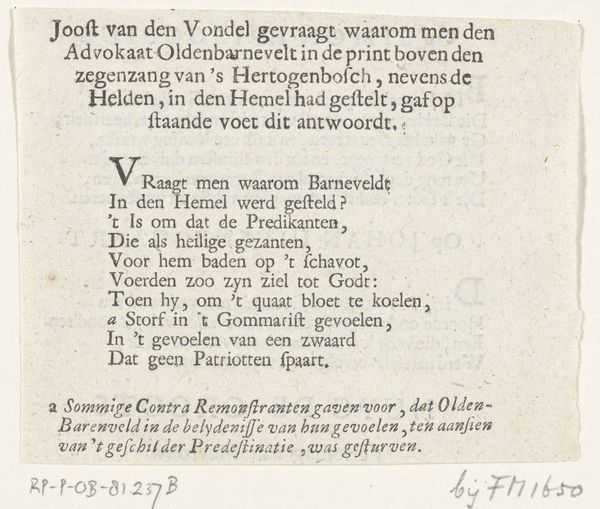
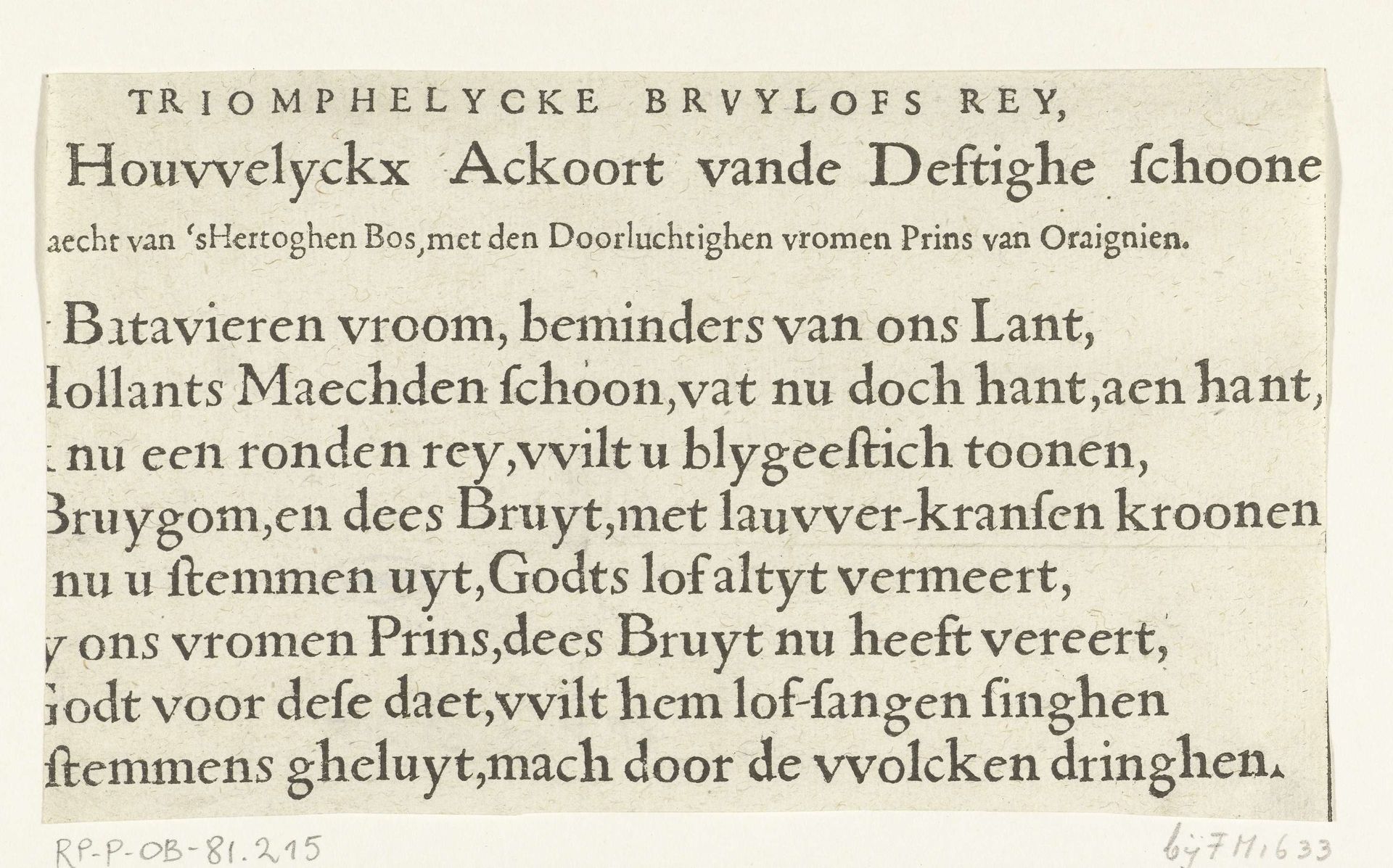
Vers ter ere van de verovering van 's-Hertogenbosch door Frederik Hendrik, 1629

Anonymous
@anonymousLocation
RijksmuseumListen to curator's interpretation
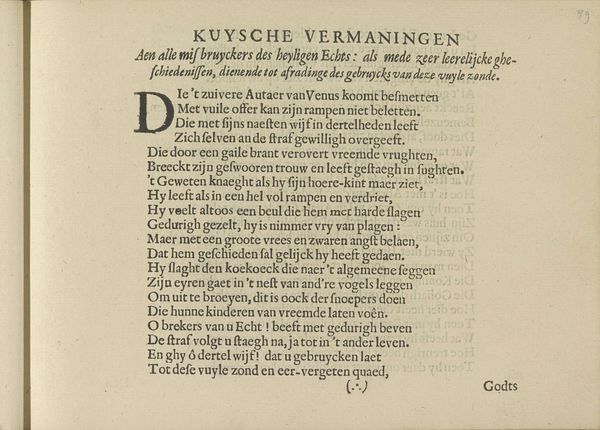
Curatorial notes
This anonymous print from 1629 celebrates the Dutch Republic's capture of 's-Hertogenbosch from the Spanish. It's a piece of propaganda, meant to bolster national pride and solidify support for the ruling House of Orange. The text is written in Early Modern Dutch, a language undergoing standardization at this time. The poem equates the city of 's-Hertogenbosch with a 'virtuous bride' being united with Prince Frederick Henry, a heroic groom. It casts the military victory as a joyous marriage, a powerful metaphor designed to evoke feelings of national unity and divine approval. The work reflects the cultural and political climate of the Dutch Golden Age, a period marked by economic prosperity, artistic flourishing, and a struggle for independence. The reference to ‘Batavieren’ appeals to a national myth that served to create a sense of shared history. To understand this image, you need to delve into the history of the Eighty Years' War and the role of the House of Orange in forging a national identity. Primary sources such as pamphlets, chronicles, and diplomatic correspondence can shed light on the complex interplay of politics, religion, and culture in this pivotal moment in Dutch history.