1864
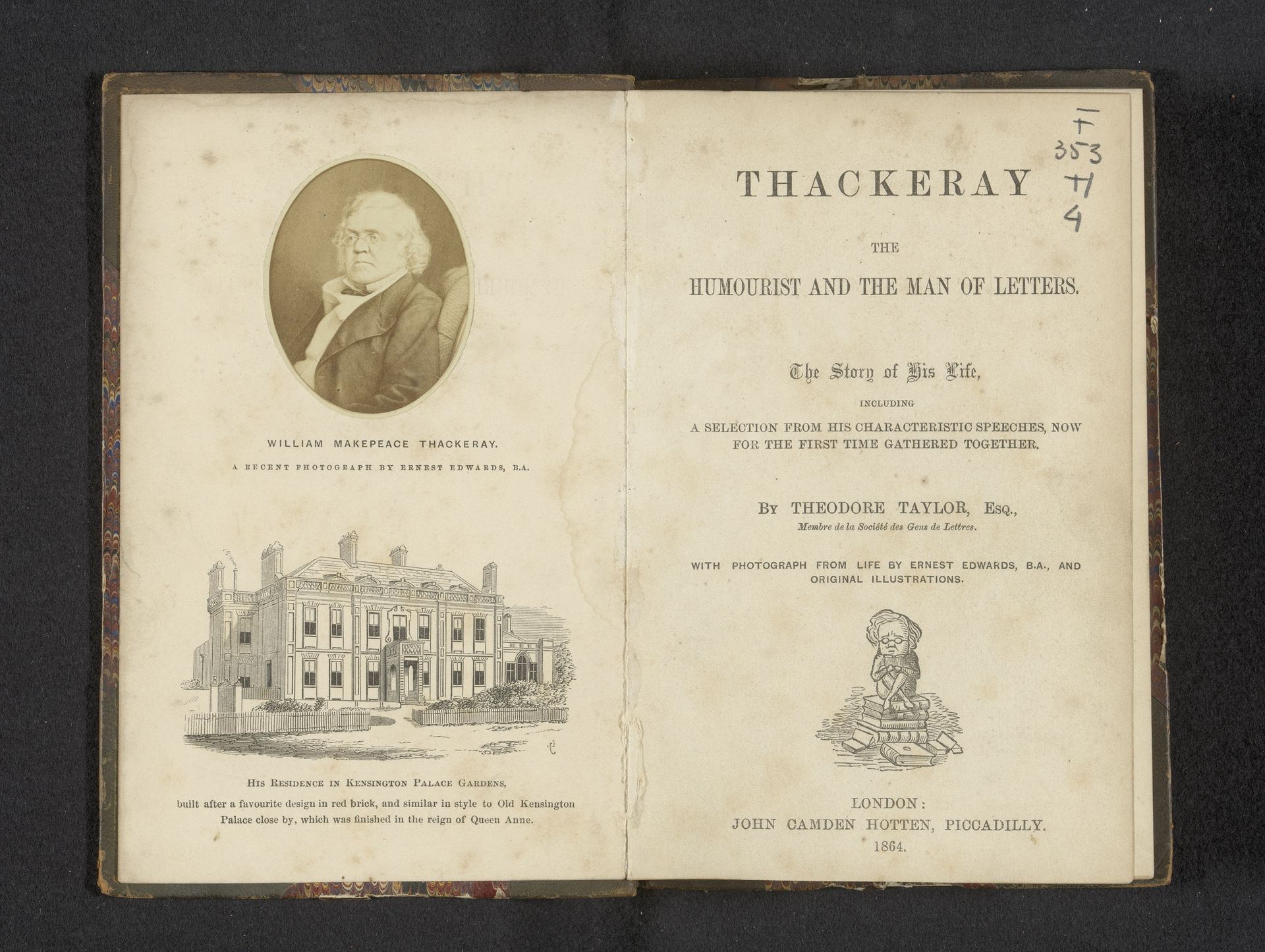
Thackeray the humourist and the man of letters the story of his life a selection from his characteristic speeches, now for the first time gathered together

Listen to curator's interpretation
Curatorial notes
This is the title page of "Thackery the humourist and the man of letters," published in 1864, shortly after the author's death, and it offers a window into Victorian England’s literary culture. Observe the portrait on the left. Framed in an oval, Thackeray is depicted in a classical bust format, a visual echo of Roman portraiture that conveys authority and timelessness. The author is also presented in a domestic setting; his residence in Kensington Palace Gardens features at the bottom left, establishing Thackeray's physical and social grounding. These images represent the dual nature of public versus private, a motif echoed through centuries. Note the image to the right. A boy sits on a stack of books. This is the motif of the "putto," associated with playful innocence and earthly love. Consider how this symbol has transformed through time from ancient depictions of Eros and Cupid to Renaissance cherubs. Here it is, recast in a modern context, linking our understanding of the writer with this timeless symbol of creativity and play. Ultimately, the image stirs deep within us reflections on legacy, memory, and enduring human experience.