1745 - 1775
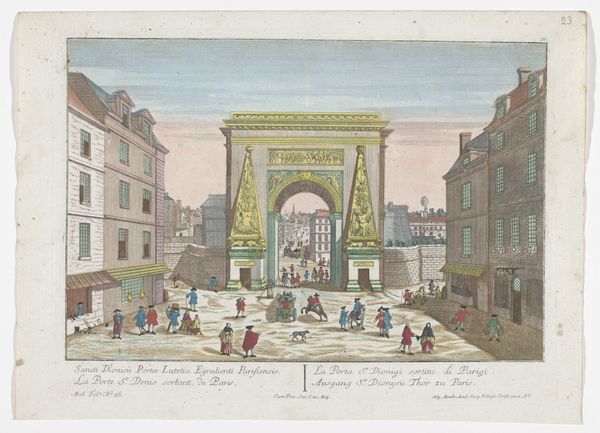
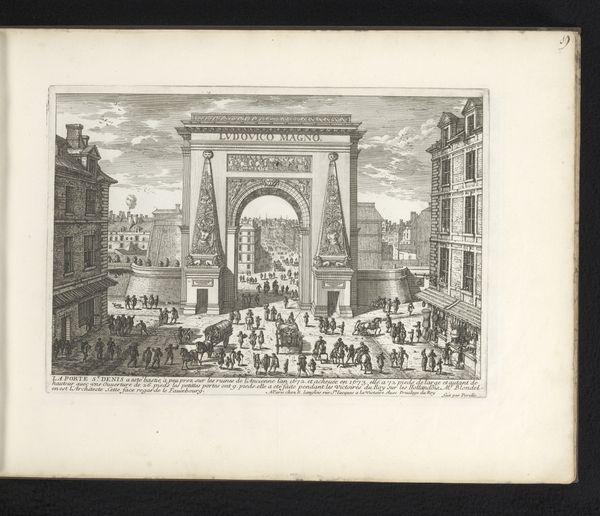
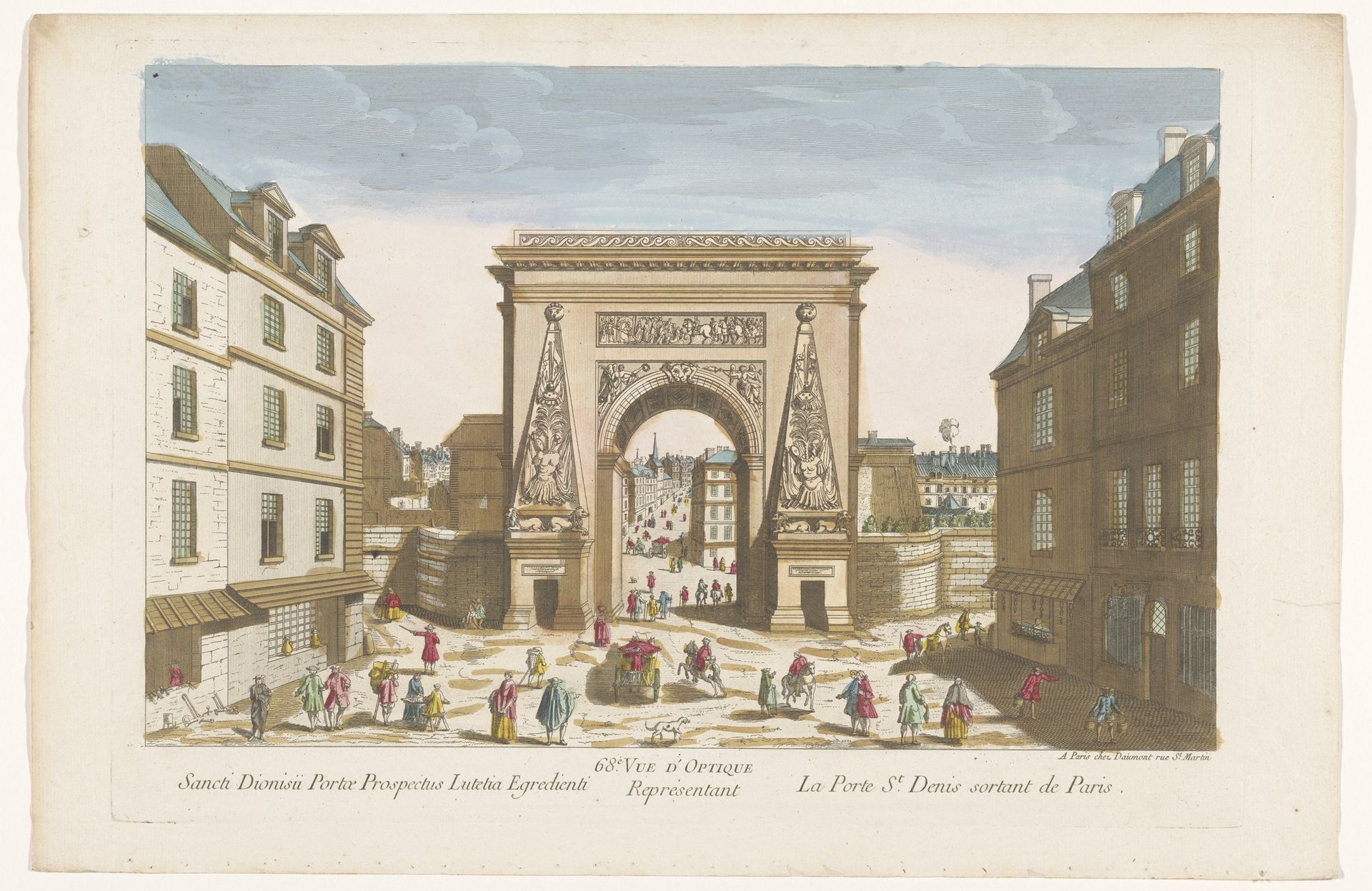
Gezicht op de Porte Saint-Denis te Parijs

Jean-François Daumont
1775Location
RijksmuseumListen to curator's interpretation
Curatorial notes
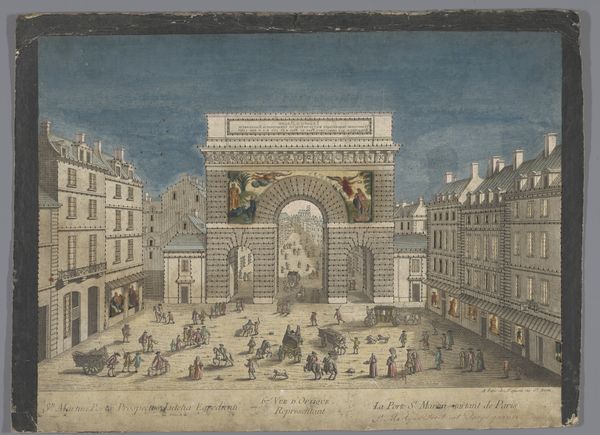
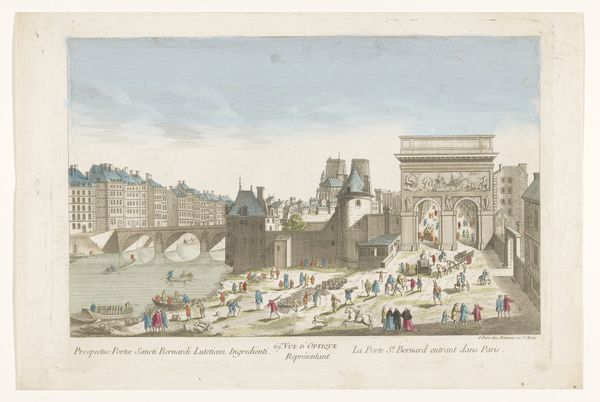
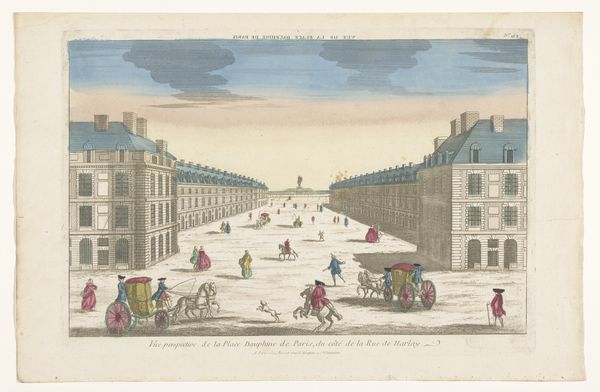
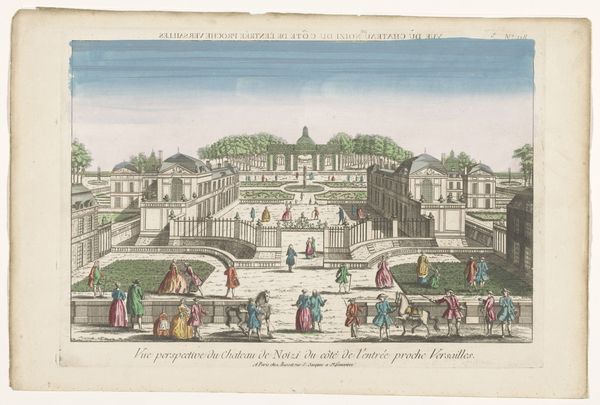
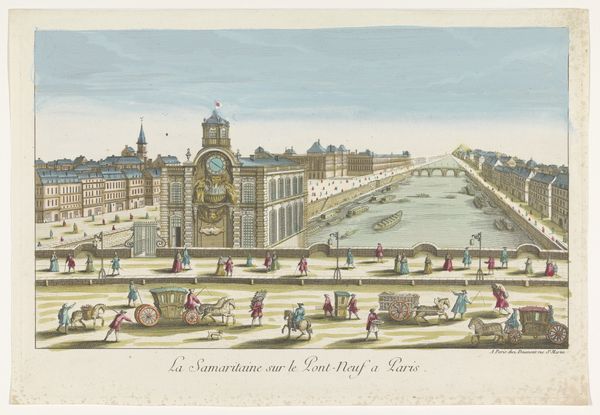
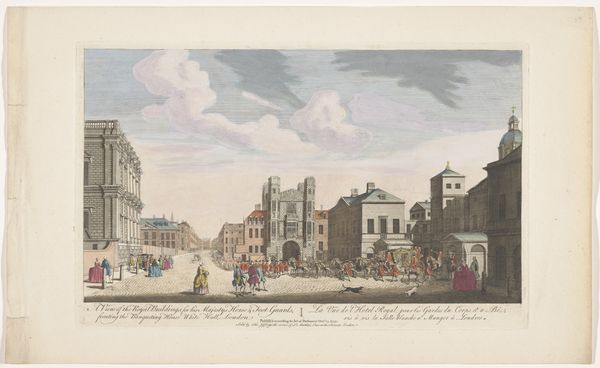
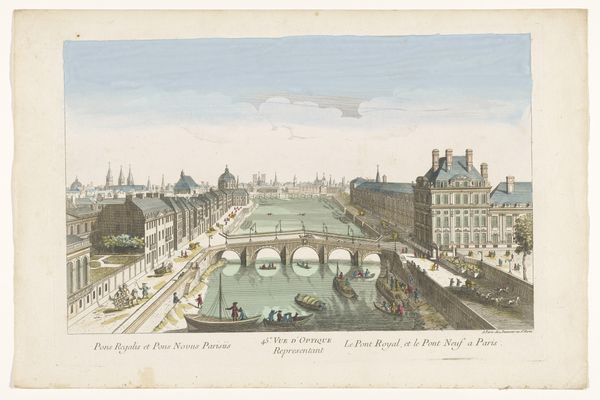
Jean-François Daumont's print of the Porte Saint-Denis in Paris, made around the 1770s, is more than just a pretty picture. It's a window into the way images were produced and consumed at the time. This isn't a unique artwork in the traditional sense. It's an etching, a printmaking technique that allows for relatively quick reproduction. Daumont would have coated a metal plate with wax, scratched his design into it, and then bathed the plate in acid. The acid bites into the exposed metal, creating grooves that hold ink. This is then transferred onto paper. The printmaking process influenced the image itself. Notice the clean lines and the way the colors are applied in flat, even tones. This was a deliberate aesthetic choice, designed for efficient production and wide distribution. Prints like these were affordable souvenirs, allowing people to take a piece of Paris home with them. They speak to a growing consumer culture, where images became commodities. They also were a crucial conduit of information, in an age before photography. This seemingly simple print is actually a complex product of its time, reflecting the rise of both capitalism and the public sphere.