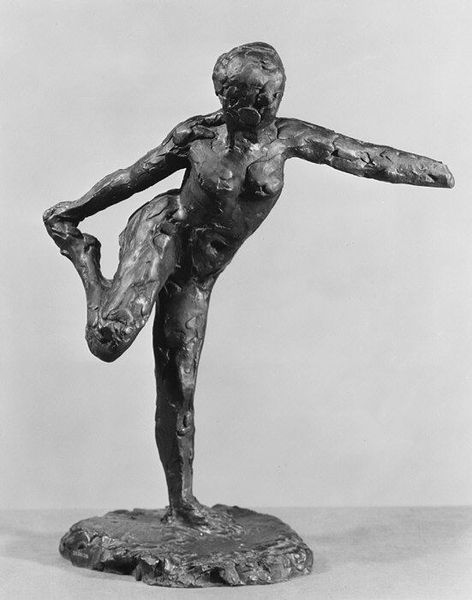
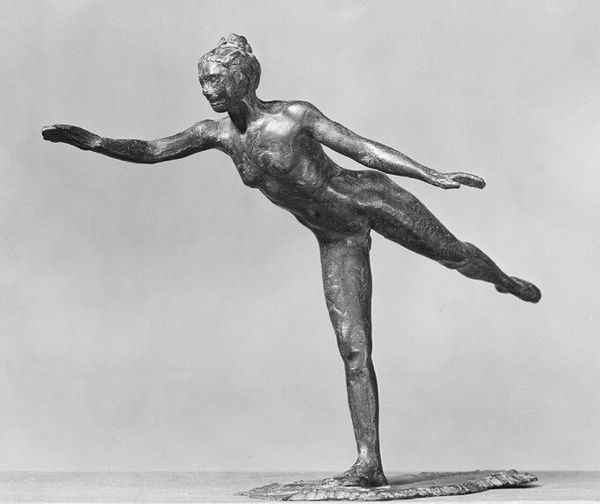
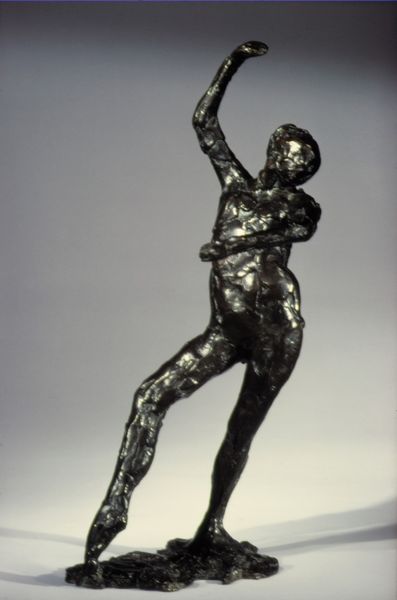
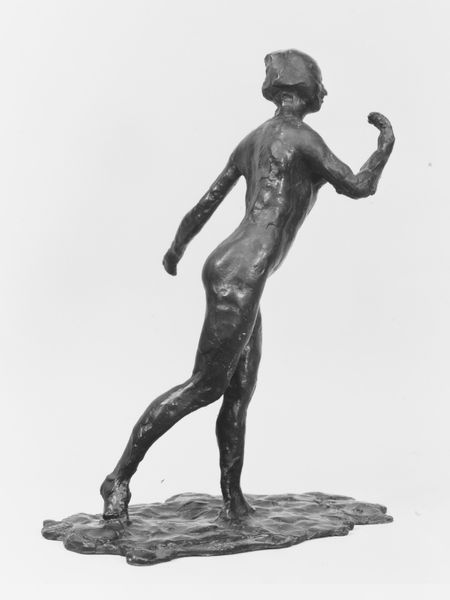
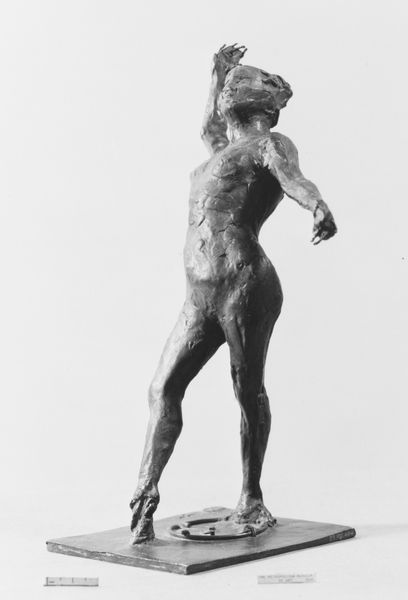
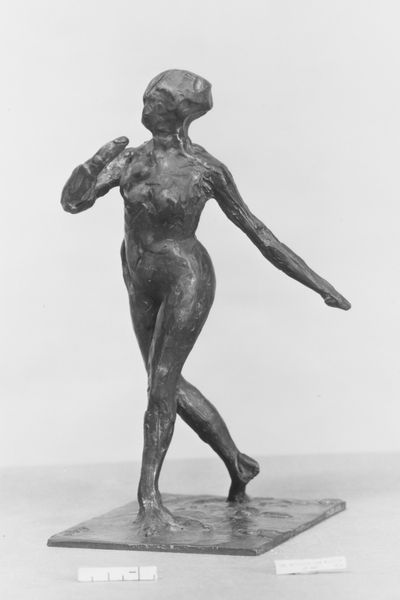
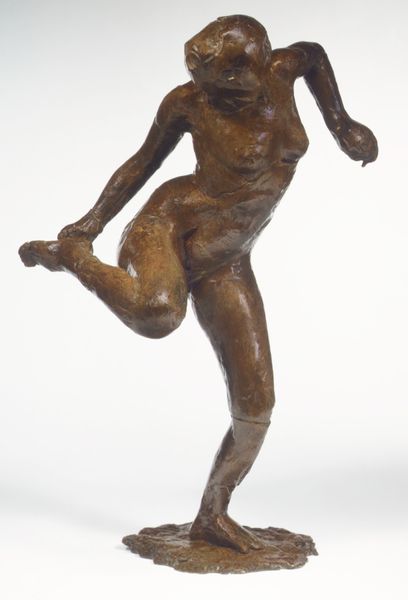
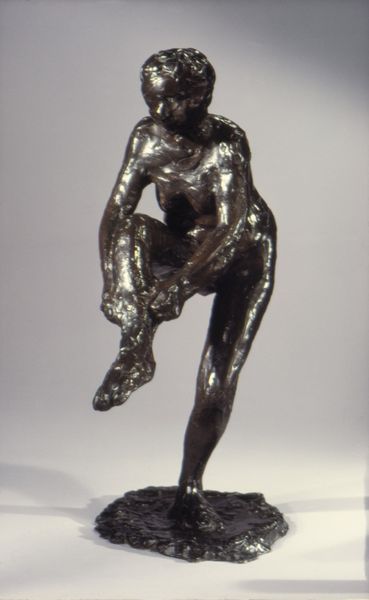
Dancer Looking at the Sole of Her Right Foot (Second State) 1890 - 1920
0:00
0:00


Dimensions: 18-7/8 x 9 x 8-1/4 in. (47.9 x 22.9 x 21.0 cm.)
Copyright: Public Domain
Curator: What a marvelous work! Here we have Edgar Degas' "Dancer Looking at the Sole of Her Right Foot," made sometime between 1890 and 1920. Editor: Whoa, talk about capturing a fleeting moment! There’s something both ungainly and incredibly elegant about this. Is she stretching? It looks a bit uncomfortable, actually! Curator: It does, doesn't it? This bronze sculpture, part of the Met's collection, really showcases Degas's interest in movement and the everyday lives of dancers. What do you make of the surface? Editor: It’s so raw. Not smooth and polished like you'd expect. I love that you can almost see the artist’s fingerprints, or at least the marks of the tools. The light and shadow really accentuate the form; makes her feel so alive. Almost feels like you could catch her mid-pose, practicing backstage. Is it that "Impasto" technique I have heard about? Curator: Something akin, although that is often used for painting. And exactly! The rough texture adds to that sense of immediacy, of capturing a genuine moment, not just an idealized form. It feels less posed and more...observed. Editor: It’s like a visual poem about the dedication and grit beneath the beauty we usually see onstage. I imagine this wasn't exactly received with open arms when it first debuted, eh? Nudity, unidealized bodies...that must've ruffled some feathers. Curator: You're absolutely right. Back then, academic standards favoured the flawless physique. Degas' work challenged that, showing bodies in moments of effort, often imperfect. Editor: I really appreciate how it complicates the usual pretty picture of ballerinas. Curator: Me too. And for me, that makes the work even more precious. Editor: Right, something like that will stick with you for much longer than just another pretty statue.
Comments
No comments
Be the first to comment and join the conversation on the ultimate creative platform.
 Collect
 React
React Comment
More like this