About this artwork
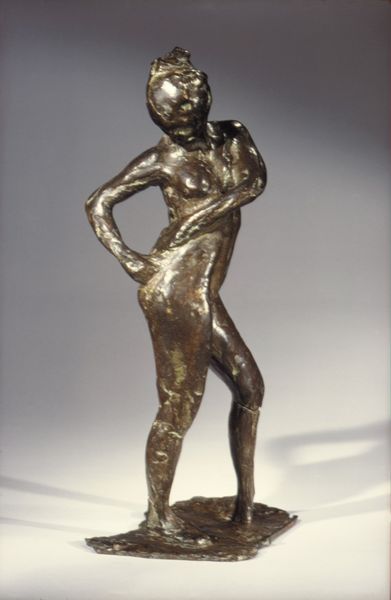
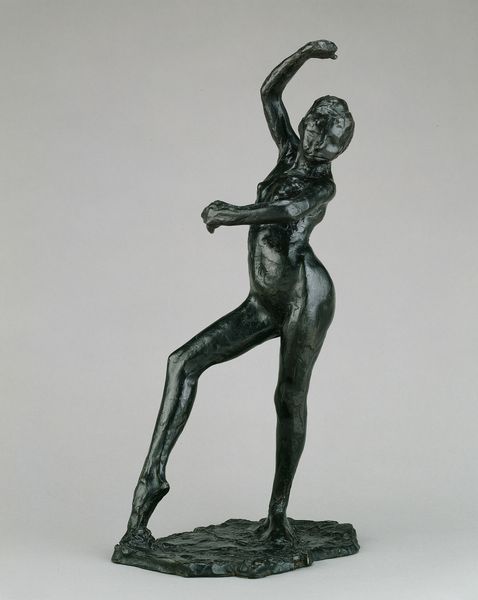
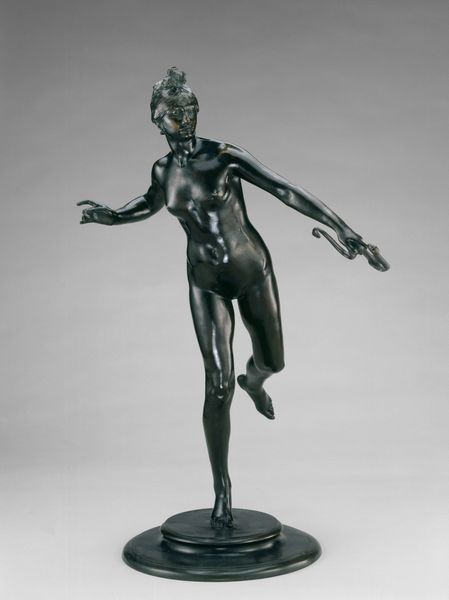
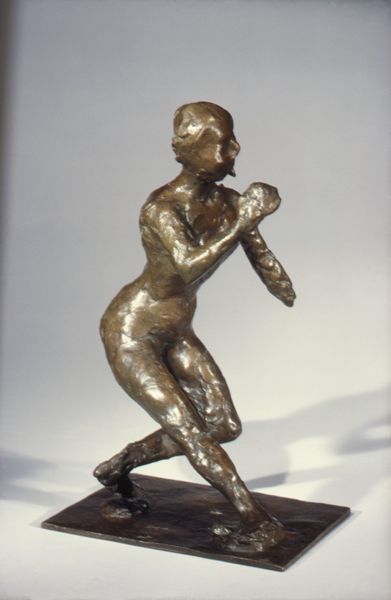
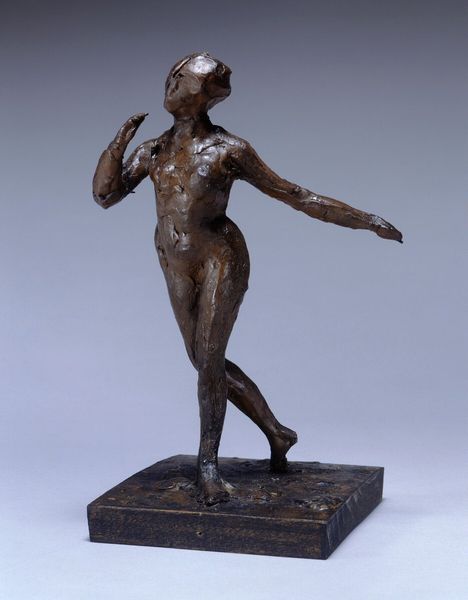
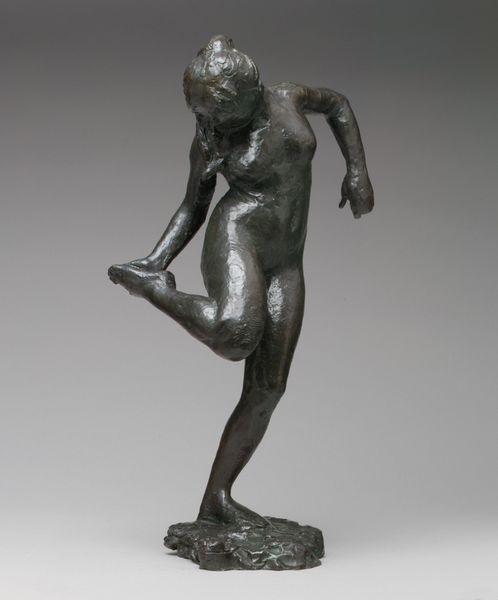
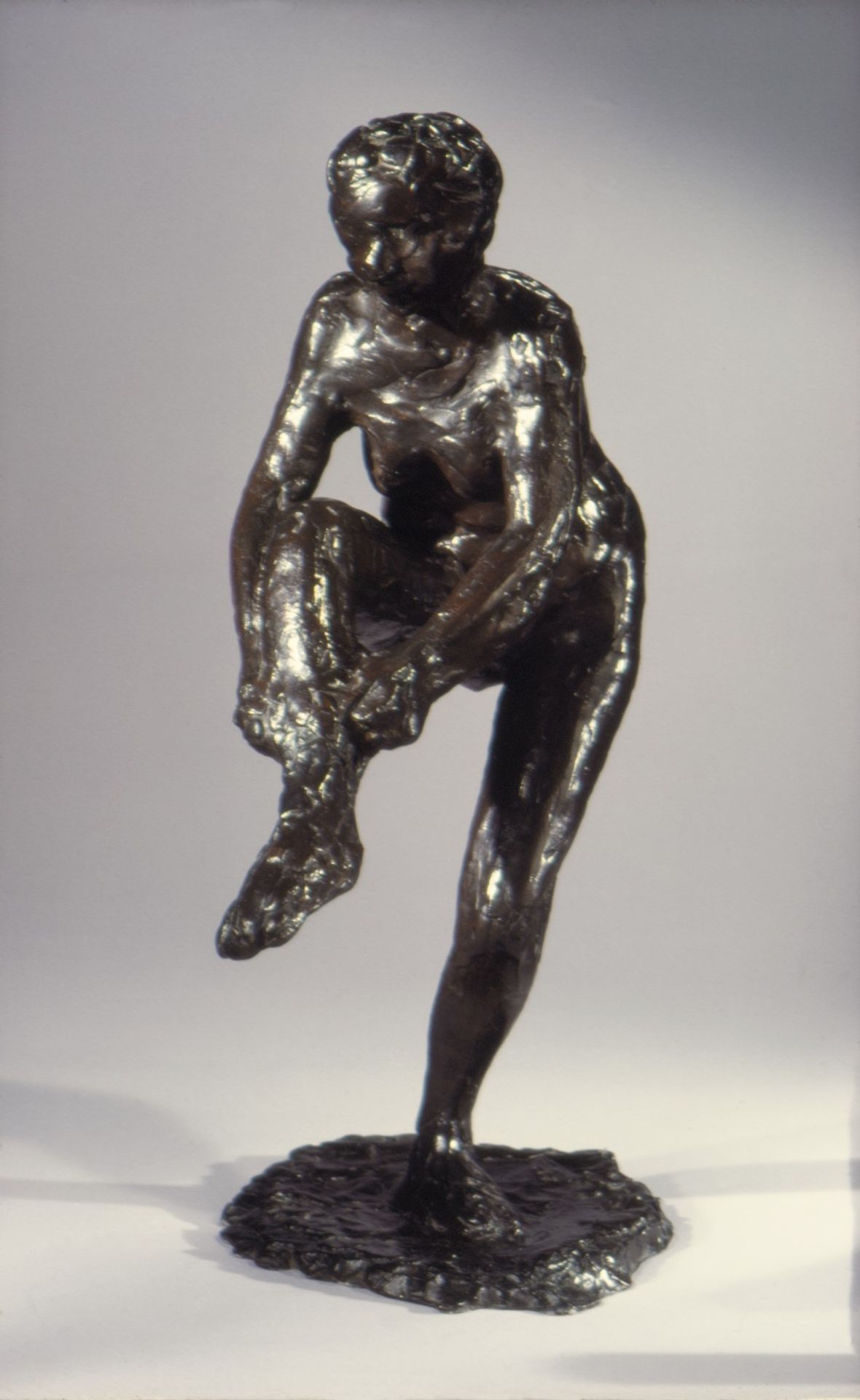
Edgar Degas created this bronze sculpture, *Dancer Putting on Her Stocking*, in France at a time when ballet was becoming increasingly popular, but also a contested subject. Degas was fascinated by the ballet, and his images gave a view into a world of rehearsals and backstage moments, rather than just the polished performances seen by the public. His focus was on the labor and the physical strain involved in the discipline of dance. The dancer is caught in an intimate moment of dressing. What might the image tell us about gender and the male gaze in late 19th century France? Was Degas celebrating the female form, or objectifying the dancer? What role did institutions such as the Paris Opera Ballet play in shaping perceptions of dancers and the lives they led? Art historians continue to examine archives such as company records, personal letters and reviews of the time to gain further insights into Degas’ world.
Dancer Putting on Her Stocking (Third State)
1910 - 1920


Artwork details
- Dimensions
- 18-3/8 x 12-1/4 x 7-1/2 in. (46.7 x 31.1 x 19.1 cm.)
- Location
- Metropolitan Museum of Art, New York, NY
- Copyright
- Public Domain
Comments
Share your thoughts
About this artwork
Edgar Degas created this bronze sculpture, *Dancer Putting on Her Stocking*, in France at a time when ballet was becoming increasingly popular, but also a contested subject. Degas was fascinated by the ballet, and his images gave a view into a world of rehearsals and backstage moments, rather than just the polished performances seen by the public. His focus was on the labor and the physical strain involved in the discipline of dance. The dancer is caught in an intimate moment of dressing. What might the image tell us about gender and the male gaze in late 19th century France? Was Degas celebrating the female form, or objectifying the dancer? What role did institutions such as the Paris Opera Ballet play in shaping perceptions of dancers and the lives they led? Art historians continue to examine archives such as company records, personal letters and reviews of the time to gain further insights into Degas’ world.
Comments
Share your thoughts