About this artwork
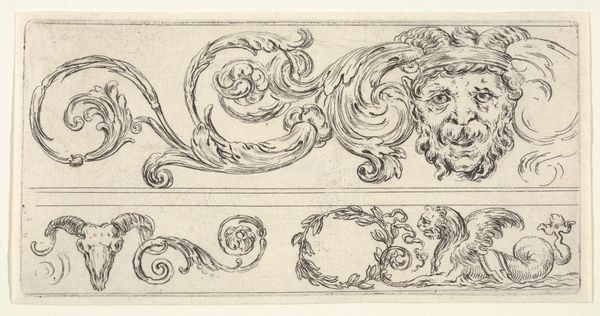
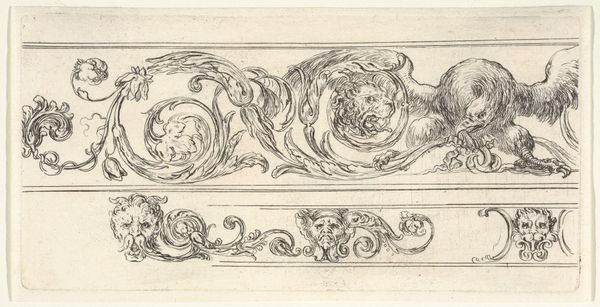
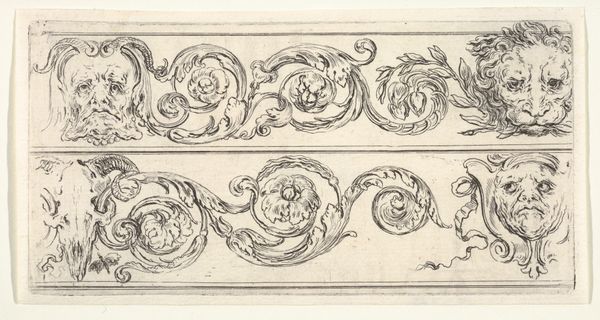
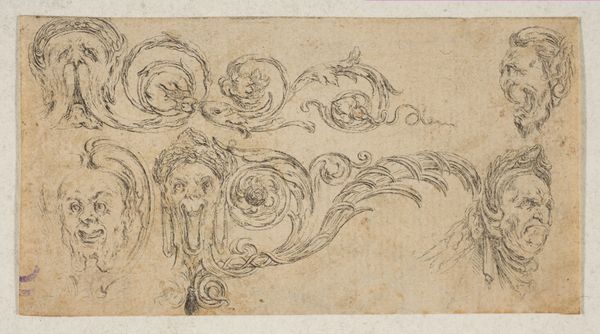
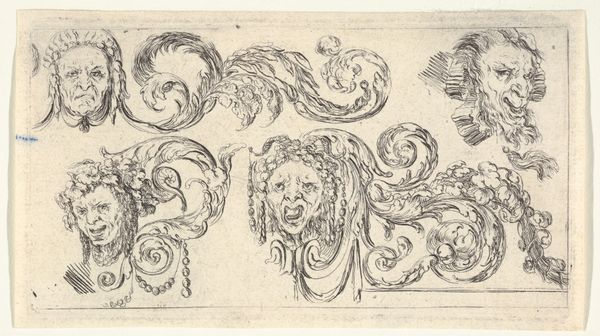
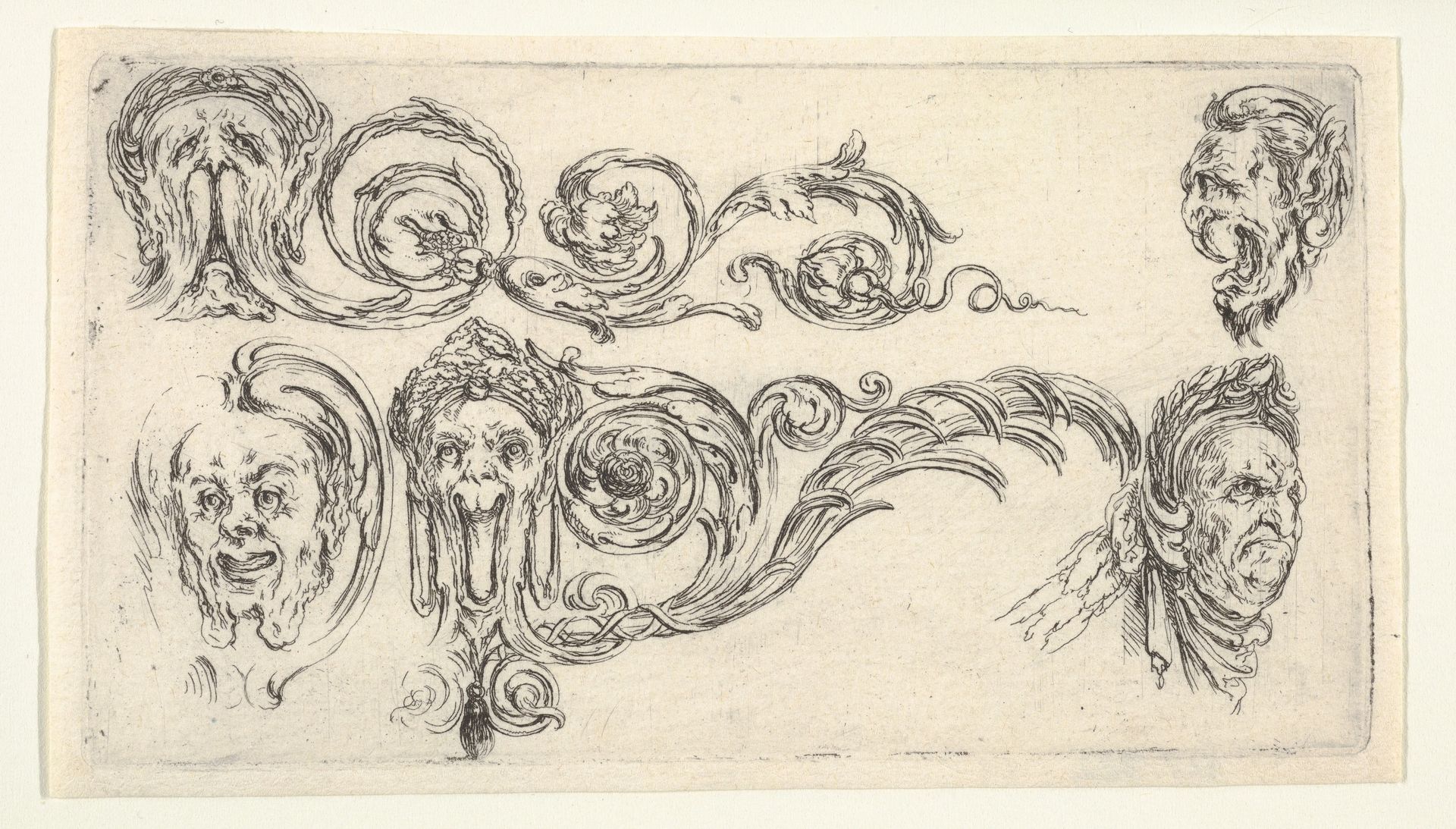
Stefano della Bella made this print, Plate 4: five grotesque heads, sometime in the 17th century as part of a series of ornamental designs. During the 17th century, Italy was experiencing a period of economic decline and political fragmentation, which led artists like della Bella to seek patronage across Europe. This print presents us with a window into the era's complex relationship with beauty, identity, and the body. Grotesque heads, a popular motif since the Renaissance, allowed artists to explore the boundaries of human expression. Are these faces mocking or being mocked? Consider the range of emotions conveyed by these "grotesque" heads. How do they challenge or reinforce societal expectations of beauty and decorum? Della Bella seems to suggest that within the ornamental and decorative, there's room to reflect on the diversity of human experience, including our fears, anxieties, and perhaps, our capacity for laughter in the face of the absurd.
Plate 4: five grotesque heads, from 'Friezes, foliage, and grotesques' (Frises, feuillages et grotesques)
1638 - 1643

Stefano della Bella
1610 - 1664
The Metropolitan Museum of Art
Metropolitan Museum of Art, New York, NYArtwork details
- Medium
- drawing, print, intaglio, ink, engraving
- Dimensions
- Sheet: 2 3/8 × 4 5/16 in. (6 × 10.9 cm)
- Location
- Metropolitan Museum of Art, New York, NY
- Copyright
- Public Domain
Tags
Comments
Share your thoughts
About this artwork
Stefano della Bella made this print, Plate 4: five grotesque heads, sometime in the 17th century as part of a series of ornamental designs. During the 17th century, Italy was experiencing a period of economic decline and political fragmentation, which led artists like della Bella to seek patronage across Europe. This print presents us with a window into the era's complex relationship with beauty, identity, and the body. Grotesque heads, a popular motif since the Renaissance, allowed artists to explore the boundaries of human expression. Are these faces mocking or being mocked? Consider the range of emotions conveyed by these "grotesque" heads. How do they challenge or reinforce societal expectations of beauty and decorum? Della Bella seems to suggest that within the ornamental and decorative, there's room to reflect on the diversity of human experience, including our fears, anxieties, and perhaps, our capacity for laughter in the face of the absurd.
Comments
Share your thoughts