About this artwork
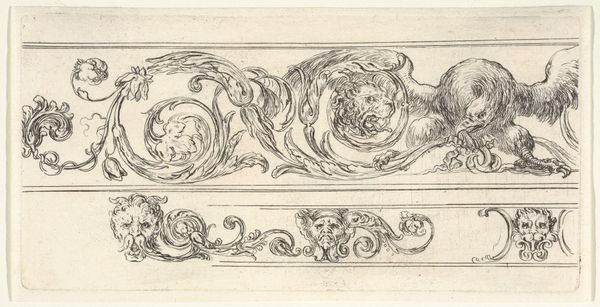
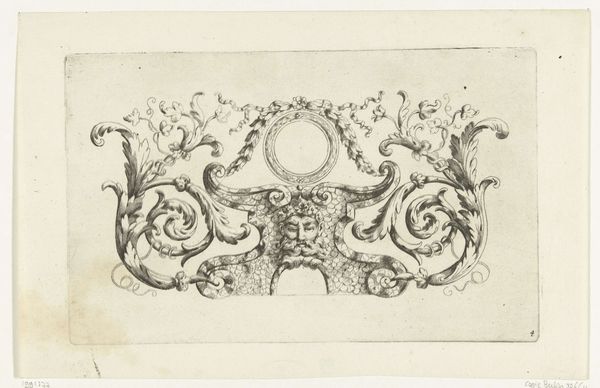
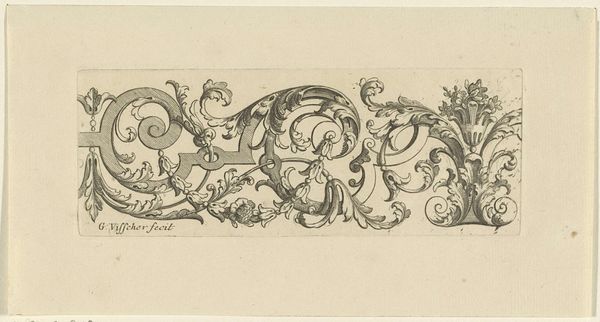
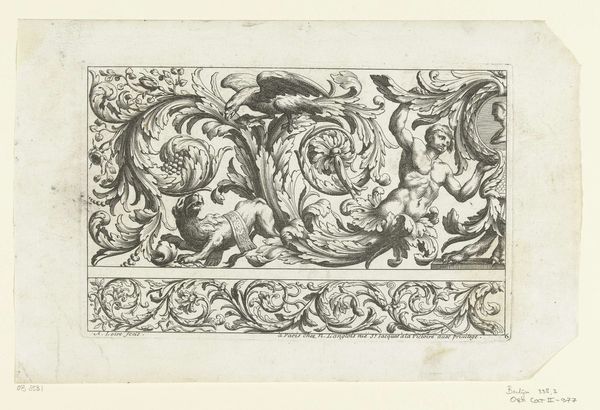
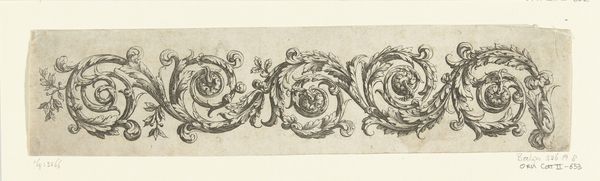
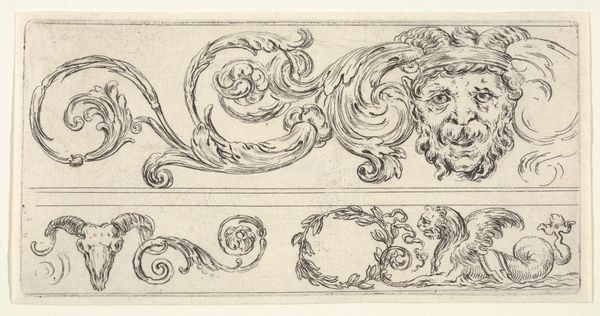
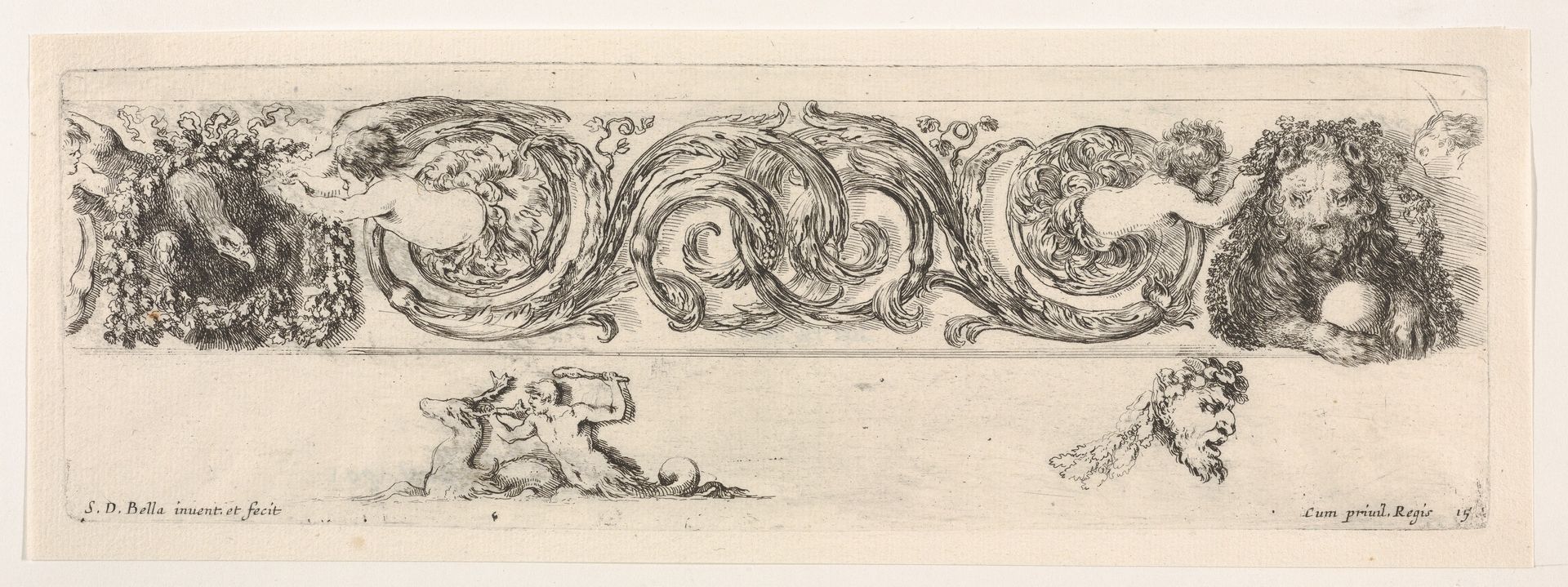
Stefano della Bella created this frieze design using etching, a printmaking technique, sometime before his death in 1664. The composition is dominated by a horizontal band featuring acanthus scrolls. These stylized leaves twist and turn, creating a dynamic rhythm across the surface. Notice the artist's use of line – delicate yet assertive – to define the forms. This emphasis on line lends the design a crisp, almost graphic quality. Below this main frieze, two smaller figural motifs offer a contrast in scale and subject matter. The arrangement of these elements suggests a deliberate attempt to balance ornate detail with moments of relative simplicity. This interplay speaks to broader artistic concerns around decoration and structure during the Baroque period. The frieze isn’t just visually pleasing; it's a study in how form can articulate cultural values.
Design for a Frieze with Acanthus Scrolls and Two Small Figural Motifs Below, Plate 15 from: 'Decorative friezes and foliage' (Ornamenti di fregi e fogliami)
1645 - 1650

Stefano della Bella
1610 - 1664
The Metropolitan Museum of Art
Metropolitan Museum of Art, New York, NYArtwork details
- Medium
- drawing, print, ink
- Dimensions
- Sheet: 3 9/16 × 9 15/16 in. (9.1 × 25.3 cm)
- Location
- Metropolitan Museum of Art, New York, NY
- Copyright
- Public Domain
Tags
drawing
ink drawing
baroque
figuration
ink
Comments
Be the first to share your thoughts about this work.
About this artwork
Stefano della Bella created this frieze design using etching, a printmaking technique, sometime before his death in 1664. The composition is dominated by a horizontal band featuring acanthus scrolls. These stylized leaves twist and turn, creating a dynamic rhythm across the surface. Notice the artist's use of line – delicate yet assertive – to define the forms. This emphasis on line lends the design a crisp, almost graphic quality. Below this main frieze, two smaller figural motifs offer a contrast in scale and subject matter. The arrangement of these elements suggests a deliberate attempt to balance ornate detail with moments of relative simplicity. This interplay speaks to broader artistic concerns around decoration and structure during the Baroque period. The frieze isn’t just visually pleasing; it's a study in how form can articulate cultural values.
Comments
Be the first to share your thoughts about this work.