Aztec Sun Stone (Calendar Stone) 1427

aztecart
Museo Nacional de Antropologia (MNA), Mexico City, Mexico
carving, relief, sculpture
carving
sculpture
relief
geometric
sculpture
decorative art
indigenous-americas
Copyright: Public domain
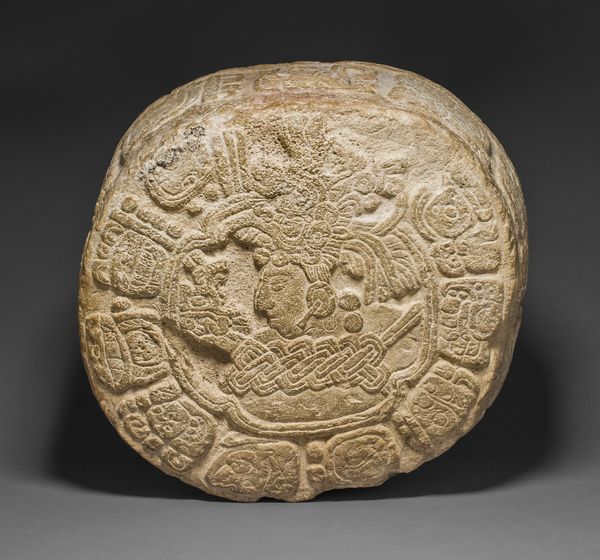
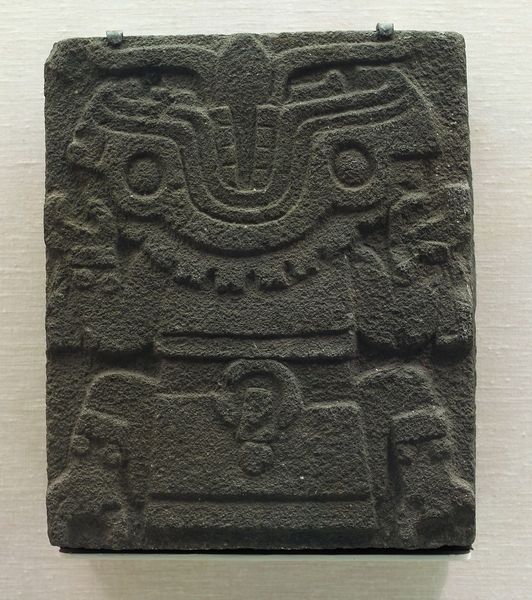
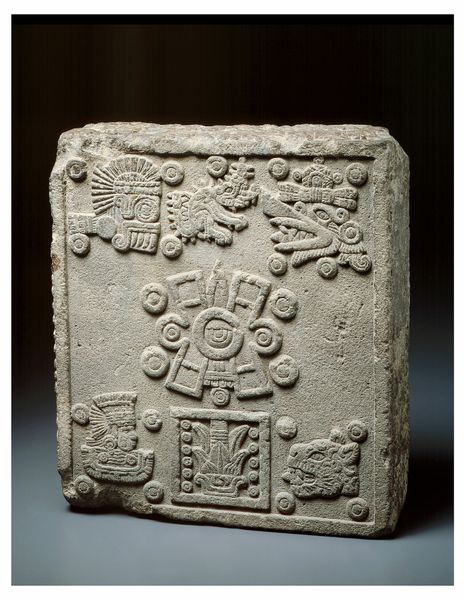
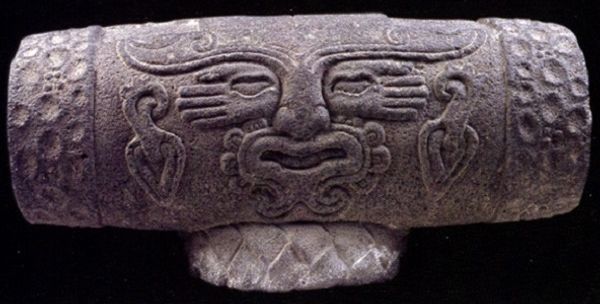
Curator: Here we have the Aztec Sun Stone, sometimes referred to as the Calendar Stone. It dates back to 1427 and is currently held at the Museo Nacional de Antropologia in Mexico City. Editor: What strikes me immediately is the overwhelming density of the carved relief, it’s almost claustrophobic in its intricate detail. The materiality of the stone gives it a brutal, commanding presence. Curator: Indeed, the radiating composition emphasizes the centrality of Tonatiuh, the sun god, whose face dominates the stone. The concentric rings are not merely decorative, but are mathematically precise arrangements indicating days, months, and cosmological cycles. Editor: I’m curious about the labour. Imagine the manpower and the tools necessary to carve this massive disc from volcanic basalt! This was a feat of engineering, logistics, and communal effort. How was the stone sourced and transported, and what did the division of labour look like in creating such a complex piece? Curator: Your question leads us to consider the symbolism woven into the form. Each glyph, each geometric pattern is not only a formal element but a piece of symbolic language—reflecting their worldview and how they structured the very fabric of reality. The stone displays a sophisticated grasp of mathematics, astronomy, and cosmogony. Editor: I’m drawn to its original placement within the urban landscape, likely ritually charged space, underscoring a synthesis of ritual, astronomical observation, and political power. How would the manipulation and consumption of this art piece influence trade networks or agriculture at the time? It's not merely about observing time, it's about controlling resources and ensuring productivity! Curator: By decoding this formal language we get insight into the ancient mind. Editor: Absolutely. To examine such artworks, you can begin to decode entire cultures from what we traditionally call functional designs or simply sculptural objects. Curator: Indeed, thinking through it has enhanced my appreciation of their ingenuity. Editor: Agreed! Approaching it from a labor and material lens contextualizes an amazing creation process with incredible sophistication and beauty!
Comments
No comments
Be the first to comment and join the conversation on the ultimate creative platform.
 React
React Comment