1500
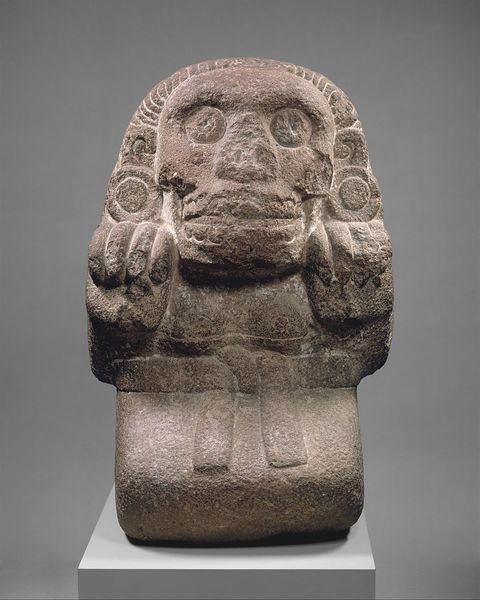
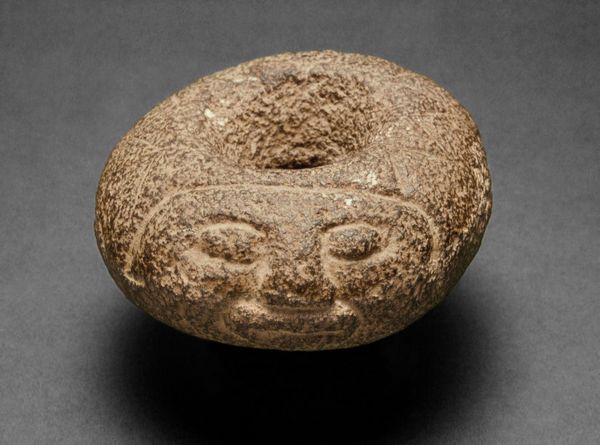
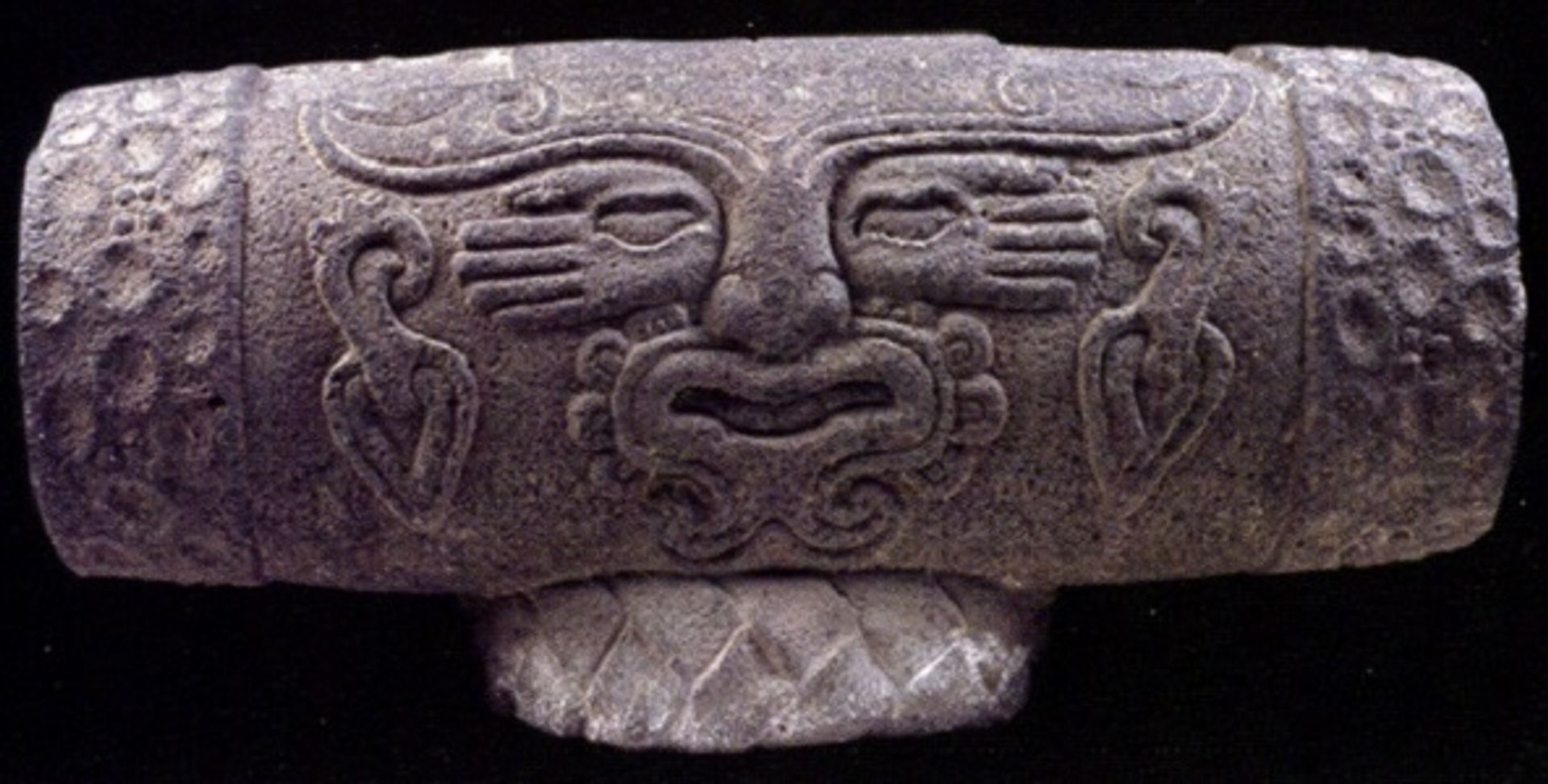
Macuilxochitl Teponaztli Votive

Aztec Art
1300 - 1521Location
Museo Nacional de Antropologia (MNA), Mexico City, MexicoListen to curator's interpretation
Curatorial notes
This is an Aztec teponaztli, or slit drum, carved from stone, probably sometime between 1300 and 1521. The cylindrical form is dominated by a highly stylized face, likely representing the god Macuilxochitl, associated with music, dance, and games. Consider how the symmetry of the face and the drum's shape create a balanced, almost serene presence, despite the somewhat grotesque features. The artist used a system of signs that would have been immediately legible to its original audience. The carved hands, the closed eyes, and the elaborate mouth are not merely decorative; they signify aspects of ritual performance and divine power. The heavy materiality of the stone contrasts with the ephemeral nature of music and dance. Perhaps this contrast was meant to suggest the enduring power of the gods amidst the fleeting nature of human life. We might consider how the creation and use of this votive object challenges fixed meanings. The formal qualities of this teponaztli engage with fundamental questions about representation, belief, and the very nature of art.