1521
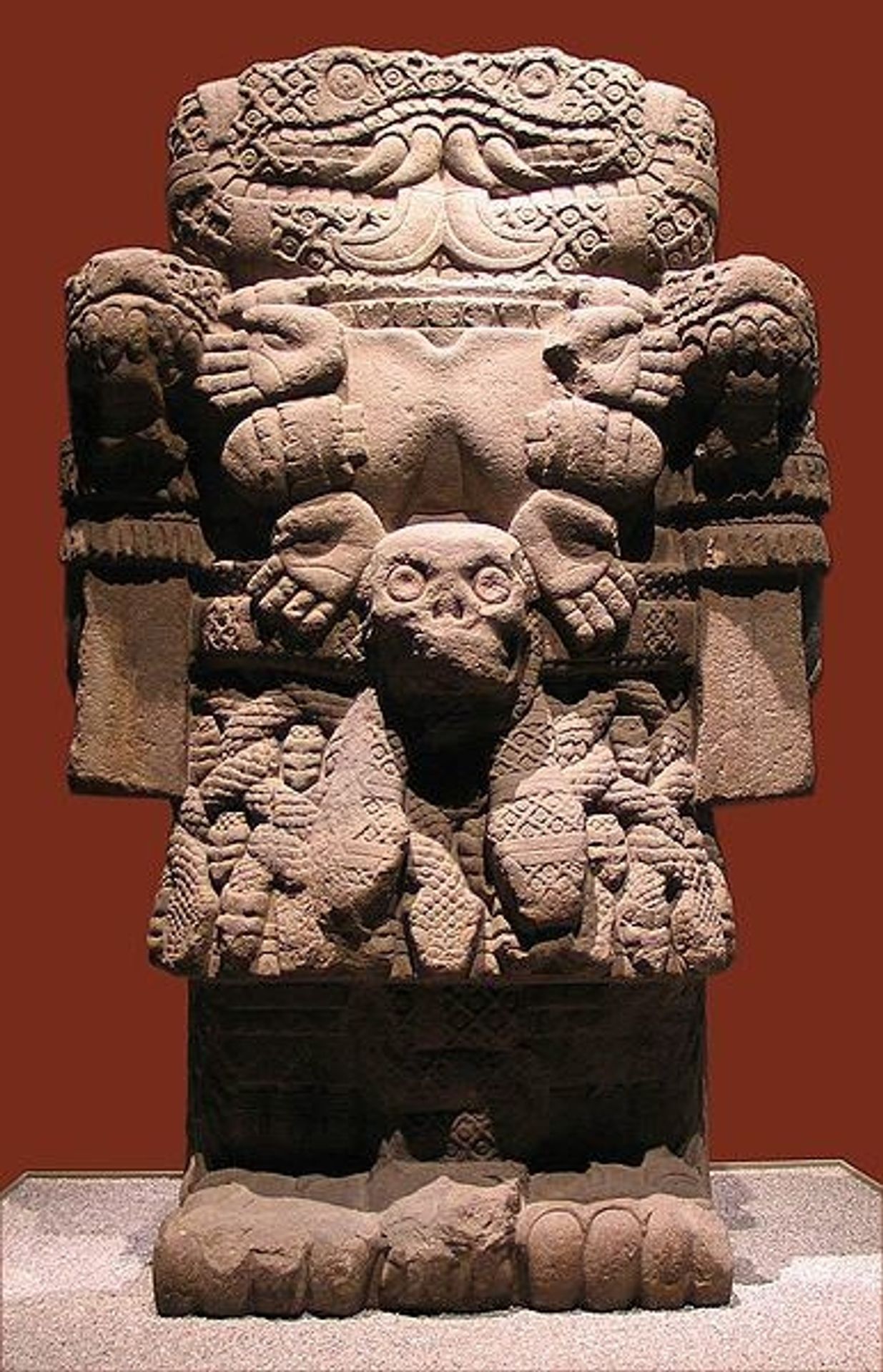
Coatlicue ('Serpent Skirt')

Aztec Art
1300 - 1521Location
Museo Nacional de Antropologia (MNA), Mexico City, MexicoListen to curator's interpretation
Curatorial notes
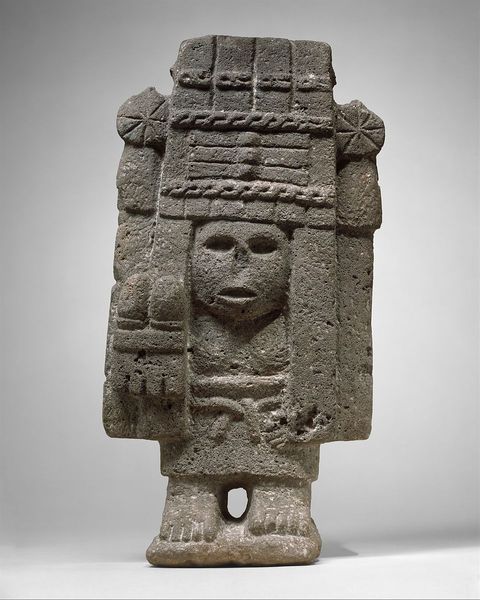
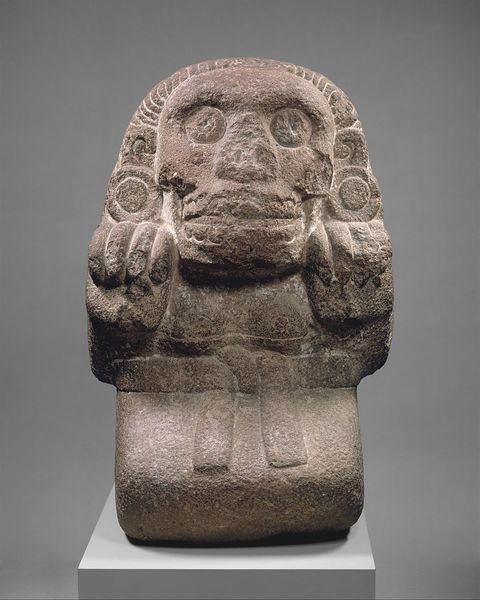
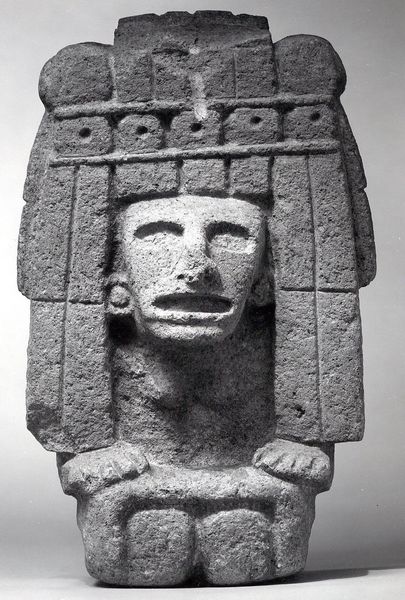
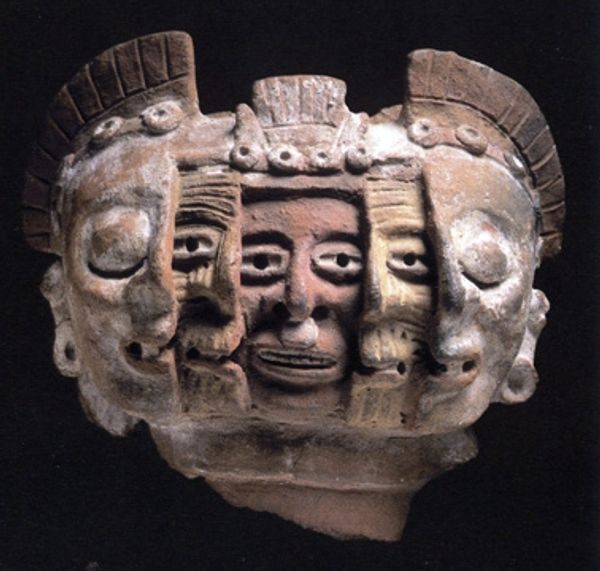
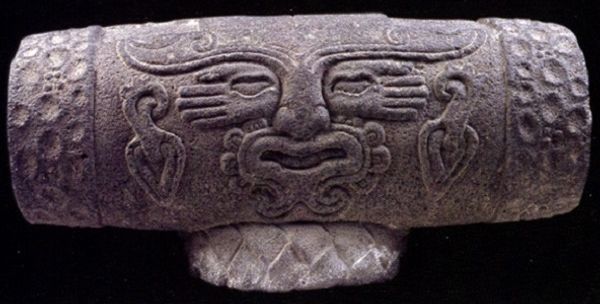
Curator: Here we have Coatlicue, meaning 'Serpent Skirt,' a sculpture from 1521, currently housed in the Museo Nacional de Antropologia in Mexico City. Editor: It's imposing! Visually dense and…terrifying. All those repeated, angular shapes and disembodied features create an unsettling feeling. Curator: Indeed. Coatlicue is a powerful, albeit fearsome, representation of the Aztec earth goddess, the mother of gods and humans. Notice how the sculptor uses the materiality of stone to its full advantage. Editor: It’s almost overwhelming. How the artists were able to carve something of such an unusual shape in such intricate details is pretty mind-blowing. What material would that be, specifically? Curator: We know the artists deployed their sculpting ability on some form of igneous rock, perhaps basalt. Look at how different textures have been applied: scales, feathers, the stark smoothness of bone rendered so skillfully. Editor: From a purely materialist perspective, I can't help but wonder about the labor involved. Who were these sculptors? What tools did they use, and how long did such a piece take to complete? That adds another layer of weight to it for me. The historical weight. Curator: Those are essential questions to ponder. But observe also the visual symbolism; the two serpent heads rising to meet, forming her face, the skirt of interwoven snakes, and the necklace of human hands and hearts signifies her role in the cycle of life and death. Structurally, all these create a strong and effective message. Editor: Absolutely. Considering the context of the Aztec empire and the role of sacrificial practices, it is difficult to avoid reading all of this imagery as linked to these processes. The snake skirt would be the most telling evidence of the type of ideology. Curator: Her dismembered form further illustrates this cycle, a constant process of creation and destruction which seems a fitting theme when taking the semiotic point of view, as well as the philosophical stand. Editor: Examining it from a materialist perspective, it becomes clear the role ideology plays in the manipulation of making. From selecting appropriate material, creating necessary instruments, the division of labor to move the giant pieces. Each point reveals something interesting. Curator: Indeed. There is a strange dichotomy that makes the sculpture that much more compelling! Editor: I concur! Thanks. That's offered me a deeper understanding and appreciation.