About this artwork
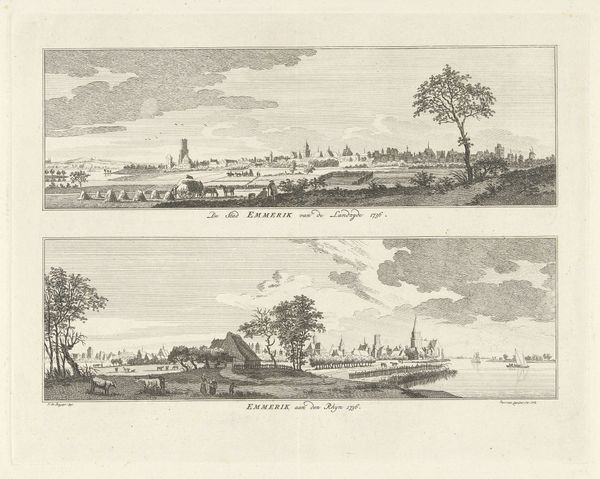
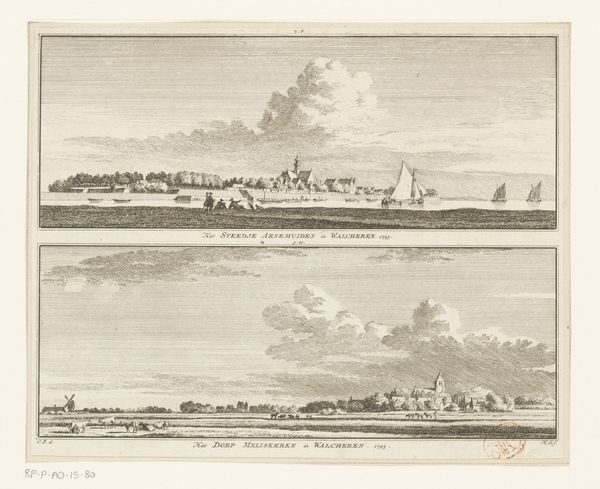
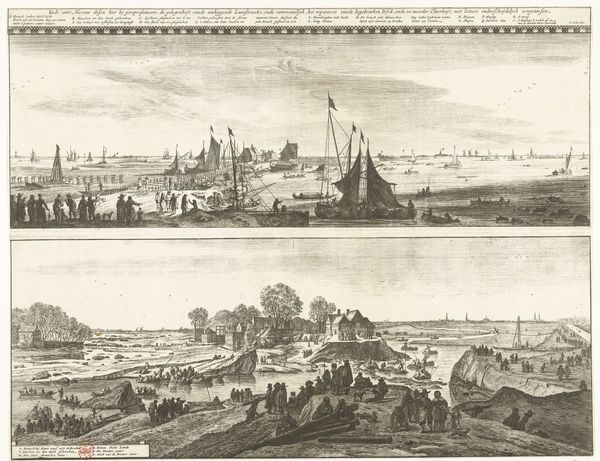
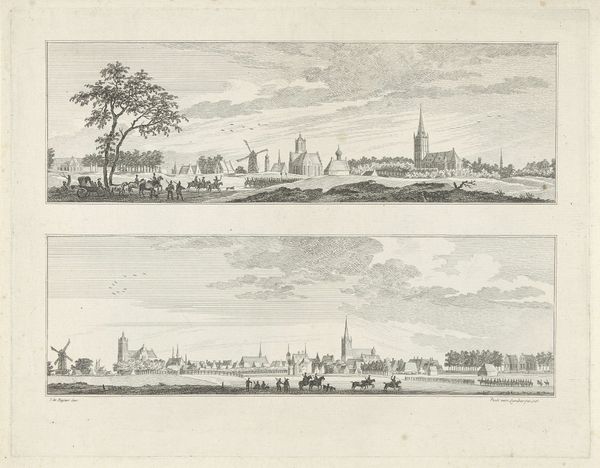
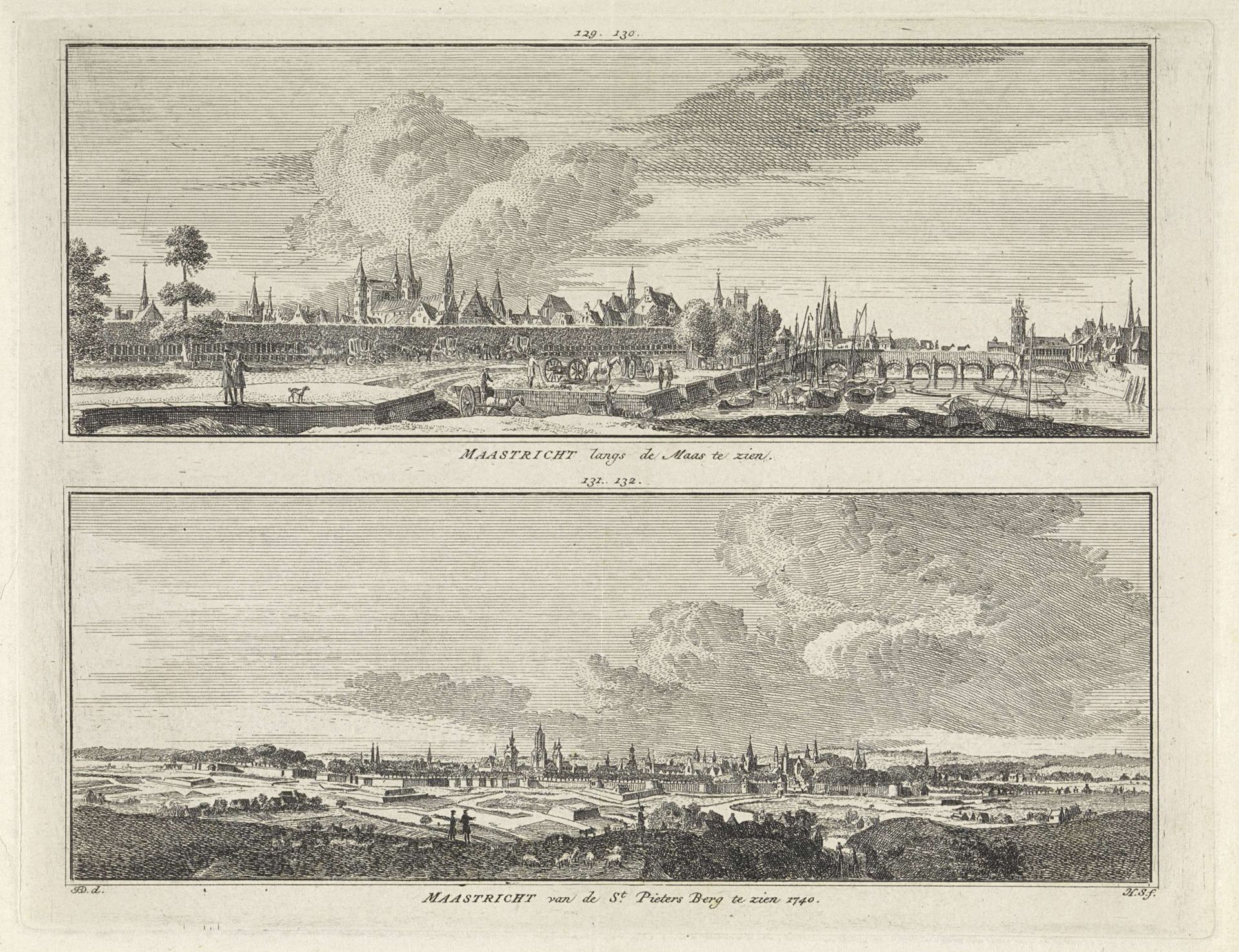
Hendrik Spilman created "Twee gezichten op Maastricht", or "Two Views of Maastricht", using etching, a process which involves scratching into a metal plate with acid. Spilman was working in the 18th century when the Dutch Republic was a major economic power. His work reflects the pride in Dutch cities and landscapes that was common at the time. Here, the city is viewed from two vantage points: along the Maas River and from St. Peter's Mountain. The scenes provide insight into the period’s urban planning and architectural styles. Spilman's precise lines and attention to detail invite us to observe the human activity along the river, offering a glimpse into the daily lives of Maastricht’s inhabitants. The artwork also prompts reflection on landscape as a marker of identity. How does seeing a familiar place represented in art affect our sense of belonging and history?

Artwork details
- Medium
- drawing, print, engraving
- Dimensions
- height 168 mm, width 218 mm
- Location
- Rijksmuseum
- Copyright
- Rijks Museum: Open Domain
Tags
drawing
baroque
old engraving style
landscape
cityscape
northern-renaissance
engraving
Comments
No comments
About this artwork
Hendrik Spilman created "Twee gezichten op Maastricht", or "Two Views of Maastricht", using etching, a process which involves scratching into a metal plate with acid. Spilman was working in the 18th century when the Dutch Republic was a major economic power. His work reflects the pride in Dutch cities and landscapes that was common at the time. Here, the city is viewed from two vantage points: along the Maas River and from St. Peter's Mountain. The scenes provide insight into the period’s urban planning and architectural styles. Spilman's precise lines and attention to detail invite us to observe the human activity along the river, offering a glimpse into the daily lives of Maastricht’s inhabitants. The artwork also prompts reflection on landscape as a marker of identity. How does seeing a familiar place represented in art affect our sense of belonging and history?
Comments
No comments