About this artwork
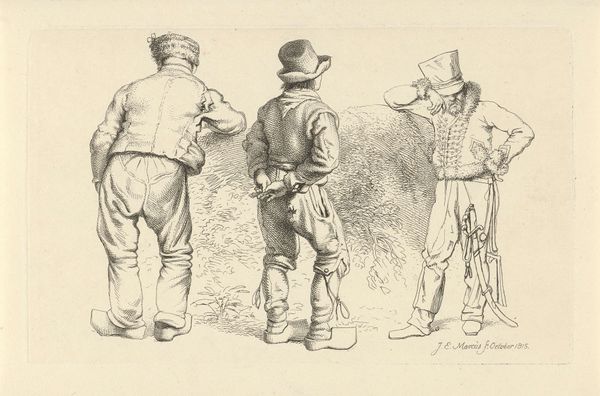
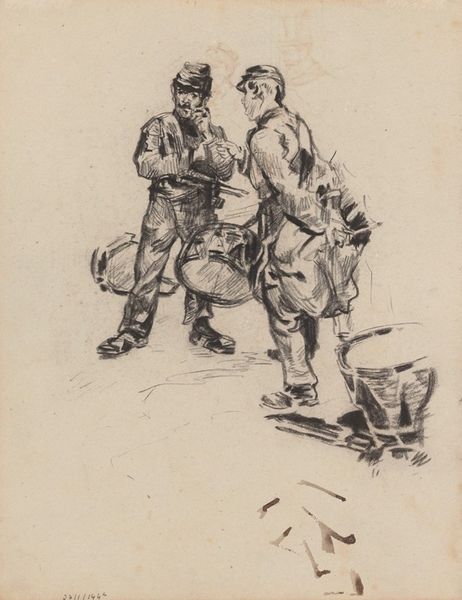
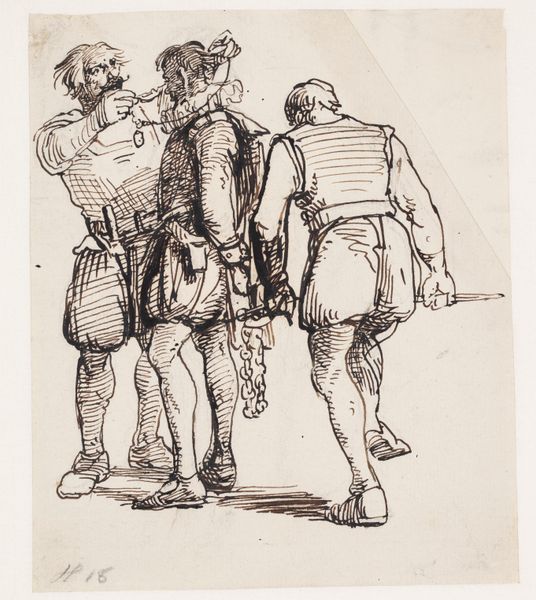
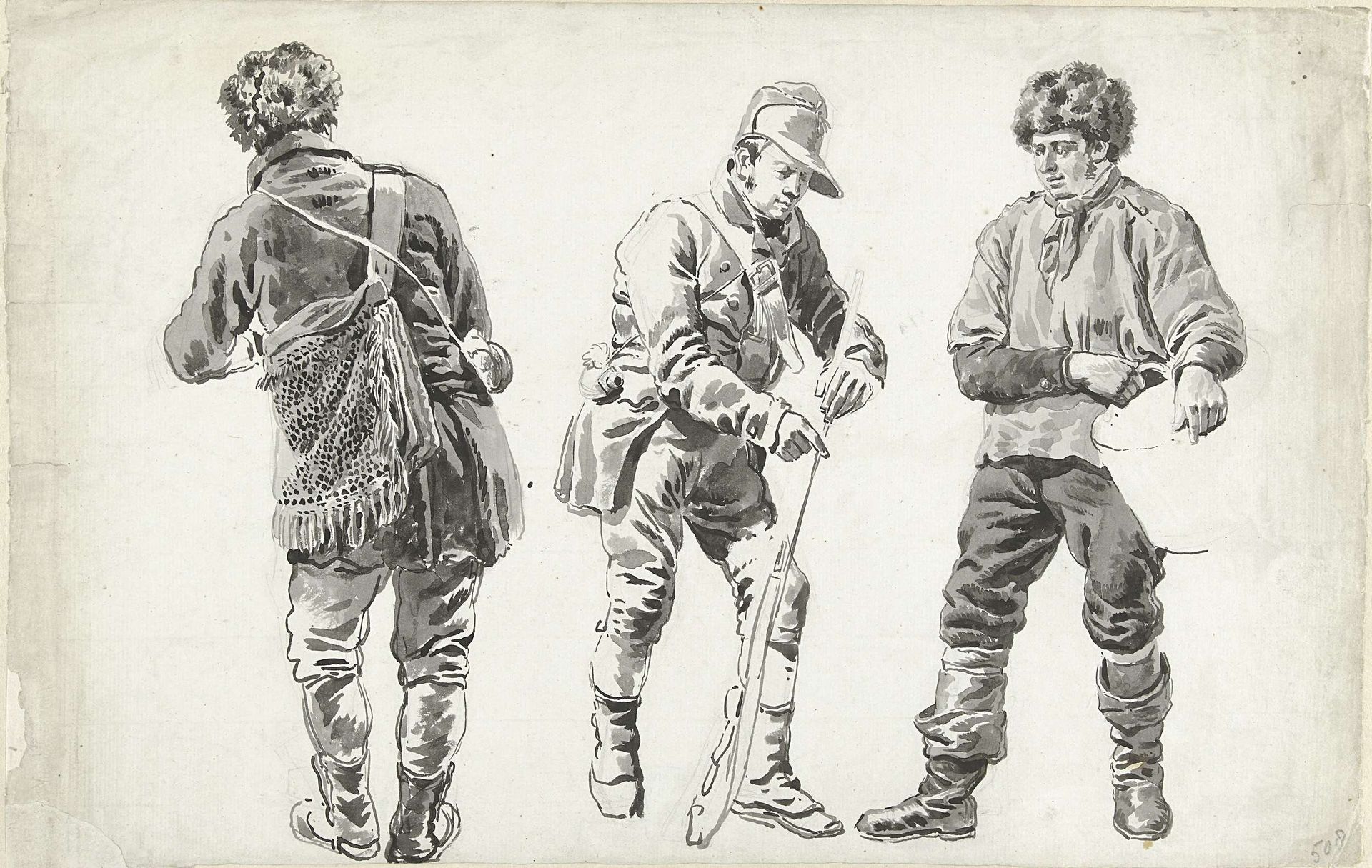
Leendert de Koningh made this study sheet with pen and gray ink in the late 18th or early 19th century, a period marked by significant social and political upheaval. Here, three figures stand against a blank background: a hunter, a soldier, and a fisherman, each embodying distinct roles within Dutch society. The hunter is seen from behind, highlighting the tools of his trade and perhaps suggesting a life close to nature. The soldier stands poised with his weapon, a symbol of authority. The fisherman, with his net and catch, represents a life sustained by the sea. It is through De Koningh’s representations that we are able to reflect on questions of labor, identity, and the social hierarchy of the Netherlands during a period of revolution and change. These figures remind us of the diverse experiences and contributions of ordinary people during times of transformation.
Studieblad met een jager (?) op de rug gezien, een soldaat en een visser
1787 - 1849

Leendert de Koningh
1777 - 1849Location
RijksmuseumArtwork details
- Medium
- drawing, paper, ink
- Dimensions
- height 277 mm, width 434 mm
- Location
- Rijksmuseum
- Copyright
- Rijks Museum: Open Domain
Tags
Comments
Share your thoughts
About this artwork
Leendert de Koningh made this study sheet with pen and gray ink in the late 18th or early 19th century, a period marked by significant social and political upheaval. Here, three figures stand against a blank background: a hunter, a soldier, and a fisherman, each embodying distinct roles within Dutch society. The hunter is seen from behind, highlighting the tools of his trade and perhaps suggesting a life close to nature. The soldier stands poised with his weapon, a symbol of authority. The fisherman, with his net and catch, represents a life sustained by the sea. It is through De Koningh’s representations that we are able to reflect on questions of labor, identity, and the social hierarchy of the Netherlands during a period of revolution and change. These figures remind us of the diverse experiences and contributions of ordinary people during times of transformation.
Comments
Share your thoughts