About this artwork
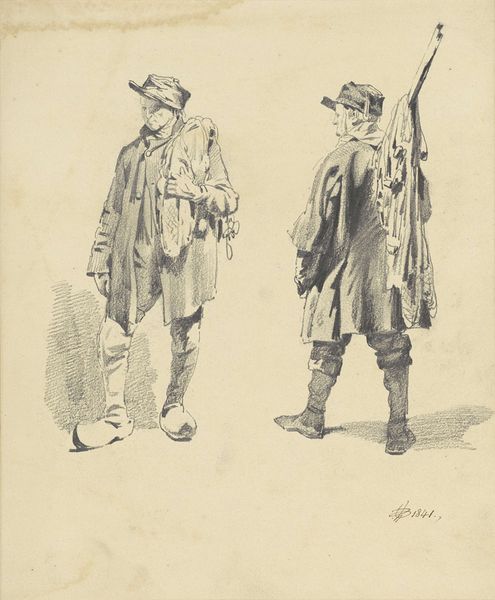
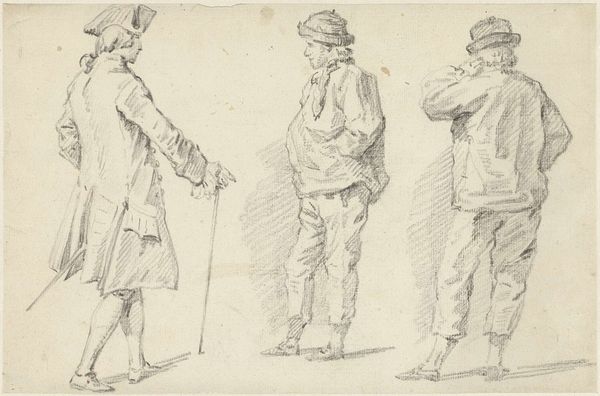
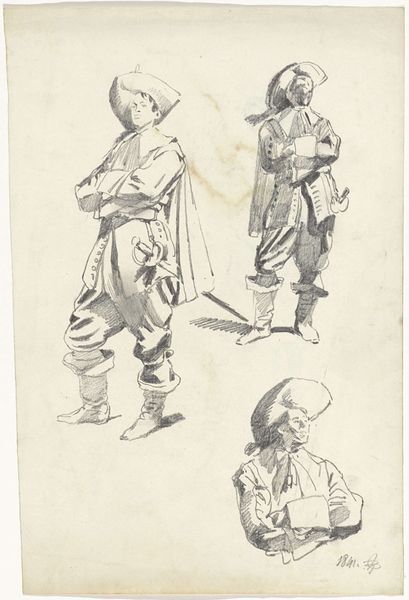
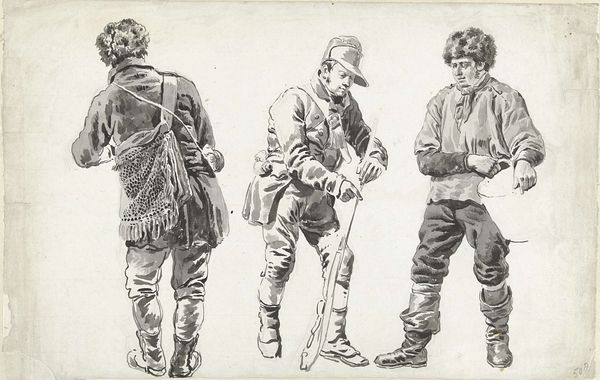
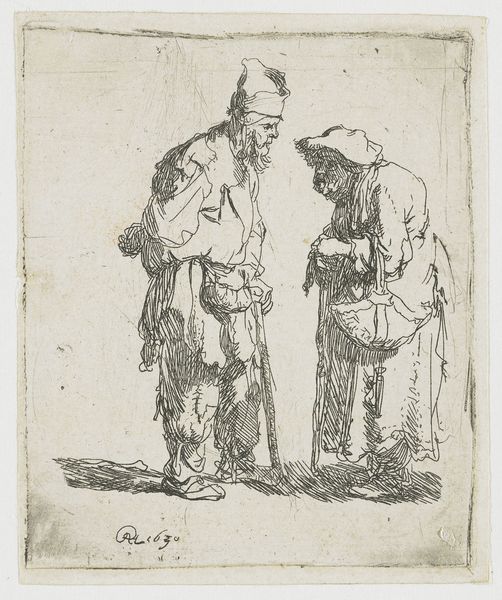
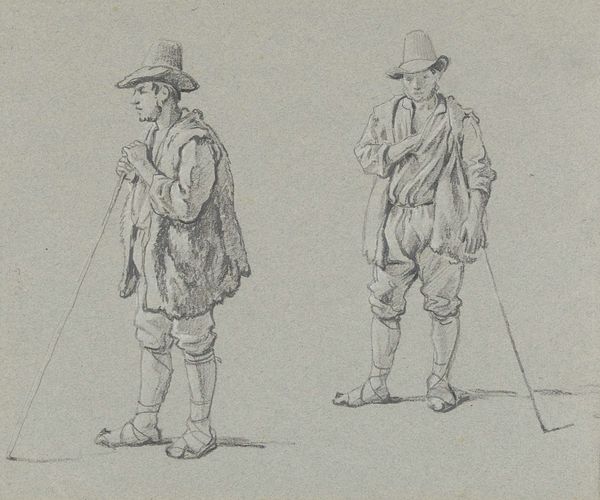
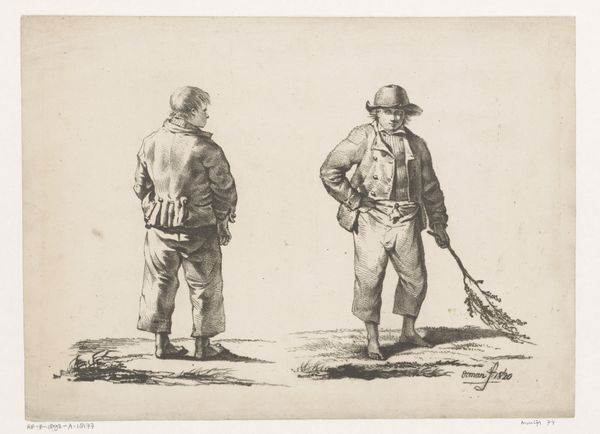
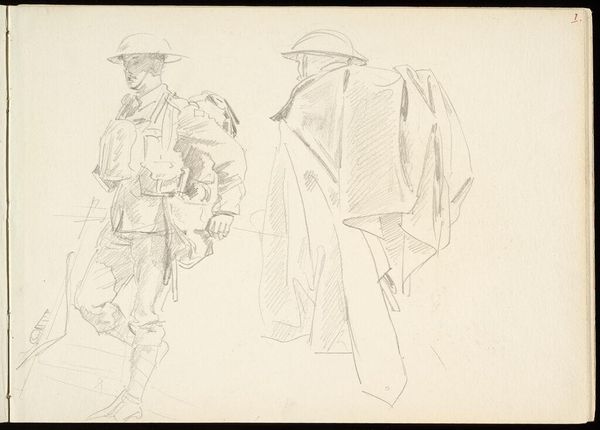
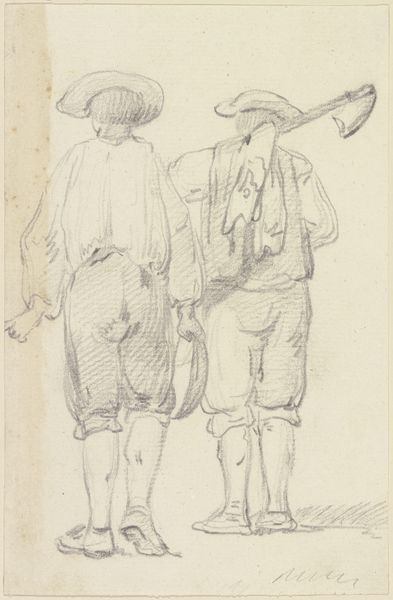
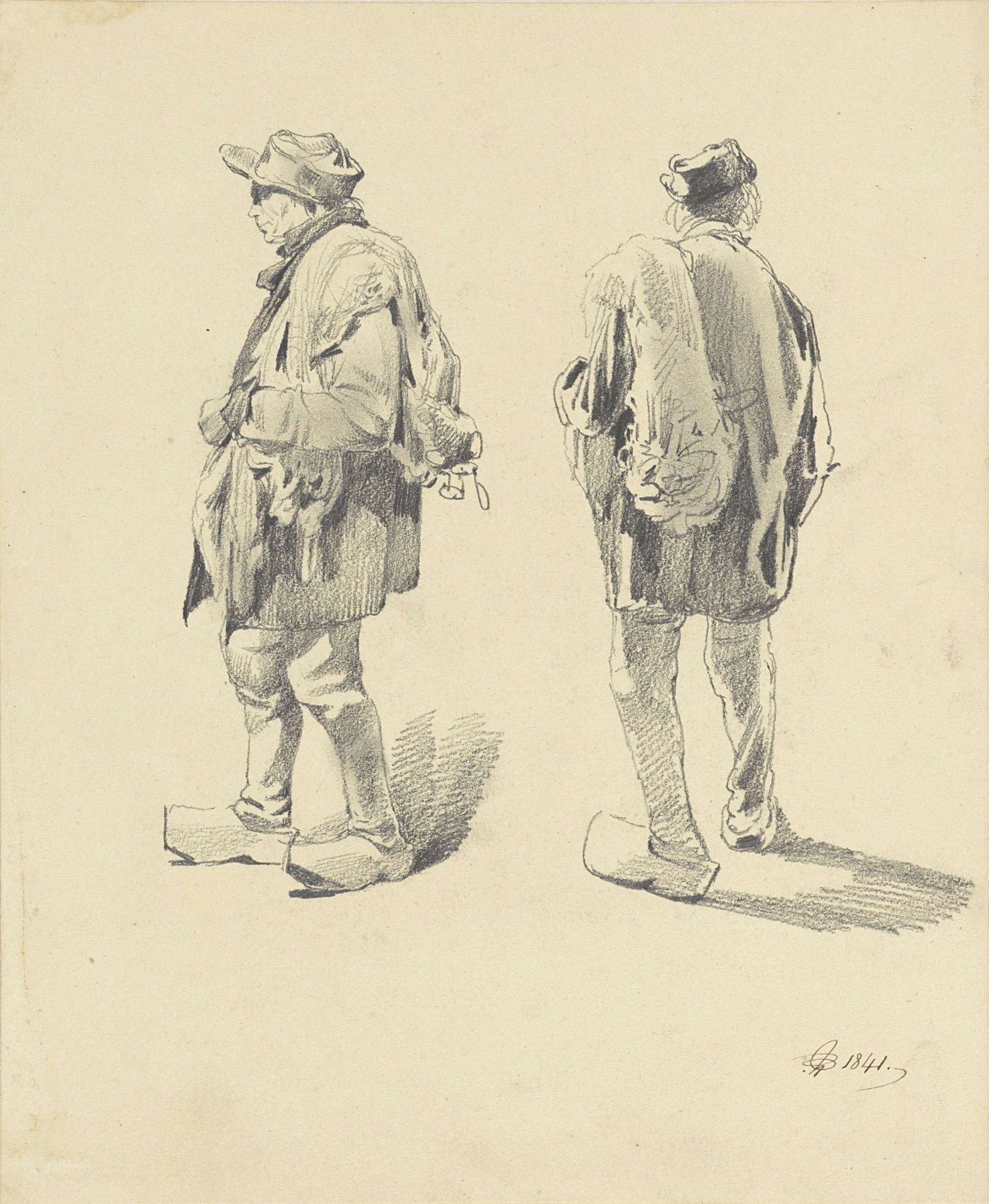
This drawing, "Twee studies van een staande man," was created by Pieter van Loon, and is currently held in the Rijksmuseum. The drawing presents two studies of a standing man, rendered with graphite on paper. The limited palette and focus on form invite an assessment centered on line, texture, and composition. The artist's emphasis on the weight and texture of the man's clothing, captured through dense, layered strokes, contrasts with the lighter rendering of the background. The composition is stark, directing attention squarely to the figure and enabling us to focus on the details of his attire and stance. Van Loon's choice to depict the figure from both the front and rear offers a comprehensive view, almost like an ethnographic study. The rough texture and visible marks underscore a sense of immediacy and directness. This materiality isn't merely representational; it invokes broader questions about representation and realism. The drawing functions as a site where visual analysis intersects with theoretical and historical understanding, inviting ongoing scrutiny.

Artwork details
- Medium
- drawing, paper, pencil
- Dimensions
- height 242 mm, width 200 mm
- Location
- Rijksmuseum
- Copyright
- Rijks Museum: Open Domain
Tags
Comments
Share your thoughts
About this artwork
This drawing, "Twee studies van een staande man," was created by Pieter van Loon, and is currently held in the Rijksmuseum. The drawing presents two studies of a standing man, rendered with graphite on paper. The limited palette and focus on form invite an assessment centered on line, texture, and composition. The artist's emphasis on the weight and texture of the man's clothing, captured through dense, layered strokes, contrasts with the lighter rendering of the background. The composition is stark, directing attention squarely to the figure and enabling us to focus on the details of his attire and stance. Van Loon's choice to depict the figure from both the front and rear offers a comprehensive view, almost like an ethnographic study. The rough texture and visible marks underscore a sense of immediacy and directness. This materiality isn't merely representational; it invokes broader questions about representation and realism. The drawing functions as a site where visual analysis intersects with theoretical and historical understanding, inviting ongoing scrutiny.
Comments
Share your thoughts