About this artwork
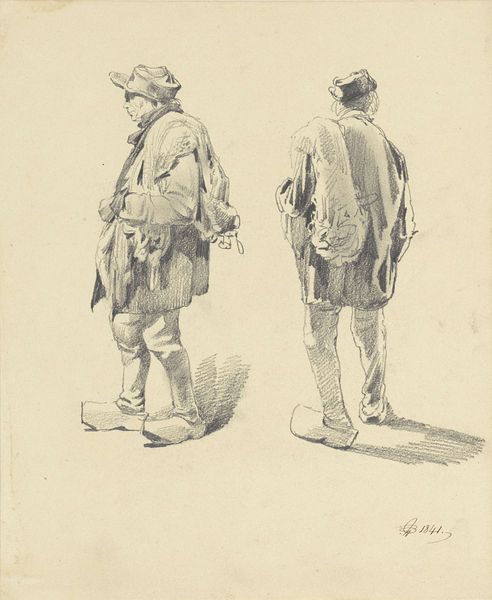
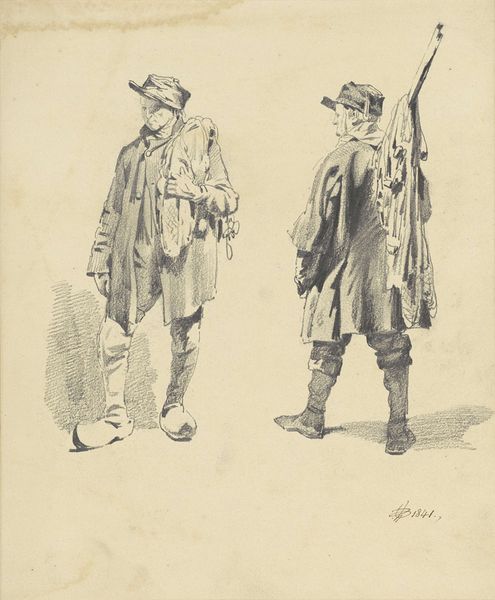
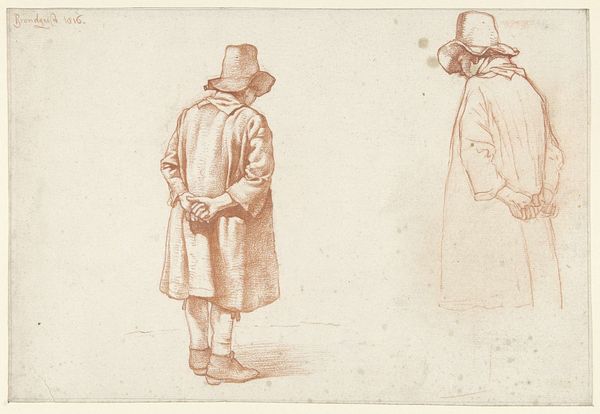
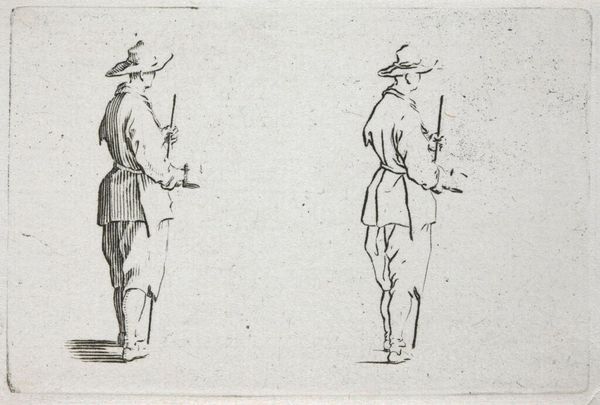
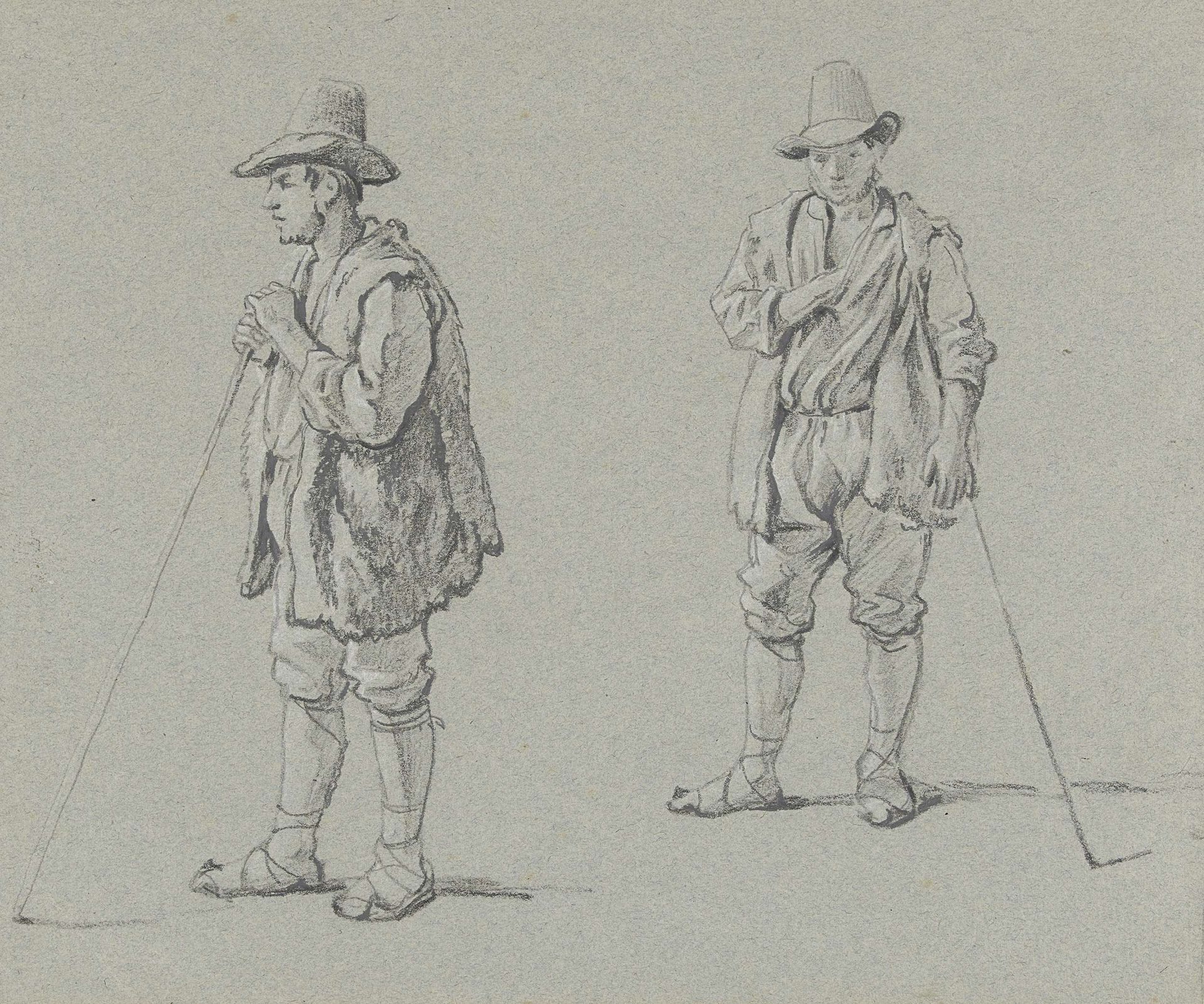
Abraham Teerlink made these two studies of a standing shepherd using graphite on paper. The use of graphite, a relatively soft and easily workable material, allows for subtle gradations of tone. See how the artist uses delicate lines to render the shepherd's clothing, capturing the texture of the cloth. The quickness of the strokes suggests that these sketches were made from life. Consider the social context: shepherds were part of the rural working class. Teerlink's choice to depict this figure speaks to a broader interest in everyday life that emerged in the late 18th and early 19th centuries. The artist's hand is evident in the careful observation and rendering of form. The sketches remind us of the labor involved in both the subject's life and the artist's practice. By focusing on materials, making, and context, we can understand the full meaning of Teerlink's sketches and the value in depicting everyday subjects.
Twee studies van een staande herder
1810 - 1857

Abraham Teerlink
1776 - 1857Location
RijksmuseumArtwork details
- Medium
- drawing, pencil
- Dimensions
- height 272 mm, width 326 mm
- Location
- Rijksmuseum
- Copyright
- Rijks Museum: Open Domain
Tags
Comments
Share your thoughts
About this artwork
Abraham Teerlink made these two studies of a standing shepherd using graphite on paper. The use of graphite, a relatively soft and easily workable material, allows for subtle gradations of tone. See how the artist uses delicate lines to render the shepherd's clothing, capturing the texture of the cloth. The quickness of the strokes suggests that these sketches were made from life. Consider the social context: shepherds were part of the rural working class. Teerlink's choice to depict this figure speaks to a broader interest in everyday life that emerged in the late 18th and early 19th centuries. The artist's hand is evident in the careful observation and rendering of form. The sketches remind us of the labor involved in both the subject's life and the artist's practice. By focusing on materials, making, and context, we can understand the full meaning of Teerlink's sketches and the value in depicting everyday subjects.
Comments
Share your thoughts