About this artwork
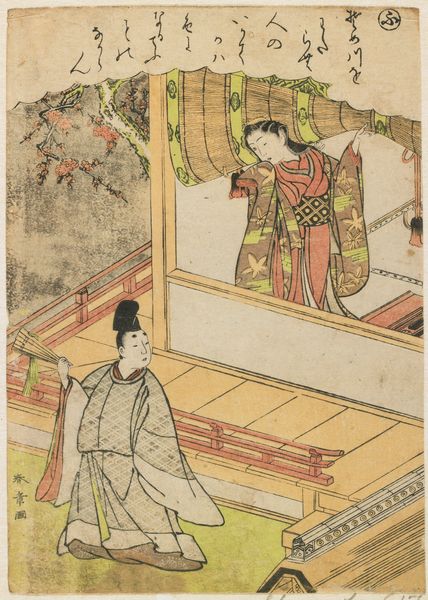
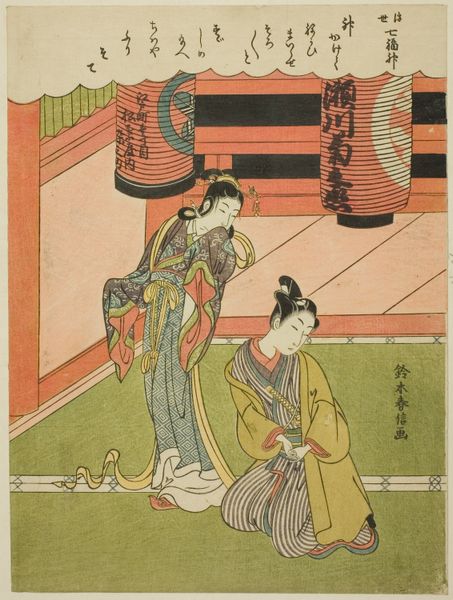
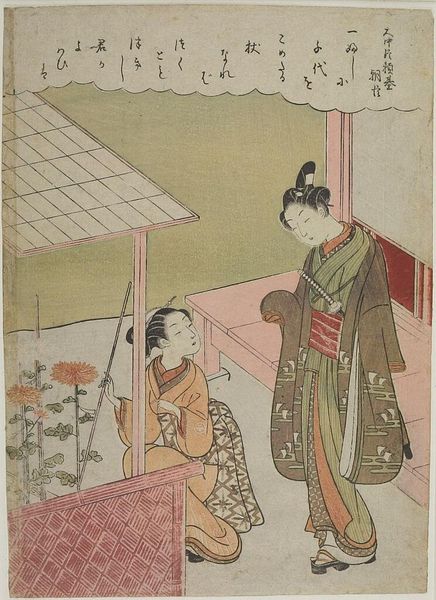
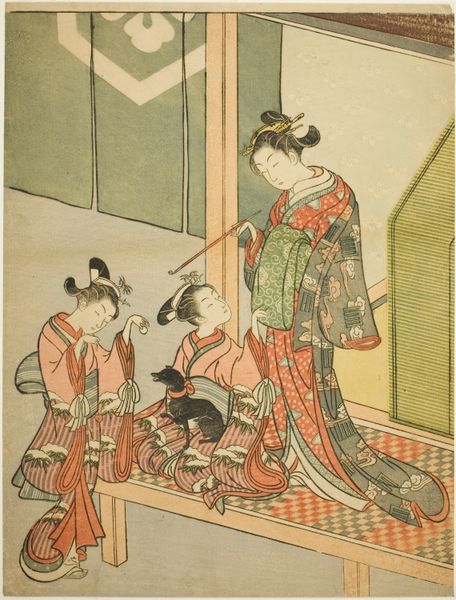
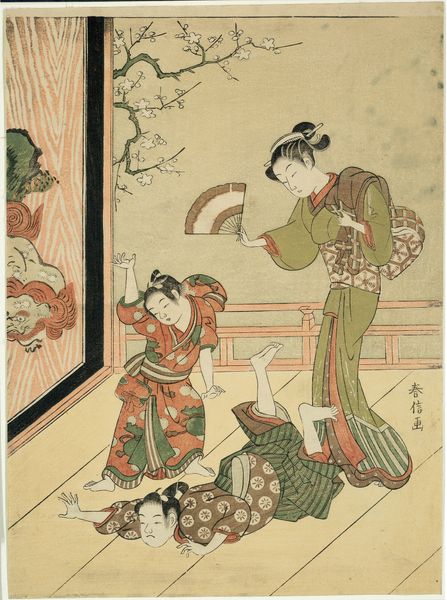
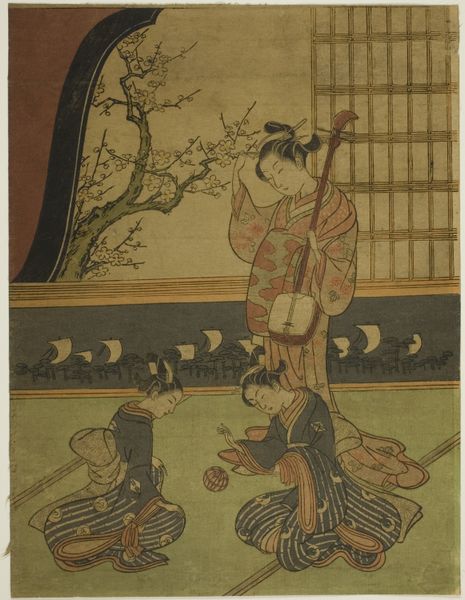
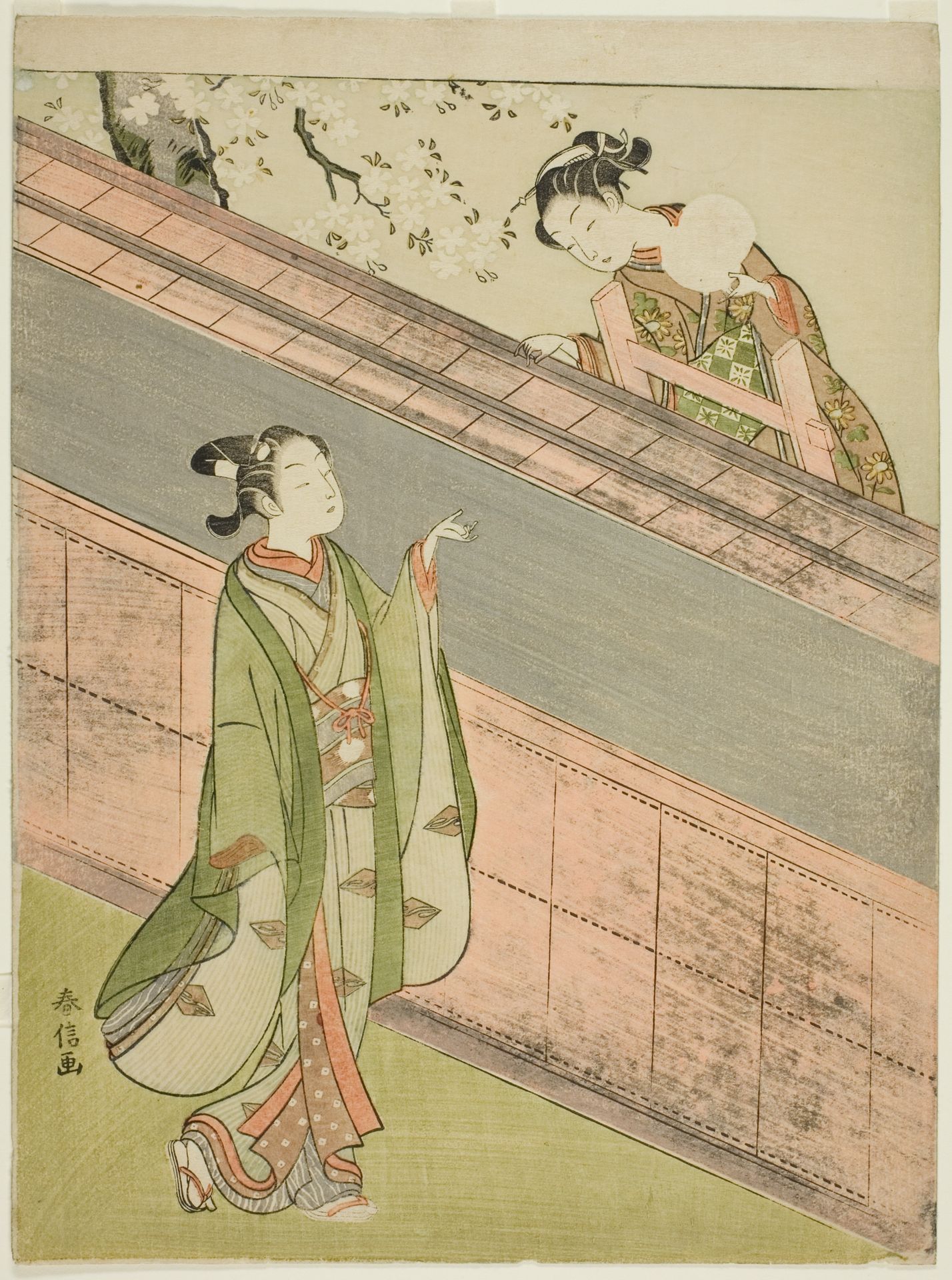
Suzuki Harunobu created "A Young Woman Returning a Ball to a Young Man" using woodblock printing, a technique that flourished in 18th century Japan. During the Edo period, Japan experienced relative peace and economic growth, leading to a vibrant urban culture where art like Harunobu’s found an audience among the merchant classes. Here, we see a young woman in a beautifully patterned kimono, returning a ball to a young man. Harunobu was celebrated for his depictions of daily life and his ability to capture the ephemeral beauty of youth. His work is often interpreted as a celebration of innocence, beauty, and the subtle nuances of human interaction. The figures in Harunobu’s prints often possess an androgynous quality, challenging conventional gender norms. This ambiguity invites us to consider the fluidity of identity and the constructed nature of gender roles. The print's emotional resonance comes from its ability to evoke a sense of nostalgia and longing for a world of beauty, grace, and fleeting moments of connection. It reflects a yearning for simpler times and a celebration of human relationships.
A Young Woman Returning a Ball to a Young Man
c. 1767


Artwork details
- Medium
- print, watercolor, woodblock-print
- Dimensions
- 29.2 × 21.6 cm (11 3/8 × 8 1/2 in.)
- Location
- The Art Institute of Chicago
- Copyright
- Public Domain
Tags
Comments
Share your thoughts
About this artwork
Suzuki Harunobu created "A Young Woman Returning a Ball to a Young Man" using woodblock printing, a technique that flourished in 18th century Japan. During the Edo period, Japan experienced relative peace and economic growth, leading to a vibrant urban culture where art like Harunobu’s found an audience among the merchant classes. Here, we see a young woman in a beautifully patterned kimono, returning a ball to a young man. Harunobu was celebrated for his depictions of daily life and his ability to capture the ephemeral beauty of youth. His work is often interpreted as a celebration of innocence, beauty, and the subtle nuances of human interaction. The figures in Harunobu’s prints often possess an androgynous quality, challenging conventional gender norms. This ambiguity invites us to consider the fluidity of identity and the constructed nature of gender roles. The print's emotional resonance comes from its ability to evoke a sense of nostalgia and longing for a world of beauty, grace, and fleeting moments of connection. It reflects a yearning for simpler times and a celebration of human relationships.
Comments
Share your thoughts